Bishkek City Tour: Walking Routes, Prices and What to See
Bishkek is easy to walk but not always easy to understand on your own. The center is spread across wide avenues, parks, Soviet-era public buildings, monuments and residential courtyards rather than a compact old town. A guided Bishkek city tour is useful because the value is not just seeing Ala-Too Square or Victory Square. It is understanding why the city looks the way it does and how its Soviet plan connects with modern Kyrgyz life.
For most first-time visitors, a 2.5–4 hour walking tour is enough to understand central Bishkek. Choose a city tour with transport if you also want Osh Bazaar, the Central Mosque or several districts without spending most of the time walking between them. If you have only one free day, a combined Bishkek and Ala-Archa tour gives a better balance of city and mountain scenery.
This guide compares Bishkek walking tours, private city tours, bazaar-focused routes and full-day combinations. It explains realistic duration, prices, route logic, what guides add, and whether you can explore independently.
Quick Answer: Which Bishkek City Tour Should You Choose?
| Tour format | Typical duration | Best for | Planning price |
|---|---|---|---|
| Central walking tour | 2.5–4 hours | History, architecture and a first-day orientation | From about $25–50 per person |
| Private city tour | 3–5 hours | Flexible pace, families and hotel pickup | Often around $50–90+ per person |
| City and Osh Bazaar tour | 3.5–5 hours | Markets, food and wider city coverage | Commonly from about $60+ |
| Bishkek and Ala-Archa | 7–9 hours | Travelers with one full free day | Roughly $50–175+ depending on group size and inclusions |
Prices are planning ranges, not fixed tariffs. Current cost depends on whether the tour is shared or private, whether transport and hotel pickup are included, and whether the day also includes food, museum tickets or Ala-Archa National Park.
If you are already comparing dates, the selected tours below are useful for checking what is actually available during your stay rather than relying on a sample itinerary.
Three Bishkek Tour Formats That Make Sense
You do not need a vehicle to see central Bishkek, but the right format depends on what you want from the day. Choose the walking tour for history and hidden details, the private city tour for wider coverage, or the full-day combination if you also want to visit Ala-Archa.
- Best city introduction: a 2.5-hour guided walk covering landmarks, Soviet mosaics, courtyards and local context.
- Best for families and wider coverage: a private city tour with hotel pickup, transport and Osh Bazaar.
- Best use of one full day: Bishkek combined with Ala-Archa National Park.
The closest match to this guide's main recommendation: a roughly 2.5-hour introduction focused on history, monuments and the city center without turning the day into a vehicle-based checklist.
Is a Bishkek City Tour Worth It?
Yes, especially on your first day in Kyrgyzstan. Bishkek has fewer obvious headline landmarks than many capitals, but a good guide turns the city into useful context for the rest of the trip. You learn how Soviet planning shaped the center, what the main monuments represent, how Kyrgyz identity changed after independence, and where to eat, exchange money or plan onward transport.
A tour is most worthwhile if you:
- have only one or two days in Bishkek;
- want historical context rather than only photographs;
- are interested in Soviet architecture, mosaics and monuments;
- want to see courtyards or details that are easy to miss alone;
- want practical recommendations at the start of a longer trip;
- plan to combine the center with Osh Bazaar or Ala-Archa.
A guided tour is less necessary if you mainly want a relaxed walk, parks and cafés. Central navigation is straightforward, and the main squares are easy to find independently. For wider trip preparation, start with the Kyrgyzstan travel guide.
What a Bishkek Walking Tour Actually Includes
Most central walking tours begin around Ala-Too Square and follow Chuy Avenue, Erkindik Boulevard and the surrounding park network. Exact routes vary, but the better ones combine well-known places with smaller details: Soviet mosaics, public sculpture, courtyards, street art and stories about the people represented by the monuments.
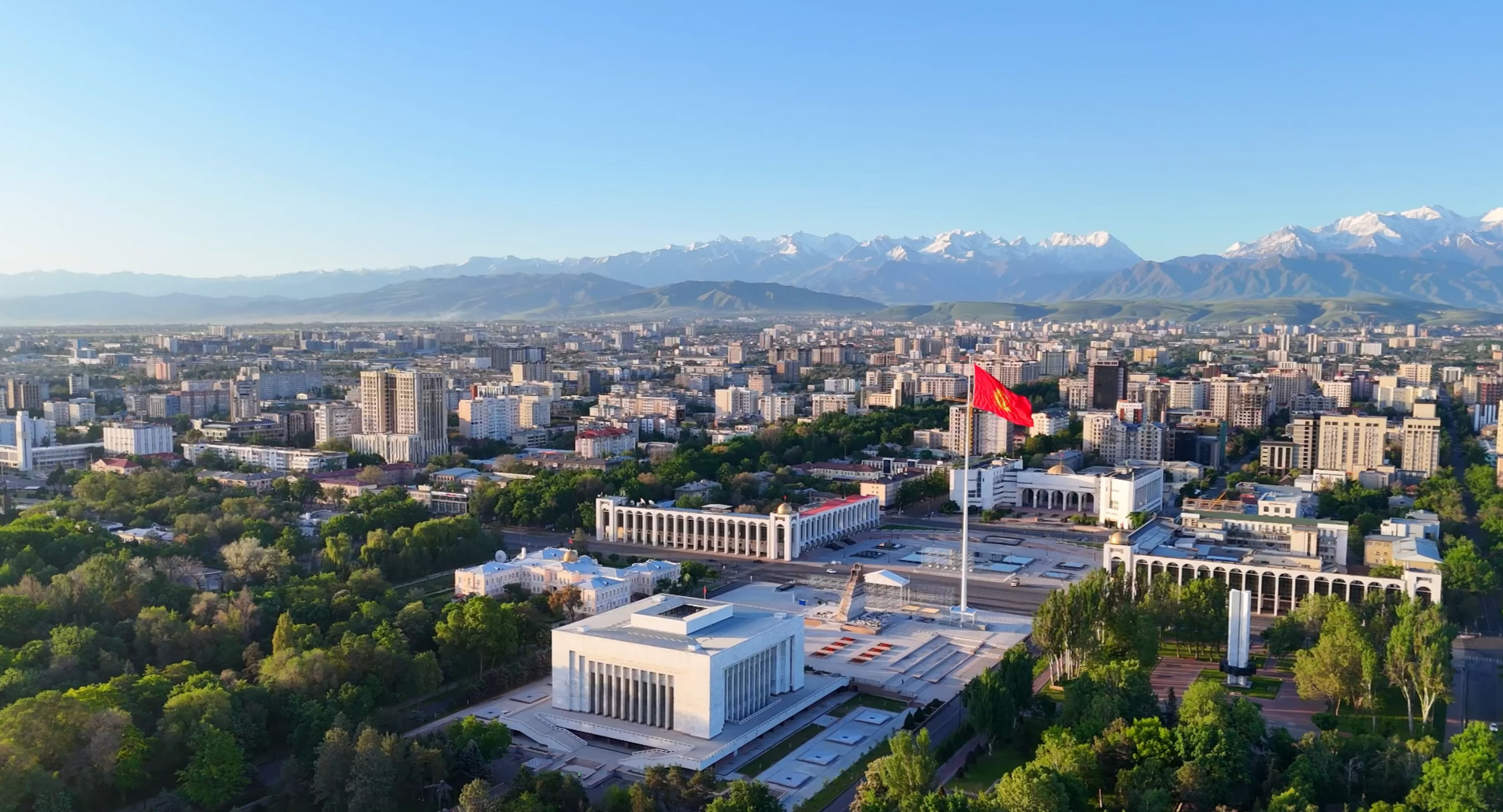
A typical walking route may include:
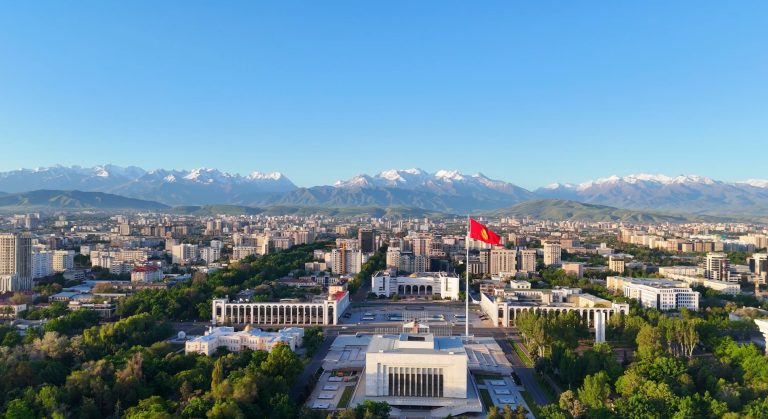
- Ala-Too Square and the national flag;
- the State History Museum and surrounding government buildings;
- the Manas statue and Philharmonic area;
- Panfilov Park and the Lenin statue;
- Oak Park and its open-air sculptures;
- the Opera and Ballet Theatre;
- Soviet mosaics, hidden courtyards and street art;
- Victory Square on longer eastbound routes;
- the Central Mosque on selected longer tours.
Not every tour includes all these stops. A 2.5-hour walk usually focuses on the central core. A longer route may continue east to Victory Square and the mosque, or end west of the center near the Manas statue. Osh Bazaar is better treated as a separate extension or visited with transport.
A longer walking-focused alternative that keeps the emphasis on Soviet-era architecture, monuments and central Bishkek rather than adding a car and distant stops.
What a Guide Adds
The buildings and monuments do not explain themselves. A guide can connect the Soviet city plan with the 1991 independence period, the 2005 and 2010 political changes, current Kyrgyz identity and the everyday use of public space.
The most useful guided details are often not the biggest landmarks:
- why Lenin’s statue was moved but not removed;
- how Ala-Too Square changed after independence;
- what local mosaics and memorials were designed to communicate;
- how people use inner courtyards behind formal street facades;
- where the practical center of Bishkek differs from its ceremonial center.
You are not paying someone simply to show you where Ala-Too Square is. The value of a good Bishkek tour is the explanation of Soviet planning, post-independence changes, mosaics, monuments and residential courtyards that have little or no visitor information on site.
A focused 3–4 hour city tour for travelers who want the historical layer explained properly, with Soviet architecture, statues, public art and the stories behind Bishkek’s urban landscape.
How Bishkek Is Built: Grid, Parks and Soviet Planning
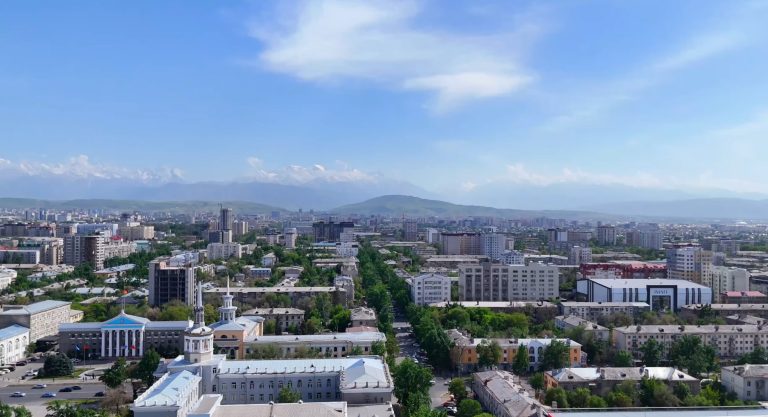
Bishkek uses a clear grid of long streets and large blocks. The center is flat, tree-lined and easy to navigate, but distances often look shorter on a map than they feel on foot. The city was planned around broad avenues, public buildings, parks and open squares rather than a tightly packed historic center.
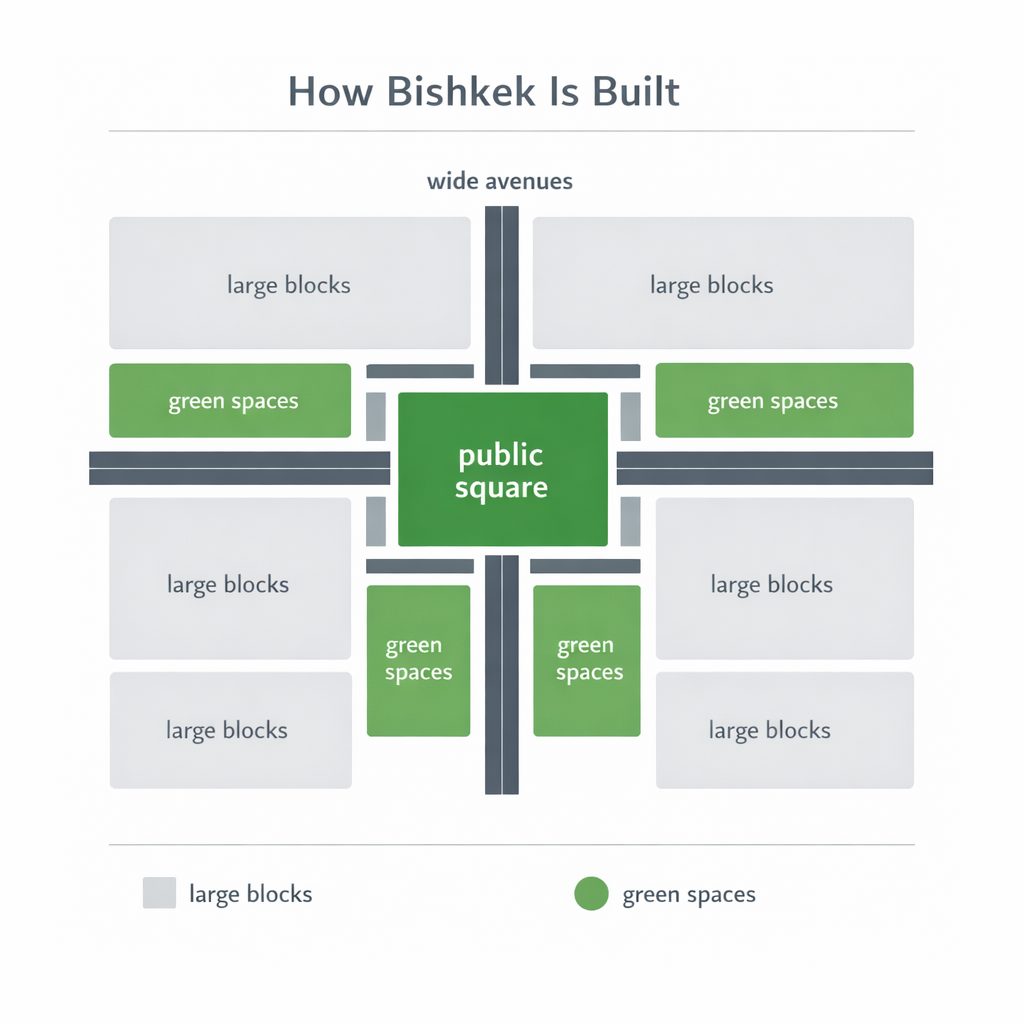
- Large and fairly consistent city blocks
- Long east–west and north–south streets
- Government and cultural buildings set back from the road
- Parks integrated into the central street grid
- Irrigation channels and mature trees providing shade
This layout is why Bishkek becomes more interesting after you have walked for an hour. A single building may seem plain, but the relationship between buildings, squares, parks and avenues reveals the logic of the city.
Is Bishkek Walkable?
Central Bishkek is highly walkable. The terrain is flat and the grid makes orientation easy. The main limitations are large blocks, summer heat, uneven pavements in some places and wide roads that take time to cross.
| Factor | What to expect |
|---|---|
| Typical walking distance | About 3–6 km depending on route |
| Terrain | Flat, with no meaningful elevation |
| Typical duration | 2.5–4 hours for a central guided walk |
| Shade | Good on many boulevards and in parks, limited on open squares |
| Best starting point | Ala-Too Square or another central meeting point |
If you have just arrived at Manas International Airport, allow time to reach your accommodation and recover before starting a long walk. The Bishkek airport-to-city guide explains the current transport options.
Main Bishkek Walking Route for First-Time Visitors
The most coherent fully walkable route stays in the central and eastern core. It avoids pretending that Osh Bazaar is a natural final stop on the same short line.
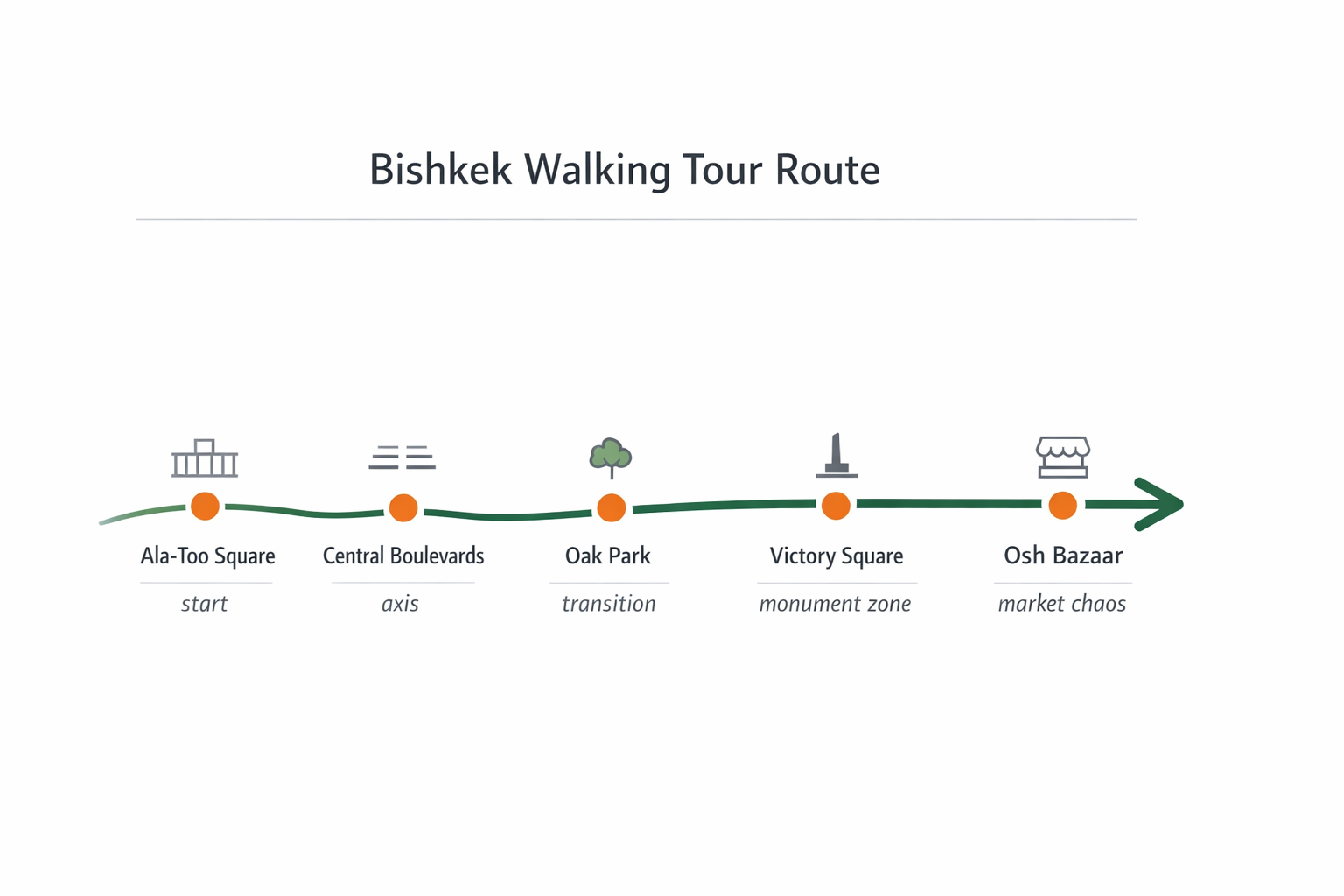
Balanced 3-Hour Central Route
- Ala-Too Square: start with the ceremonial center, national flag and main government axis.
- State History Museum area: understand how the central square changed across Soviet and independent periods.
- Erkindik Boulevard: walk through one of the city’s most pleasant tree-lined pedestrian corridors.
- Oak Park: see public sculpture, monuments and the quieter cultural side of the center.
- Opera and Ballet Theatre: continue through the cultural district.
- Victory Square: finish at the city’s major Second World War memorial.
This route is direct, mostly shaded and suitable for a first morning in Bishkek. It does not include everything, but it makes geographical sense and gives a clear introduction.
West-Center Alternative
A second coherent route focuses on the west and central landmarks:
- Manas statue and Philharmonic Hall;
- Chuy Avenue;
- Panfilov Park;
- Lenin statue;
- Ala-Too Square;
- Erkindik Boulevard and Oak Park.
This route works well if your accommodation is west of Ala-Too Square or if you are interested in political monuments and the Soviet center.
Where Osh Bazaar Fits
Osh Bazaar is west of the main sightseeing core. Walking there from Ala-Too Square is possible, but it adds substantial distance and reduces time inside the market. For most visitors, a short taxi ride or a city tour with transport is more efficient.
If food and market life are the main interests, choose a dedicated Bishkek food tour instead of adding a rushed bazaar stop to an architecture-focused walk.
Walking Tour or City Tour With Transport?
| Option | Advantages | Limitations |
|---|---|---|
| Walking tour | Better detail, stronger sense of the city grid, no time lost in traffic | Covers a smaller area and may exclude Osh Bazaar |
| Private city tour with car | Hotel pickup, wider coverage, easier for families and hot weather | Less continuous walking and usually more expensive |
| City and bazaar tour | Combines monuments, market life and sometimes tastings | Can feel rushed if too many stops are included |
| Self-guided walk | Free, flexible and easy to repeat at your own pace | Less historical context and easier to miss mosaics or courtyards |
Choose a walking tour if architecture and history matter most. Choose transport if you want Osh Bazaar, the Central Mosque and both sides of the center in one half-day. A car also makes sense in July heat, winter cold or when traveling with children.
A strong private half-day option with hotel pickup and vehicle transfers, useful when wider coverage matters more than experiencing the entire center continuously on foot.
Bishkek City Tour Prices
City-tour pricing in Bishkek varies widely because some walks are tip-based, some are shared tours sold per person, and others are private experiences with transport.
| Tour type | Useful planning range | Check before booking |
|---|---|---|
| Tip-based or budget walking tour | Flexible tip or listings from about $25 | Group size, language and actual duration |
| Small-group guided walk | About $25–50 per person | Whether hidden courtyards, mosaics and the mosque are included |
| Private city or city-and-bazaar tour | Often $50–90+ per person | Pickup, car, food tastings and market time |
| Full-day city and Ala-Archa combination | About $50–175+ depending on group size | Park entry, lunch, hiking time and city-tour depth |
Do not judge only by the lowest displayed price. Check whether the rate assumes several people, whether it includes a private vehicle, and whether the city portion is a real guided tour or only a few short photo stops. For wider budgeting, use the Kyrgyzstan travel costs guide.
Bishkek and Ala-Archa in One Day
A combined city and Ala-Archa tour is often the best choice for travelers with one full day in Bishkek. The mountain park is close enough to combine with the capital, and the contrast is more convincing than spending eight hours only on urban sightseeing.
Most combinations take around 7–9 hours and include:
- hotel pickup;
- a drive to Ala-Archa National Park;
- an easy walk or short hike;
- lunch or a food stop;
- Ala-Too Square and several central Bishkek landmarks;
- sometimes Osh Bazaar or the Central Mosque.
The limitation is depth. A tour combining mountains, lunch, the market and the city cannot spend several hours explaining Bishkek’s architecture. Choose it for variety, not for the most detailed city history.
Other options outside the capital are compared in the guide to the best day trips from Bishkek. For history and canyon scenery, the Burana Tower and Konorchek Canyons route is another strong full-day alternative.
The strongest one-day combination: private transport, Ala-Archa, lunch, Osh Bazaar and the main Bishkek landmarks. Choose it for variety rather than the deepest city-history experience.
What Bishkek Feels Like on Foot
Bishkek does not present a single compact historic center. Its character appears through transitions: formal public squares, long green boulevards, cultural buildings, residential courtyards and busy commercial areas.
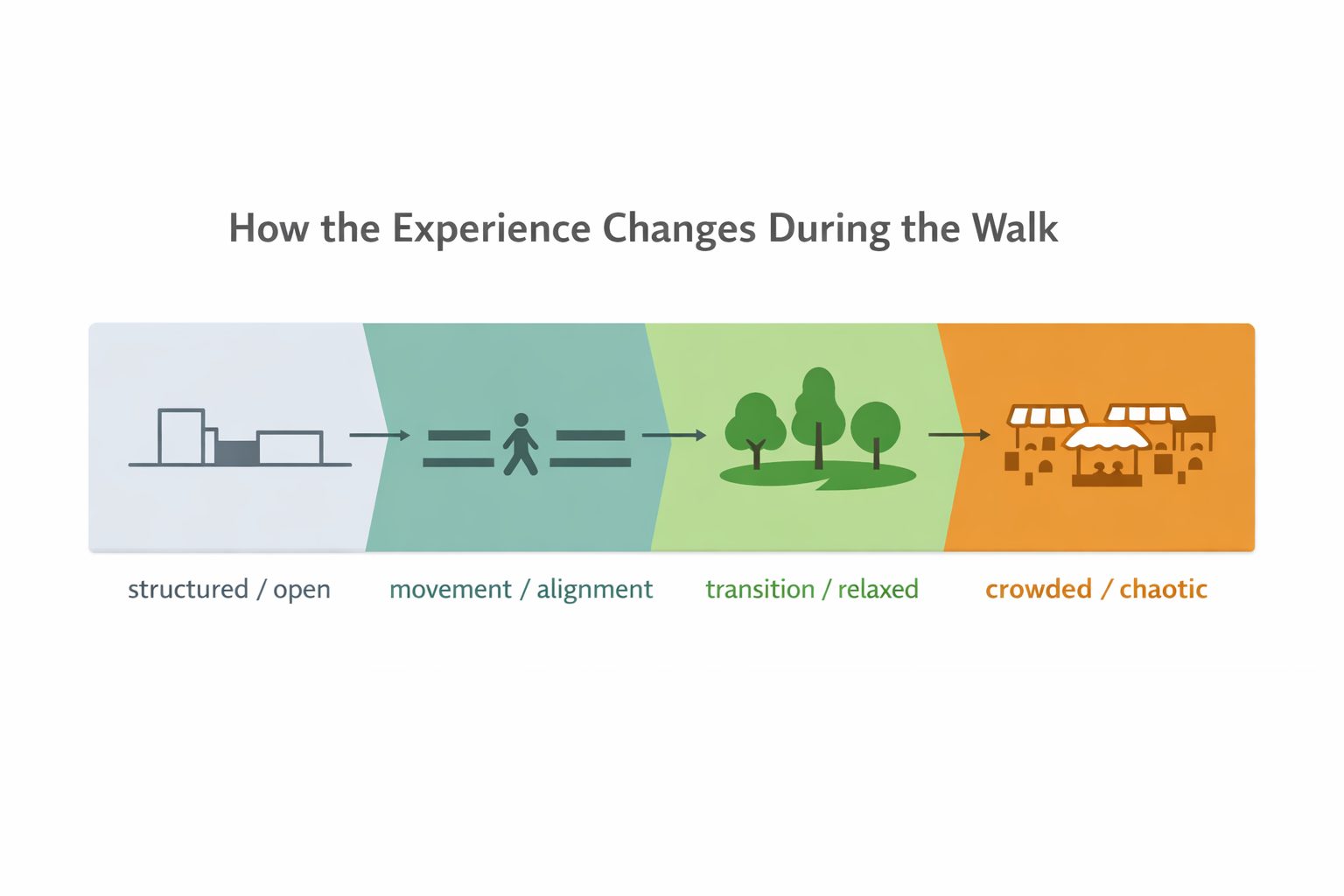
The contrast between the center and Osh Bazaar is useful, but it should not be forced into every itinerary. The central walk explains how Bishkek was planned. The bazaar explains how one of its busiest commercial systems works. Both are worthwhile, and each benefits from enough time.
Soviet Architecture and Monuments
Bishkek’s Soviet layer is more about scale and relationships than ornate facades. Public buildings line up across broad streets, monuments anchor parks, and open space is part of the architecture.
- Ala-Too Square as the ceremonial center;
- the State History Museum and government axis;
- the Lenin statue and changing political symbolism;
- Victory Square and Second World War memory;
- the Opera and Ballet Theatre district;
- mosaics and decorative panels on less famous buildings.
A niche three-hour alternative that turns the Soviet layer into the main experience, using a classic Zhiguli rather than treating the city's monuments as brief stops on a general tour.
Courtyards and Everyday Bishkek
Some of the most useful stops sit behind the main facades. Residential courtyards, irrigation channels, small shops and shaded paths show how the formal Soviet grid is adapted to everyday life. These places are easy to pass without a guide because they do not look like named attractions.
Osh Bazaar as Part of a City Tour
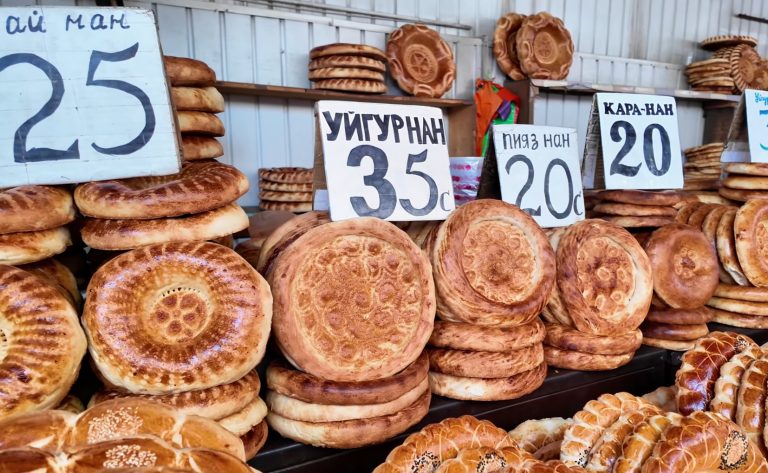
Osh Bazaar is one of Bishkek’s busiest markets and a strong addition when you want local food, shopping and everyday city life rather than only monuments. Allow at least one hour inside; a quick 15-minute pass adds little.
A bazaar visit works best when the tour includes:
- clear transport between the center and the market;
- enough time to see bread, dried fruit, spices and produce sections;
- guidance on prices, bargaining and suitable souvenirs;
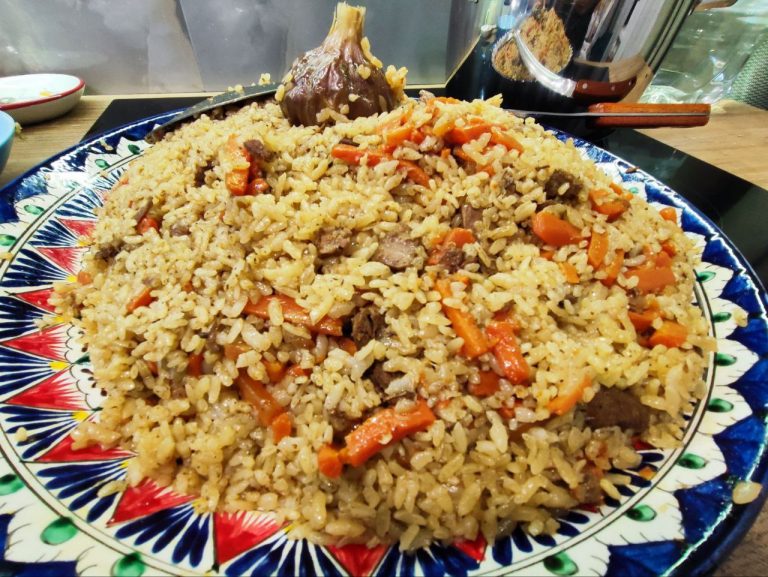
- optional tastings rather than a vague promise of “local flavours.”
A useful middle ground between a pure walking tour and a food tour: city sightseeing plus dedicated time at Osh Bazaar, with transport helping cover the wider route.
The market is crowded, and visitors should keep phones, wallets and bags secure. Do not carry all your cash in one easy-access pocket.
More interested in tastings than architecture? Compare the dedicated Bishkek food tour options, which allow more time for Osh Bazaar and local dishes.
Choose this instead of a standard city tour when food is the priority. It gives several hours to Kyrgyz flavors and local context rather than squeezing tastings into a landmark-heavy itinerary.
Best Time for a Bishkek Walking Tour
Spring and autumn are the most comfortable seasons for long walks. Summer is manageable because many streets are shaded, but open squares can be hot around midday. Winter routes still operate, though shorter daylight and cold weather make a private vehicle more attractive.
| Time | What it is like |
|---|---|
| 08:30–11:30 | Cooler, quieter and usually the best summer option |
| Late morning to early afternoon | Good in spring or autumn; exposed squares are hotter in summer |
| 15:00–18:00 | Better light and cooler temperatures, but some indoor stops may close earlier |
| Evening | Good for a casual self-guided center walk, less suitable for a full historical route |
Can You Do a Self-Guided Bishkek Walking Tour?
Yes. Ala-Too Square, Erkindik Boulevard, Oak Park, Panfilov Park and Victory Square are easy to locate. A self-guided walk is a good option if your budget is limited or you prefer stopping at cafés and parks without a schedule.
Self-Guided Works Well If
- You mainly want the central landmarks.
- You are comfortable using an offline map.
- You prefer a flexible pace.
- You are less interested in detailed political history.
A Guide Is Better If
- You want Soviet and post-independence context.
- You want hidden mosaics, courtyards and street art.
- You want to ask practical questions about the rest of your trip.
- You plan to visit Osh Bazaar and want local guidance.
Safety and Practical Tips
- Wear comfortable shoes; pavements are uneven in places.
- Carry water, especially from June to August.
- Use sun protection on open squares.
- Keep valuables secure at Osh Bazaar and on crowded public transport.
- Avoid demonstrations and large political gatherings.
- Use an app-based or pre-arranged taxi for long trips after dark.
- Ask whether museum entries, transport and food tastings are included.
- Confirm the meeting point carefully; Ala-Too Square is large.
- Check how much walking is involved if traveling with limited mobility.
Common Booking Mistakes
- Assuming every city tour is fully walkable. Routes including Osh Bazaar and the Central Mosque often use transport.
- Choosing by price alone. A cheaper tour may be tip-based or exclude pickup, museums and tastings.
- Expecting a historic old town. Bishkek’s value is its Soviet plan, monuments, parks and modern context.
- Booking too much for one day. Ala-Archa, a detailed city tour and a long bazaar visit can become rushed.
- Not checking the language. A strong historical tour depends heavily on clear explanation.
- Treating Osh Bazaar as a five-minute photo stop. Allow enough time or skip it for another day.
FAQ: Bishkek City and Walking Tours
How long does a Bishkek walking tour take?
Most central walking tours last about 2.5–4 hours and cover roughly 3–6 km. Longer city tours may use a car to include Osh Bazaar, Victory Square, the Central Mosque or hotel pickup.
How much does a Bishkek city tour cost?
Budget and small-group walking tours can start around $25 per person. Private city and bazaar tours commonly start around $50–60 and rise with transport, group size, food and extra stops. Full-day Bishkek and Ala-Archa tours vary much more.
Is Bishkek safe to walk around?
Central Bishkek is generally suitable for daytime walking. Keep valuables secure in crowded places, especially Osh Bazaar and public transport, avoid demonstrations, and use a reputable taxi rather than walking long distances late at night.
Do you need a guide in Bishkek?
You do not need a guide to find the central squares and parks. A guide is useful for Soviet history, political monuments, mosaics, courtyards and understanding how the city changed after independence.
Can a Bishkek walking tour include Osh Bazaar?
Yes, but the market is west of the central sightseeing route. A longer tour may walk there, while a city tour with transport is usually more efficient and leaves more time inside the bazaar.
Is Bishkek and Ala-Archa possible in one day?
Yes. Combined tours commonly take 7–9 hours. They are a good option when you have one free day, but the city portion will usually be less detailed than a dedicated walking tour.
What is the best Bishkek tour for a first visit?
A 2.5–4 hour guided central walking tour is the best general introduction. Choose a private city-and-bazaar tour if market life and food matter more, or combine Bishkek with Ala-Archa if you have only one full day.
Final Thoughts: Which Bishkek Tour Is Best?
For most first-time visitors, the best choice is a central walking tour lasting around three hours. It gives enough time to understand Ala-Too Square, the Soviet grid, parks, monuments and the city’s post-independence identity without turning the day into a long checklist.
Choose a city tour with a vehicle when Osh Bazaar, the Central Mosque and wider coverage matter. Choose Bishkek plus Ala-Archa when your priority is variety and you have only one full day. Bishkek is not difficult to explore independently, but good local context makes its broad avenues and restrained architecture much more meaningful.