Osh Bazaar Bishkek: How It Works and What You Actually Experience
You don’t ease into Osh Bazaar. You step in — and it’s already happening. Noise stacking on noise, movement from every direction, someone brushing your shoulder like you’re part of the system already. No entrance, no soft start. Just — inside.
If Bishkek felt wide, breathable… this flips it. Everything compresses. Paths tighten, colors hit harder, voices overlap in a way that shouldn’t work but somehow does. It’s not chaos in the random sense. It’s organized pressure. You just don’t speak the language of it yet.
Give it a minute. Or don’t. Trying to “figure it out” too fast — that’s where people trip. It’s not a map problem. It’s a rhythm problem.
Understanding Osh Bazaar
Why Osh Bazaar Feels Overwhelming at First
It’s not just crowds. It’s compression. Everything happening at once, stacked tight.
City center — space behaves. Here, space gets bent. Every meter is claimed. Corners aren’t empty, they’re occupied. Movement doesn’t follow lines you can see. It flows around you, through you.
- Paths crossing constantly, no clear priority
- Vendors repeating prices, adjusting tone mid-sentence
- People cutting through without hesitation
- Visual overload — spices, fabrics, metal, plastic, all layered
At first you feel like friction. Like you’re slowing things down just by existing there.
Then something loosens. You stop pushing against it. You drift a bit. Match the pace. And weirdly — it starts working. Not in your head, more in your body.
What This Place Actually Is
Calling it a “market” feels off. Too clean a word.
This is infrastructure. Daily life compressed into lanes and corners and improvised setups that somehow feel permanent.
Nobody’s browsing. People come in, buy, negotiate, leave. Quick hands, quick decisions. No one’s curating anything for you. No soft lighting, no storytelling boards, no “experience design.”
- Food — fresh, dried, bulk, whatever makes sense that day
- Staples — flour, oil, spices, stacked in practical quantities
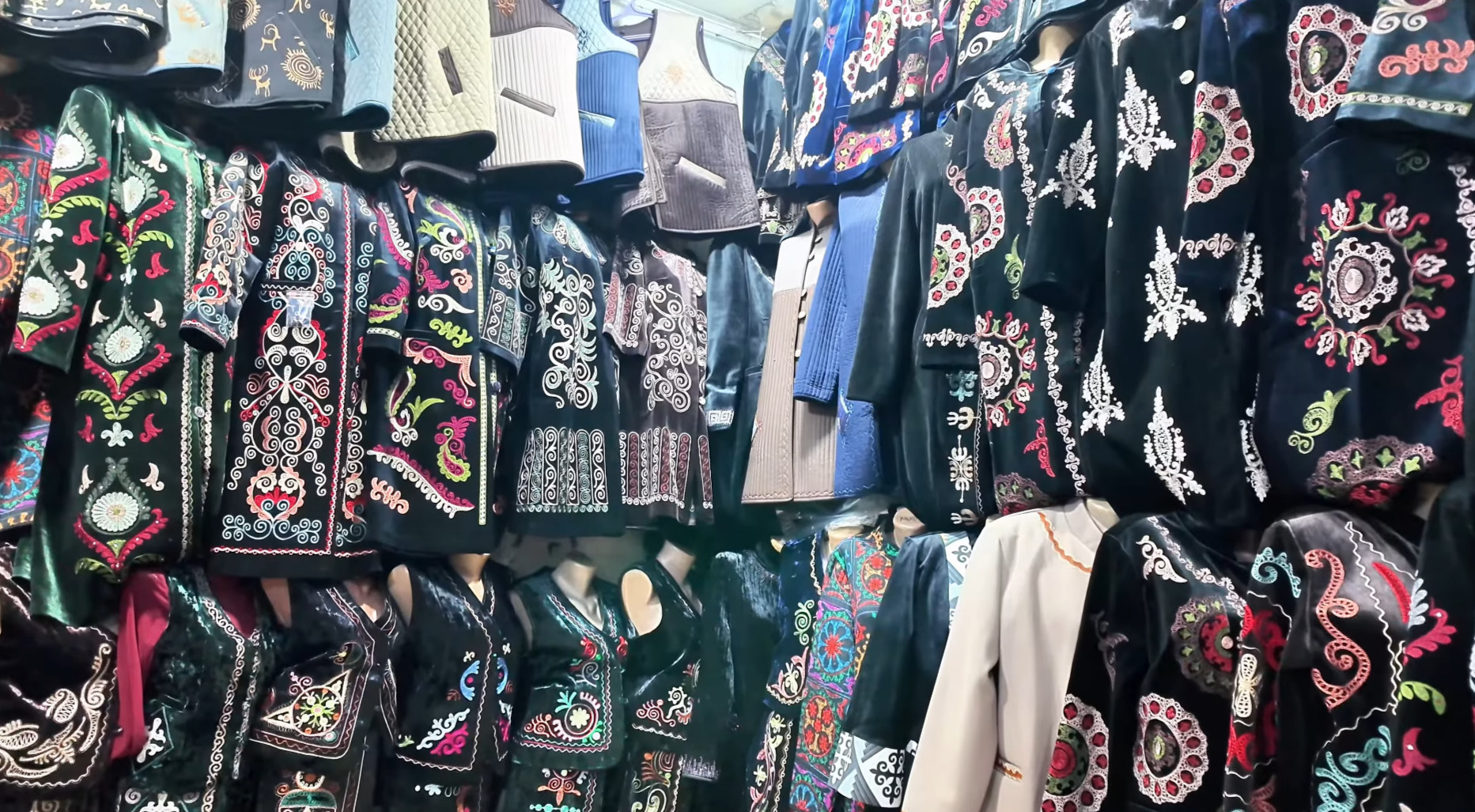
- Clothes and shoes — seasonal, sometimes random, always functional
- Household goods, tools, bits you didn’t know you needed
Tourists pass through. Locals keep it alive. That balance isn’t equal, and you feel it.
Quick Facts About Osh Bazaar
| Fact | Details |
|---|---|
| Founded | 1983 |
| Location | West of central Bishkek |
| Type | Large working market and trade complex |
| Market structure | Includes multiple trading sections and surrounding market units |
| Best time to visit | Morning |
| Typical visit length | 1–2 hours |
| Weekly schedule note | Monday is commonly used as a sanitary day on city markets including Osh Bazaar |
Osh Bazaar in Bishkek was established in 1983 and grew as part of the late Soviet expansion of large urban bazaars in Central Asia.
Publicly available official sources confirm that the market operates as a large trade complex with hundreds of trading places, but reliable open figures for the current total area and overall trade turnover are not clearly published.
First Impressions vs Reality
First impression — messy, loud, borderline stressful.
Reality — tight system, fast turnover, efficient in a way that doesn’t explain itself.
There’s structure here. You just don’t see it right away. Vendors cluster by what they sell, regulars move like they’ve memorized invisible routes, flows form and dissolve depending on time of day… or mood, honestly.
Ten minutes won’t show you anything. An hour — maybe fragments.
Walk slower. Stop trying to optimize your path. Let yourself get slightly lost — not dramatic lost, just enough to stop controlling it. That’s when patterns start leaking through.
A Short Note on History (Without Getting Stuck There)
The current Osh Bazaar grew during the Soviet period, but the logic behind it goes back way further — trade routes, exchange habits, moving goods through Central Asia long before modern logistics showed up.
It’s not preserved. No one froze it in time for display.
It evolved. Kept adapting. That’s why it feels… alive. Not polished, not staged.
Things shift constantly — layout tweaks, price swings, new goods, old goods disappearing — but the core stays the same: a place where the city feeds itself, literally and structurally.
The Moment It Clicks
There’s a moment — not dramatic, easy to miss — where you stop feeling like an observer trying to decode everything.
You’re walking. Maybe holding something small you bought without overthinking it. Bread, nuts, something simple. And the noise stops feeling aggressive.
It just becomes background.
You’re not analyzing anymore.
You’re just moving with it.
How Osh Bazaar Works
How Osh Bazaar Is Actually Organized
At first, it just hits you as noise. Rows of stalls, people cutting across each other, voices bouncing around, no obvious pattern. You stand there thinking — ok… where do I even start.
Give it a few minutes. Don’t force it. Walk a bit, stop, drift again. Slowly the repetition starts showing up. Not labeled, not explained, just… there if you pay attention.
- One stretch completely taken over by bread
- Another packed with spices and dried goods
- Meat vendors grouped together in tight rows
- Clothing and household stuff pushed outward
You don’t “navigate” into these sections. You sort of fall into them without realizing.
The Layout: Not a Map, but a System
Trying to understand Osh Bazaar like a neat map — doesn’t work. It’s not built that way. There’s no clean grid you can memorize.
The structure is functional. Vendors selling the same thing cluster together because it makes sense for business. That’s it. No design logic beyond that, or maybe there is, but it’s invisible unless you’ve been here forever.
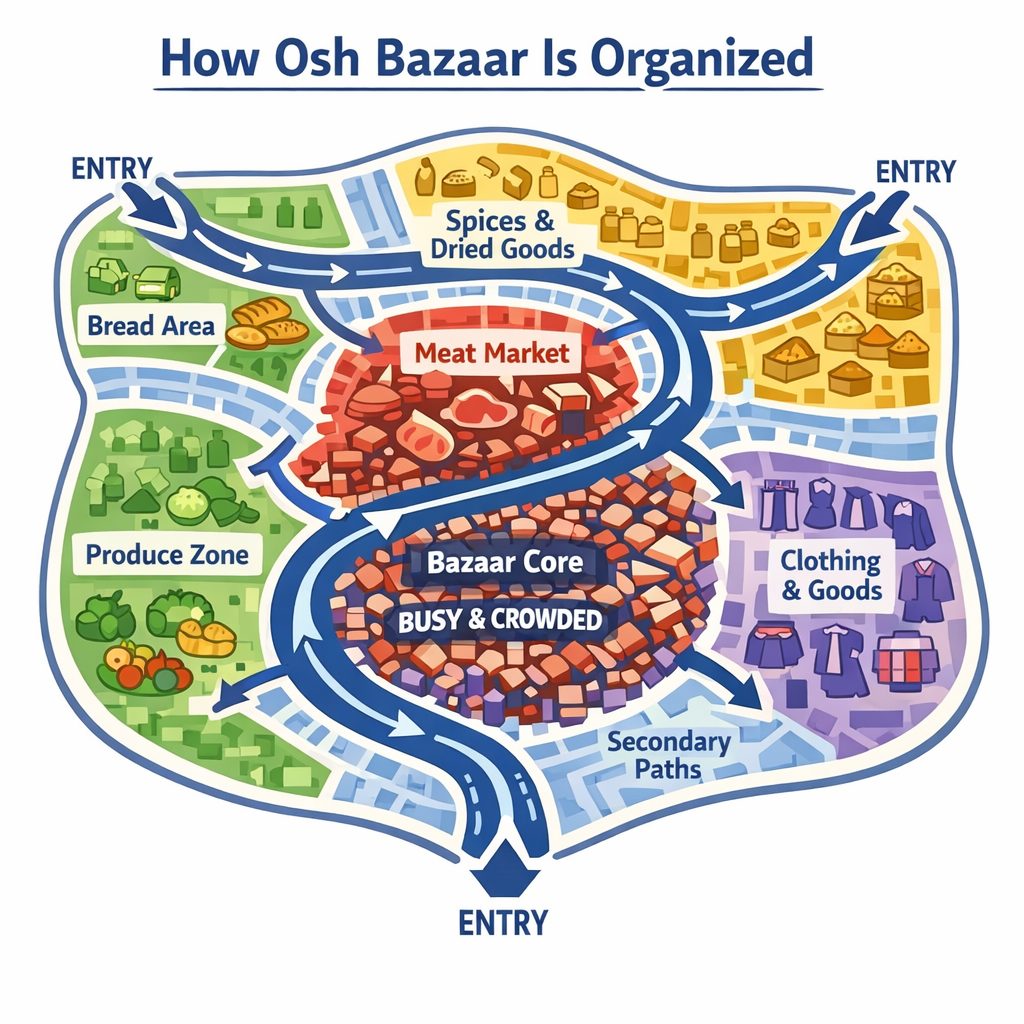
- Food areas closer to main movement paths
- Bulk goods deeper inside
- Clothing zones sitting more on the edges
- Temporary stalls filling every possible gap
And the thing is — it shifts. Not dramatically, but enough that yesterday’s path won’t feel identical today.
If you’re trying to retrace your exact steps, you’ll get frustrated fast. Moving forward is easier than going back.
How People Move Inside the Bazaar
It looks chaotic, yeah. But it’s not random.
People don’t walk in straight lines. They cut sideways, pause mid-step, change direction without warning, talk, negotiate, move again. It’s constant micro-adjustment.
- Side-to-side movement between stalls
- Short stops, never really standing still
- No fixed lanes — space just adapts
- Vendors spilling slightly into walking areas
First reaction is confusion. Then something clicks — everyone else is synced. You’re the one lagging behind.
Once you match the rhythm, even a little, it stops feeling stressful.
Main Sections You’ll Notice
Before getting into the sections in more detail, it helps to understand what stands out most on a first visit.
- Large stacks of fresh flatbread
- Dense spice and dried fruit stalls
- Rows of produce and everyday groceries
- Meat counters and practical food sections
- Outer areas with clothing and household goods
Bread Rows
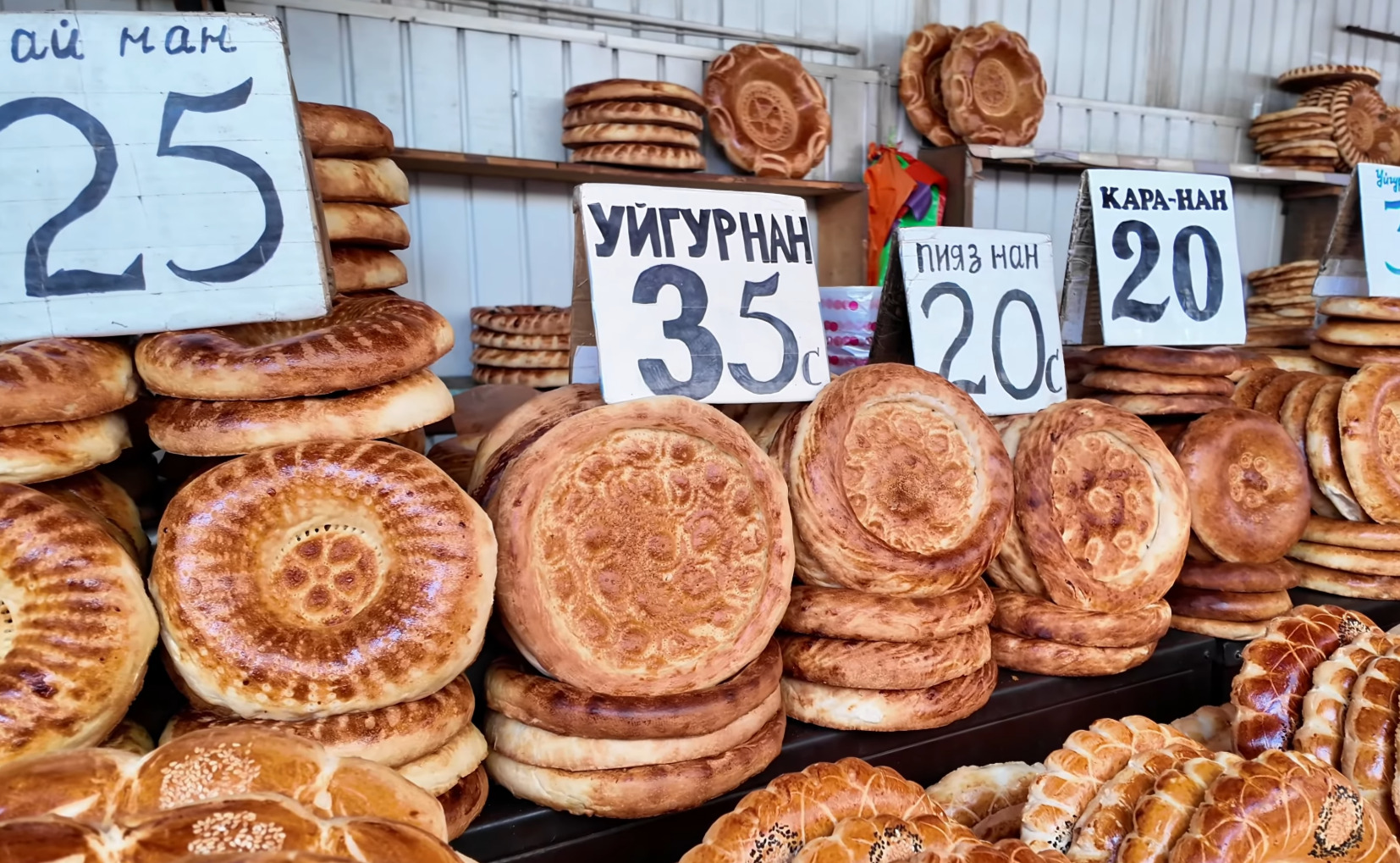
This one is hard to miss. Stacks of flatbread, warm sometimes, arranged in repeating circles and piles. It’s almost hypnotic if you stand there long enough.
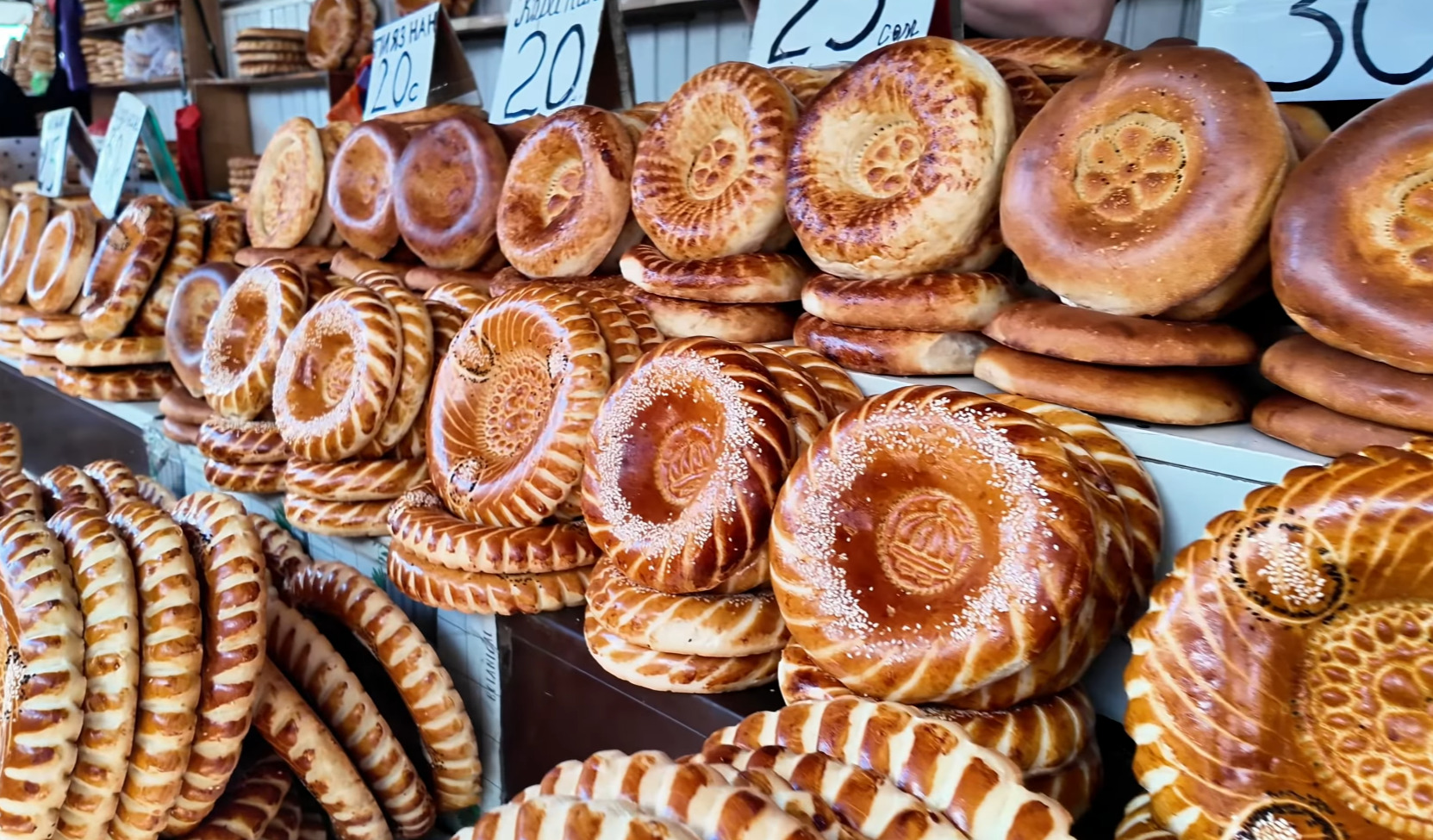
Simple setup, but it shows how fast things move here. Nothing sits for long.
Spices and Dried Goods
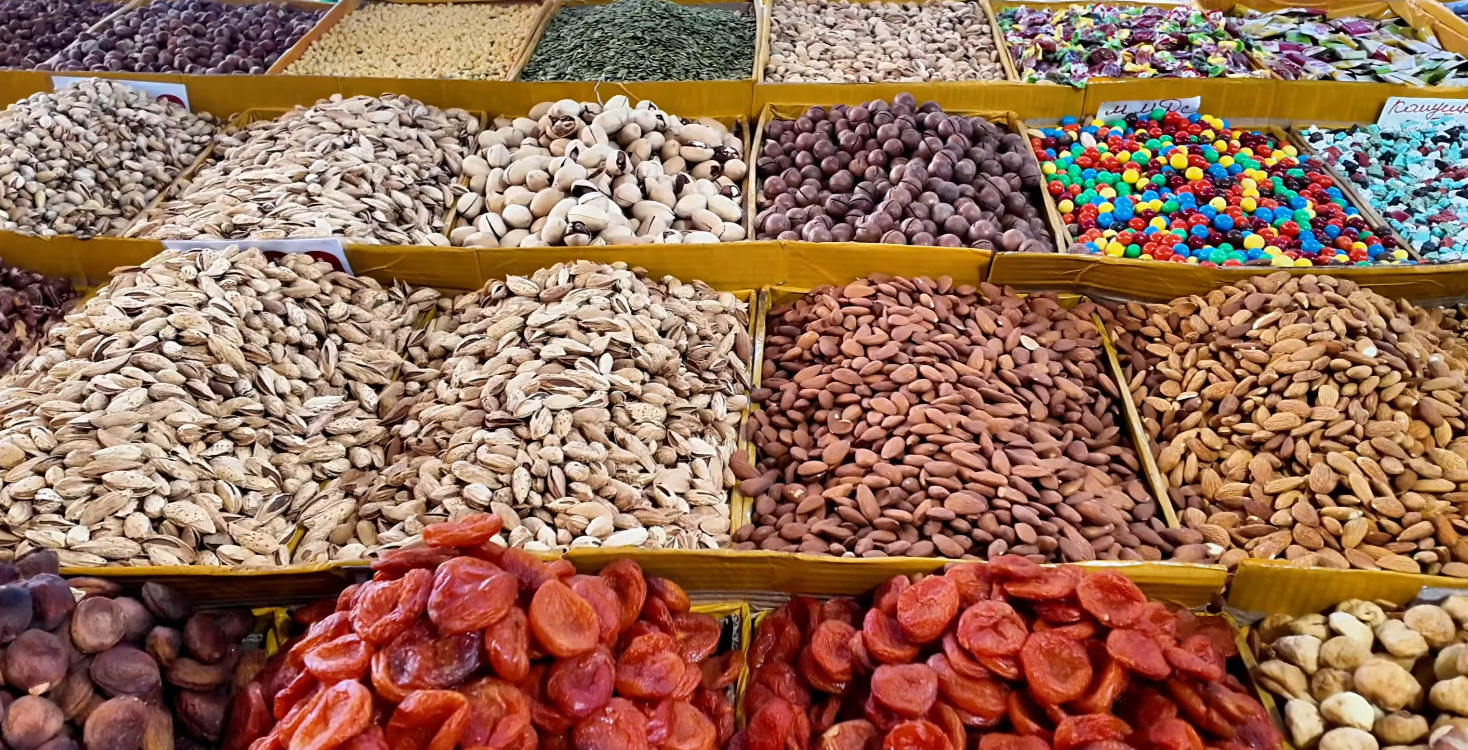
You’ll smell it before you see it — sharp, sweet, heavy air. Spices, dried fruits, nuts… layered smells that stick to you a bit.
Visually dense too. Everything stacked, overflowing, colors everywhere. Feels tighter, more compressed.
Meat and Fresh Produce
Different energy. Raw, louder, less filtered. Not everyone lingers here, and honestly… I get why. But it’s part of the system, no way around it.
Feels closer to the source of things, less polished.
Clothing and Household Goods
Further out, usually. Slightly wider paths, less pressure, though still busy enough.
This is where the bazaar starts blending into something broader — less about food, more about everyday life.
Why It Feels Chaotic (But Isn’t)
From the outside, yeah, it looks messy. No order, no logic. Just noise.
But it’s not disorder — it’s density. Everything is in use. Every bit of space has a purpose, even if you can’t see it right away.
- High concentration of activity packed into a tight area
- Multiple interactions happening at the same time
- No clean separation between selling and movement
It’s not designed for clarity. It’s designed to function under pressure.
And it works. You just need a minute to catch up to it.
Getting Oriented (Without Overthinking It)
You don’t need a map here. Honestly, a map would probably make it worse.
The more you try to control your route, the more disoriented you feel. It’s weird like that.
Better approach:
- Pick a direction and just follow it
- Notice when sections start repeating
- Use wider paths as loose reference points
- Accept that you’ll loop back without realizing it
Orientation here isn’t about precision.
It’s about being fine with a bit of uncertainty and still moving anyway.
How Long to Spend Inside
There’s no fixed time. Some people pass through in twenty minutes and that’s enough for them. Others stay… longer than they planned.
- Quick pass: 20–30 minutes
- Exploring: 1–2 hours
- Going deeper: longer, with pauses
Depends how you engage with it.
Walk straight through and it blurs together. Stop, look around, interact a bit — even briefly — and everything slows down. The place changes.
Food at Osh Bazaar: What It Actually Feels Like
Food at Osh Bazaar isn’t presented to you. There’s no menu, no sequence, no polite “start here.” It just… exists. Everywhere. Hanging, stacked, piled up like it doesn’t care if you’re ready or not.
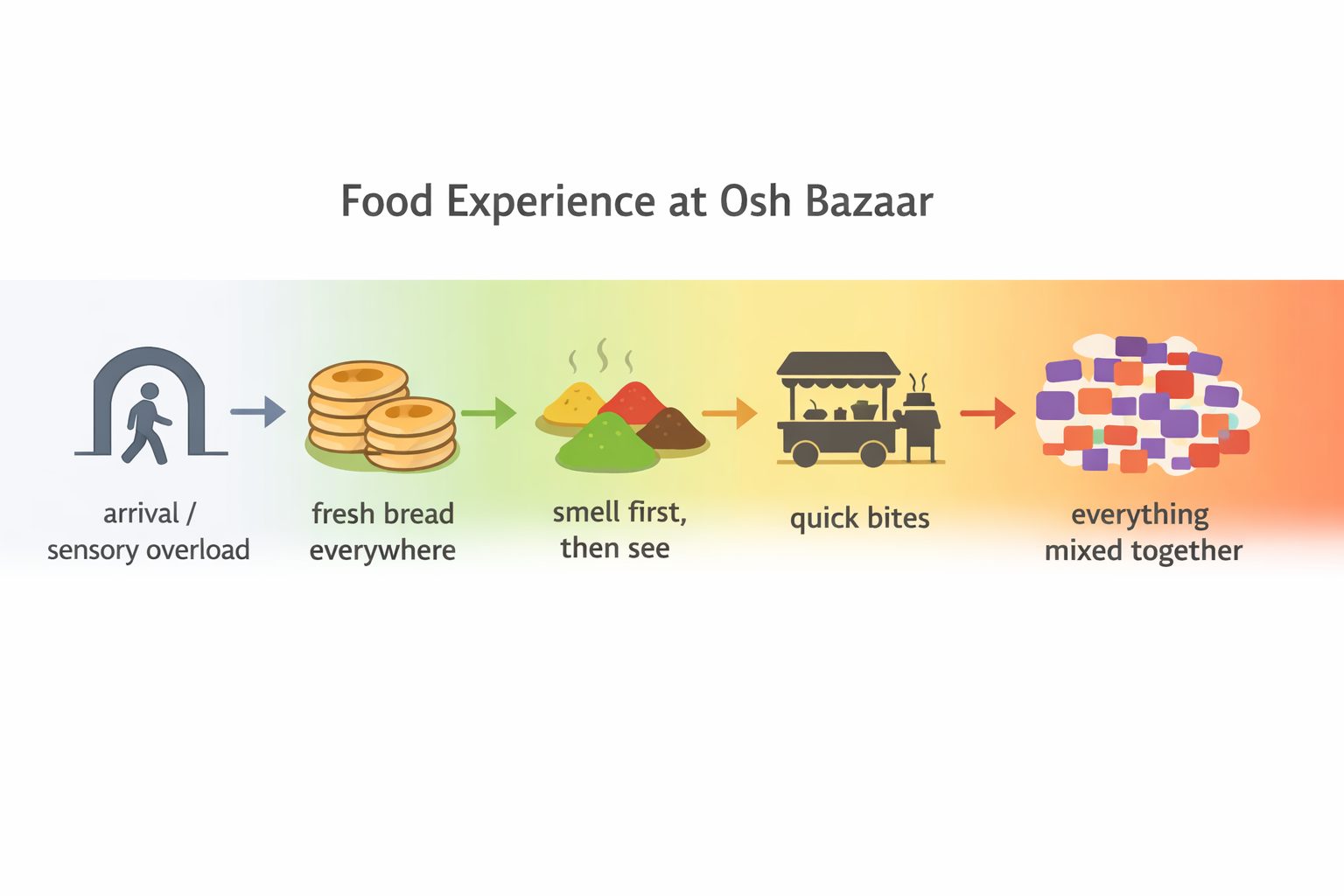
You don’t sit down and order. You drift. Something catches your eye, you slow down, maybe try it, maybe not, then you keep moving.
It’s less about eating… more about running into food mid-motion.
What Hits You First
Before you taste anything, you start noticing patterns. Repetition. Density. Color doing its own thing.
- Stacks of round flatbread, layered like rough tiles
- Rows of dried fruits — orange, brown, deep red, almost black
- Spices poured into mounds instead of containers
- Produce packed so tight it looks like it might spill over
It doesn’t feel arranged. It feels excessive. In a good way.
Bread Culture (You Won’t Avoid It)
Bread is everywhere. Not decorative, not staged — just constant, practical, alive.
You’ll see it stacked high, carried in bundles, handed off quickly. Nobody stands there admiring it. They grab, pay, move.
- Fresh flatbread baked daily
- Thin crust, slight crunch, soft inside
- Still warm sometimes… which kind of throws you off if you’re not expecting it
If you try one thing, it’s this. Not because it’s rare. Because it’s unavoidable.
Don’t overthink it. Buy the bread. Break it as you walk. No ceremony. That’s pretty much the whole point.
Spices and Dried Goods
This part shifts the atmosphere. You don’t even need to see it — the smell gets there first.
Spices aren’t sealed or labeled neatly. They sit out in the open, piled high like texture matters more than packaging.
- Dried fruits stacked in bulk
- Nuts sold loose, by weight
- Spices exposed, not protected
It’s intense, but not loud. More like… dense air. You feel it before you process it.
Street Food and Quick Stops
There’s no clean “food area.” No central zone where everything happens.
Food just appears. Scattered. In between things.
- Hot snacks made right there
- Tea poured in small stalls or half-hidden cafés
- Simple dishes eaten fast, often standing
You don’t sit for a meal. You interrupt your walk, eat, then disappear back into the flow.
How Food Actually Fits In
Food isn’t separate from the bazaar. It’s part of the same mechanism.
People aren’t here for a “food experience.” They’re buying things. Eating just… happens along the way.
- Short pauses instead of proper meals
- Eating while standing, sometimes mid-step
- No order, no sequence — just reactions
That’s why it feels real. Nobody’s performing anything.
What to Try (If You Really Need a Starting Point)
You don’t need a checklist. Honestly, lists kind of kill the vibe here. But still—
- Fresh bread — easiest entry, no thinking required
- Dried fruits — simple, portable, hard to mess up
- Tea — quick reset, everywhere
Keep it basic. The point isn’t to find the “best” thing. It’s to interact with whatever crosses your path.
What People Commonly Buy at Osh Bazaar
- Fresh flatbread for the same day
- Dried fruits and nuts sold by weight
- Spices in practical household quantities
- Fresh produce and everyday groceries
- Simple household items in outer sections
Eating vs Watching
Some people try everything. Others just walk through, taking it in.
Both make sense.
Even if you barely eat, you still experience the food. It’s in the air, in the movement, in the color shifts as you pass.
And yeah… sometimes that’s enough.
Why This Part Matters
Without food, Osh Bazaar is just motion. Structure. People moving in patterns.
Add food — and it changes. It gets heavier, more grounded, more human.
You’re not just observing how the place works.
You’re inside it. Even if it’s just for a few minutes.
How to Visit Osh Bazaar
Getting to Osh Bazaar sounds simple. It is, technically. The confusing part kicks in a bit later — when you realize there’s no clear way to “enter” it.
It sits west of central Bishkek, where the city starts loosening up a little. Streets get wider, then messier, then suddenly… stalls, noise, movement. You can walk there if you’re already wandering around the city, but honestly most people just grab a taxi and don’t overthink it.
- Taxi: easiest, no friction, you get dropped somewhere near the chaos
- Walking: doable, but yeah… expect 30–50 minutes depending where you start
- Public transport: exists, works, but not obvious if you’re new
Arrival feels almost accidental. No gate, no “welcome” moment. One second it’s a street, next second you’re inside.
Best Time to Visit
Timing changes everything. Not slightly — completely.
- Morning (08:00–11:00): full intensity, fresh produce, actual rhythm of the place
- Midday: still busy, just a bit less sharp
- Late afternoon: things fade, vendors pack up, energy drops
Early is the real version. Later is… softer, quieter, kind of like catching the aftermath of something you just missed.
How Long You Should Spend
There’s no fixed time. Depends how you move, how curious you are, how quickly you get overwhelmed — yeah, that happens too.
- Quick visit: 20–30 minutes (walk through, glance, leave)
- Standard visit: about 1 hour (wander, stop here and there)
- Deeper visit: 1.5–2 hours (eat something, slow down, actually notice details)
If you’re doing a city walk, this place works best at the end. You arrive a bit tired, less structured… fits the mood.
Best Simple Visiting Plan
For most first-time visitors, the easiest approach is to arrive in the morning, walk through the bread and spice sections first, slow down in the food areas, and leave extra time for wandering without a fixed route.
- Start early for the full market rhythm
- Focus on food sections first
- Pause for bread or tea instead of planning a meal
- Use wider paths when you want to reorient yourself
How to Move Without Getting Lost
You will get lost. Not maybe — you will.
And weirdly, that’s fine. The trick isn’t avoiding it, it’s not panicking when it happens.
- Stick to wider paths when you can
- Use sections as anchors — bread, spices, produce
- Don’t try to backtrack perfectly (you won’t)
- Loops happen… you’ll pass the same stall again and think “wait”
Exiting is easier than navigating. Always.
If you feel lost, don’t freeze trying to figure it out. Just pick a direction and keep walking. Eventually you’ll hit a main path or an exit — the place kind of spits you out when it’s done with you.
Safety and Practical Reality
During the day, it’s generally safe. Still — it’s dense, busy, a bit chaotic. Awareness matters more than rules.
- Keep your stuff close in tight areas
- Don’t block narrow paths — people won’t wait
- Look around instead of staring at your phone
It doesn’t feel dangerous. Just intense, like everything is happening at once.
Language and Interaction
Interactions are short. Functional. No small talk unless it just… happens.
- English is limited
- Point, confirm, pay — that’s the flow
- Smile, gesture, move on
You don’t need words to get through it.
Do You Need to Bargain?
Sometimes. Not always. Depends on the stall, the mood, the item — hard to predict.
Prices are often already set, or close enough. Bargaining here isn’t aggressive, more like a small adjustment if it feels natural.
- Minor negotiation is normal
- Pushing too hard feels off
- Quick deals are preferred
If you’re unsure… just keep it simple. Honestly, nobody expects a performance.
Common Mistakes to Avoid
- Trying to see everything in one go
- Planning your exact route (won’t work)
- Treating it like a tourist attraction
- Walking through without stopping at all
The moment you stop trying to control it — it clicks.
Who Osh Bazaar Is For
- People curious about real local life
- Travelers okay with noise, movement, unpredictability
- Anyone who prefers observing over being guided
If you want calm, clean, curated… yeah, this probably isn’t your place.
FAQ: Osh Bazaar Bishkek
Is Osh Bazaar worth visiting?
Yes — especially if you want to understand how Bishkek actually functions beyond the center.
Is Osh Bazaar safe?
Generally yes during the day. Just stay aware in crowded spots.
How do you get to Osh Bazaar?
Taxi is the easiest from central areas. Walking works too, just takes longer.
Can you eat at Osh Bazaar?
Yes, but it’s informal — quick snacks, tea, simple food. Not really a sit-down meal kind of place.
Final Thoughts: Is Osh Bazaar Worth It?
Osh Bazaar doesn’t try to impress you. It doesn’t slow down, doesn’t explain itself, doesn’t care if you understand what’s happening.
It just runs.
If you walk in expecting something polished, it can feel like too much. Noise, movement, no clear structure… a bit overwhelming, yeah.
But if you accept that you’ve stepped into something already in motion — not built for you — it shifts.
You don’t leave with a checklist.
You leave with a feeling. How the city breathes, how it moves, how it ignores you completely while still letting you exist inside it.