Tash Rabat in Kyrgyzstan: Why This Remote Silk Road Site Still Matters
There are places on the Silk Road that feel expected. Most people expect a landmark. What they get is something closer to infrastructure.
Cities, ruins, restored streets — locations that still carry a sense of movement, even now. You arrive, you understand why people passed through, and the story follows naturally from the setting.
Tash Rabat doesn’t work like that.
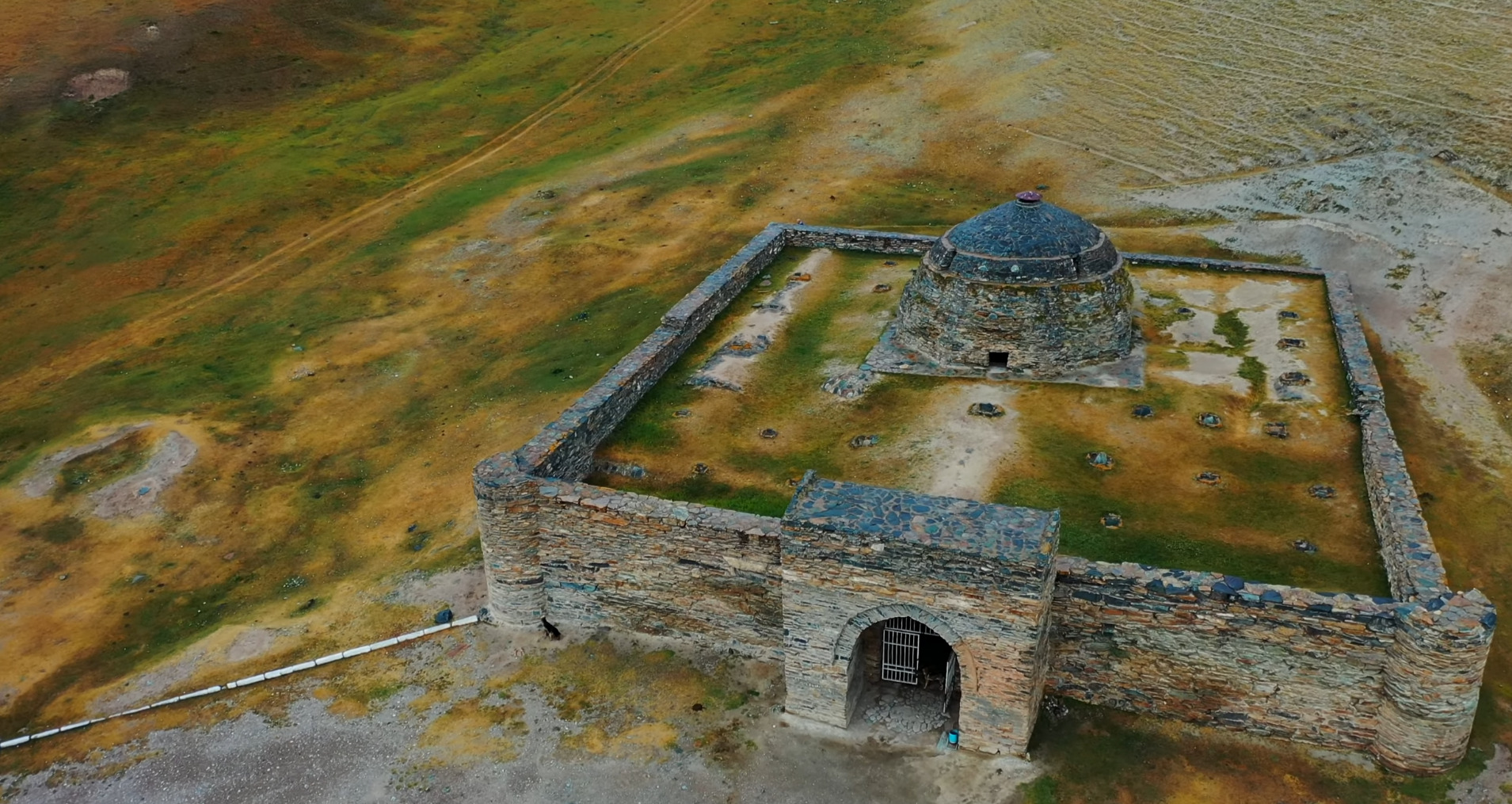
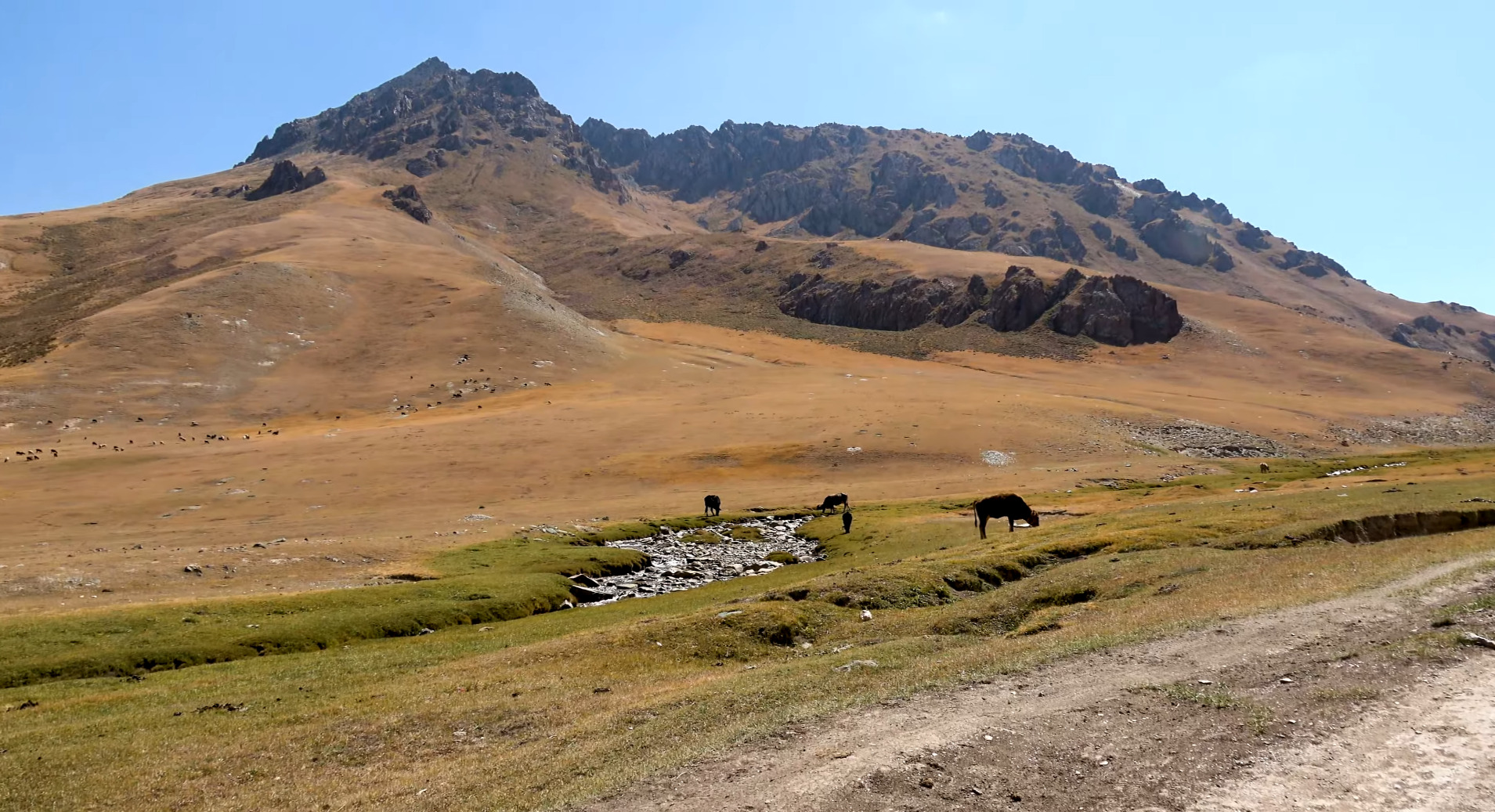
You reach it and the first thing that stands out isn’t the structure itself. It’s the absence around it. No town. No gradual transition from settlement into landscape. Just a wide valley, high enough to feel exposed, and a stone building sitting where you wouldn’t expect anything to be built at all.
For a moment, it feels misplaced.
Too large for such an empty setting. Too solid for a place that looks temporary. Too deliberate for something surrounded by so little else.
That impression doesn’t last.
The longer you stay with it — even just looking at it, before stepping inside — the more the logic starts to shift. The question stops being why it’s here, and becomes what kind of movement would have required something like this to exist.
Because Tash Rabat isn’t an isolated monument. It only looks that way when you remove the routes that once passed through it.
Put those routes back in — traders, animals, long distances between safe stops, the need to cross mountains rather than avoid them — and the structure begins to make sense again.
Why Tash Rabat Matters
There are many places connected to the Silk Road. Most of them sit near cities, markets, or former centers of trade — places where exchange still feels visible even after centuries.
Tash Rabat doesn’t follow that pattern.
It sits far from any urban center, in a high valley where movement today is limited and slow. There are no layers of later development built around it. No city that grew out of its presence. No surrounding structure that explains it at a glance.
That’s exactly why it matters.
Because it shows something the more famous Silk Road sites don’t always make clear — how trade actually worked once routes left the lowlands and entered the mountains.
Movement didn’t stop when the terrain became difficult. It adapted.
Caravans didn’t disappear at altitude. They slowed down, restructured, and depended on fixed points like this one to continue. Places where people could rest, regroup, and wait out conditions before moving on.
Tash Rabat is one of those points.
Not symbolic. Not decorative. Functional in the most direct sense.
It exists because something needed to happen here — not once, but repeatedly — over long stretches of time.
And that makes it different from most historical sites. It doesn’t represent power, or wealth, or expansion. It represents necessity.
Tash Rabat at a Glance
| Feature | Tash Rabat Basics |
|---|---|
| Location | Naryn Region, At-Bashy area, high mountain valley |
| Altitude | Approx. 3200 meters |
| Type of structure | Caravanserai (with debated earlier origins) |
| Historical role | Shelter along a Silk Road mountain route |
| Architecture | Stone-built structure with central hall and multiple chambers |
| Key characteristic | Extreme isolation within a mountain corridor |
| Why it stands out | Explains how travel worked in high-altitude Silk Road routes |
The facts are straightforward enough.
But they don’t explain the place on their own.
You can read the altitude, the number of rooms, the general historical framing — and still not understand why something like this exists so far from everything else.
That only starts to make sense once you look at the geography more closely.
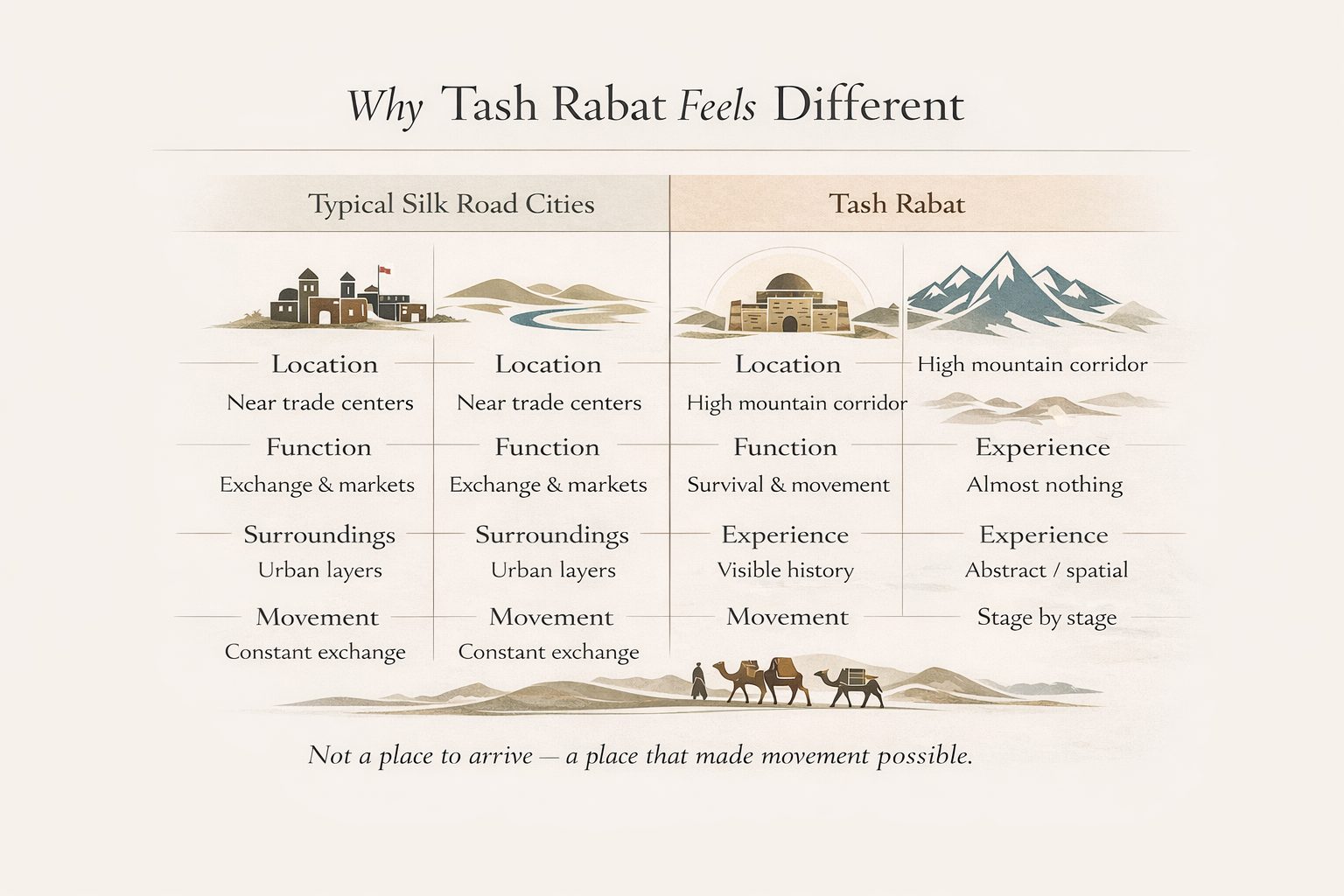
Why Tash Rabat Feels Different from Other Silk Road Sites
| Feature | Typical Silk Road Cities | Tash Rabat |
|---|---|---|
| Location | Near trade centers | High mountain corridor |
| Function | Exchange & markets | Survival & movement |
| Surroundings | Urban layers | Almost nothing |
| Experience | Visible history | Abstract / spatial |
Tash Rabat on the Map
If you zoom out far enough, Tash Rabat sits somewhere in the interior of Kyrgyzstan — south of Naryn, closer to the Chinese border than to any major town.
Zoom in, and the picture doesn’t get clearer. It gets emptier.
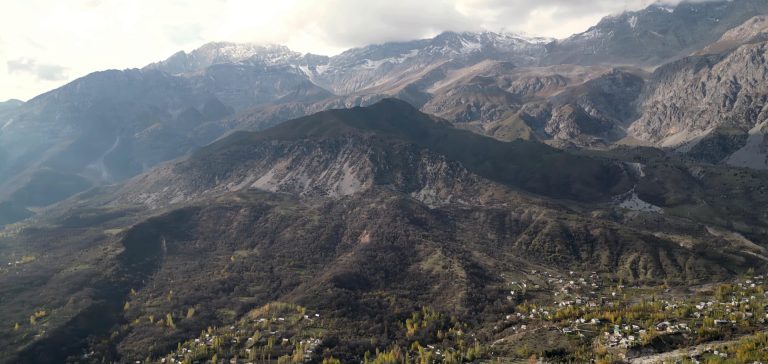
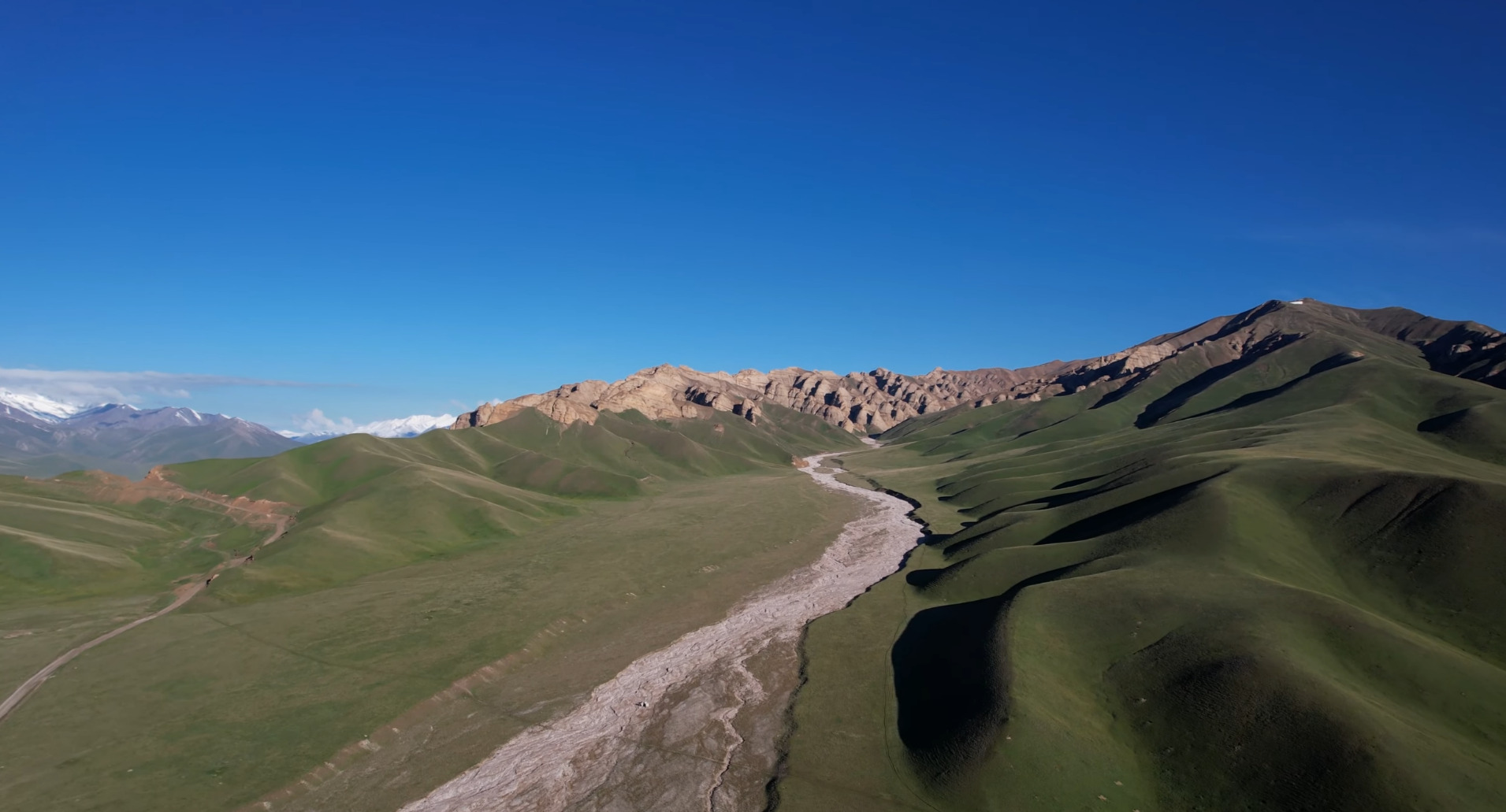
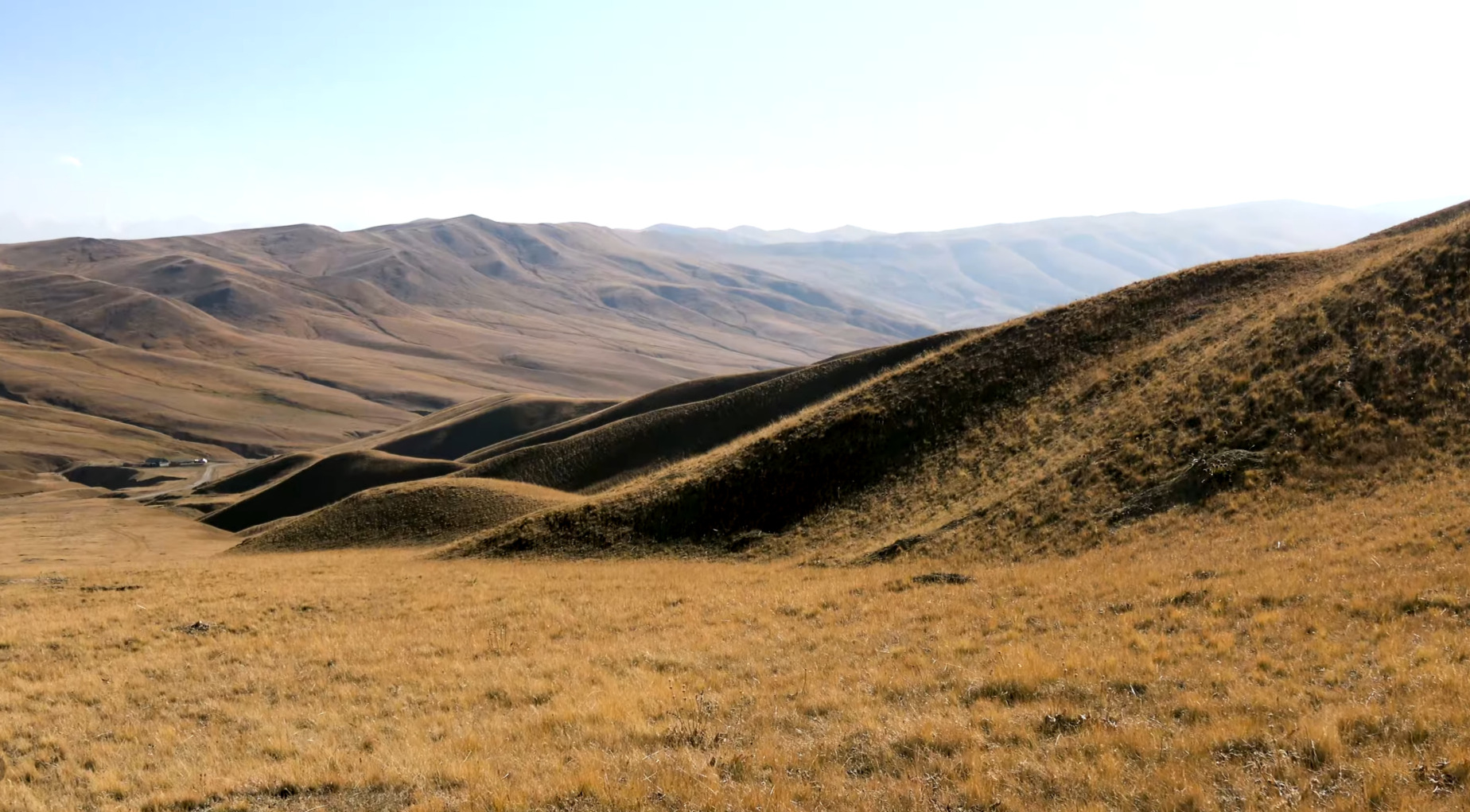
There’s no obvious line leading to it. No major settlement nearby. Just a valley that opens and closes in long stretches, framed by the higher ridges of the Tien Shan.
It’s easy to read that as isolation.
But the geography tells a different story.
Tash Rabat is positioned along a corridor that once connected Central Asia to western China. Not directly — not in a straight line — but through a sequence of valleys and passes that made movement through the mountains possible.
One of those routes leads toward the direction of the Torugart Pass, a crossing point that links this part of Kyrgyzstan with the region beyond.
That changes how the location reads.
Instead of being cut off, it sits along a line of movement that just isn’t visible anymore. The road is still there in a modern sense, but the older rhythm — the one built around animals, weather, and distance — has faded.
Without that movement, the structure feels disconnected.
With it, the position becomes precise.
You don’t build something like this in a random valley. You build it where the terrain forces people to slow down, where distance between safer stops becomes too long, and where the conditions make travel uncertain enough that shelter becomes necessary.
This valley does exactly that.
It stretches far enough from Naryn that reaching it already takes time. It sits high enough that weather and temperature shift more quickly than in lower regions. And it leads toward mountain crossings that were never easy, even under good conditions.
That combination creates a natural pause point.
Not because someone decided to place a monument here, but because the route itself demanded one.
Tash Rabat feels remote when you look at it as a destination. It feels correctly placed when you look at it as part of a route that once had very few reliable stopping points.
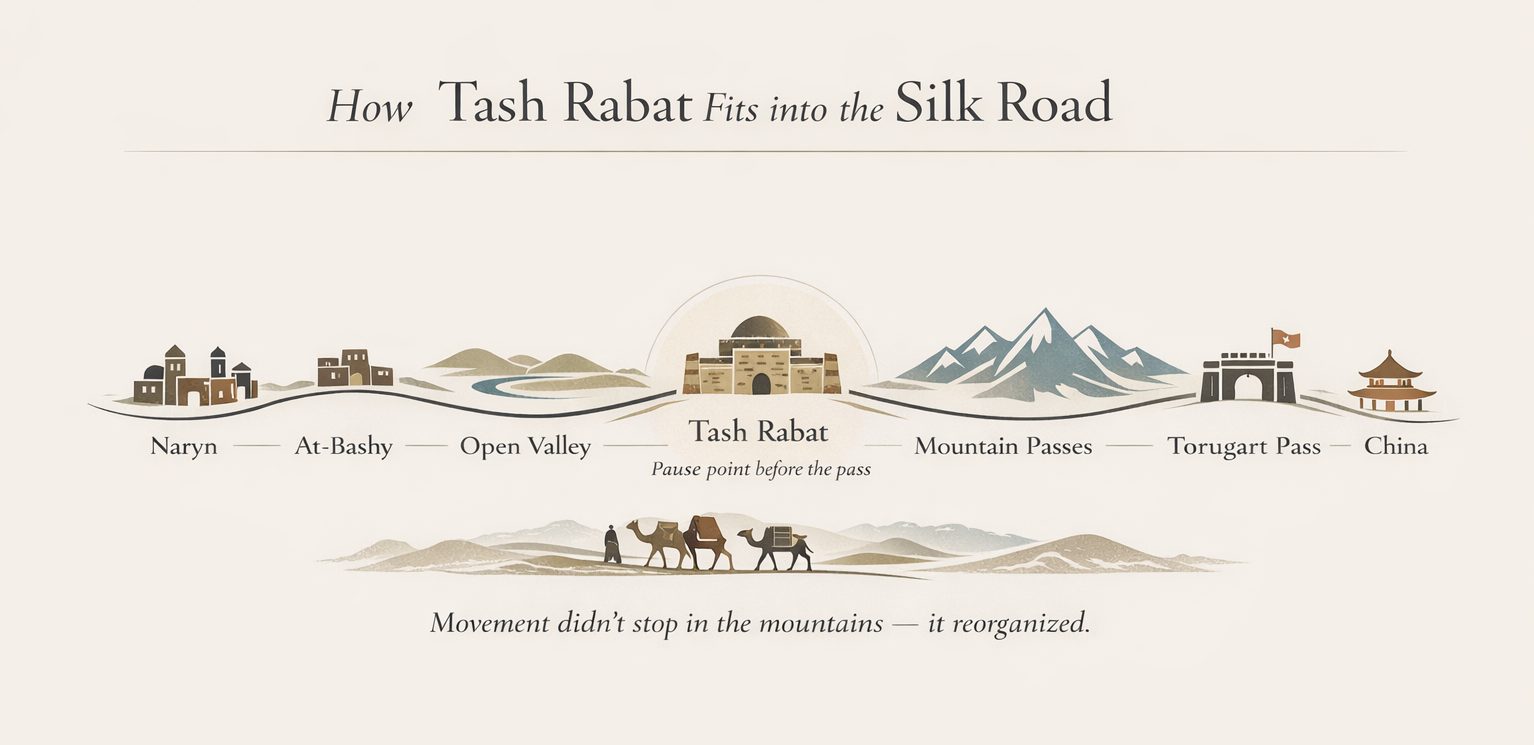
Tash Rabat only makes sense if you picture movement step by step:
Naryn → At-Bashy → open valley → narrowing terrain → Tash Rabat (pause point) → mountain passes → Torugart direction
It’s not a destination — it’s a staging point before exposure increases.
| Stage | What Happens | Why It Matters |
|---|---|---|
| Naryn | Last structured town | Preparation point |
| At-Bashy region | Transition zone | Movement still flexible |
| Tash Rabat | Controlled stop | Before terrain becomes restrictive |
| Mountain passes | Exposure + uncertainty | Main risk zone |
Where It Sits Within the Region
To understand Tash Rabat properly, it helps to place it within a sequence rather than as a single location.
From Naryn, the landscape gradually opens into wider valleys before narrowing again as you move toward At-Bashy. The terrain here isn’t flat, but it’s not immediately restrictive either. Movement still feels possible without much planning.
That changes as you move deeper.
The valleys begin to close in. Distances between settlements stretch out. The environment becomes less forgiving, even if the terrain itself doesn’t look dramatic at first glance.
Tash Rabat sits inside this shift.
It’s far enough from Naryn to no longer feel connected to it, but not yet at the highest point of the crossing. That placement matters. It sits before the most difficult sections, not after them.
This is where the logic of the structure becomes clearer.
If you’re moving with a caravan — not quickly, not lightly — you don’t wait until conditions become extreme before stopping. You pause before that point, where there’s still enough control to prepare for what comes next.
Tash Rabat fits that pattern almost exactly.
It marks a stage in the journey rather than a destination. A place where movement slows, reorganizes, and prepares to continue.
And once you see it that way, the isolation stops feeling accidental.
It becomes part of the design.
Why the Location Feels So Empty Today
Standing near Tash Rabat now, the silence can feel exaggerated.
There’s space in every direction. The valley doesn’t lead your eye toward anything obvious. The building itself holds most of the visual weight, simply because there’s so little around it to compete.
That emptiness isn’t how the place was meant to function.
It’s what remains after the movement disappears.
When trade routes shifted, and when transport stopped depending on long overland journeys through mountain corridors like this one, the need for places like Tash Rabat faded with them.
No city replaced it. No new network grew around it.
It stayed where it was — but the system it belonged to didn’t.
That’s why it feels so isolated now.
Not because it was built in the middle of nowhere, but because the “somewhere” it belonged to no longer exists in the same form.
The routes are still traceable. The geography hasn’t changed.
But the movement that made this place necessary has thinned out to the point where the structure stands on its own.
What Tash Rabat Actually Is
Most descriptions start with a label — caravanserai, Silk Road monument, historical structure.
None of those are wrong. But taken on their own, they don’t explain much.
A caravanserai, in simple terms, was a place built for travelers moving over long distances. Somewhere to stop, rest, recover, and prepare for the next stretch. Not a destination, not a settlement — a point along the way.
In flatter regions, these stops often sat near towns or trade centers. They were part of a wider network that still had density around it.
Tash Rabat is different.
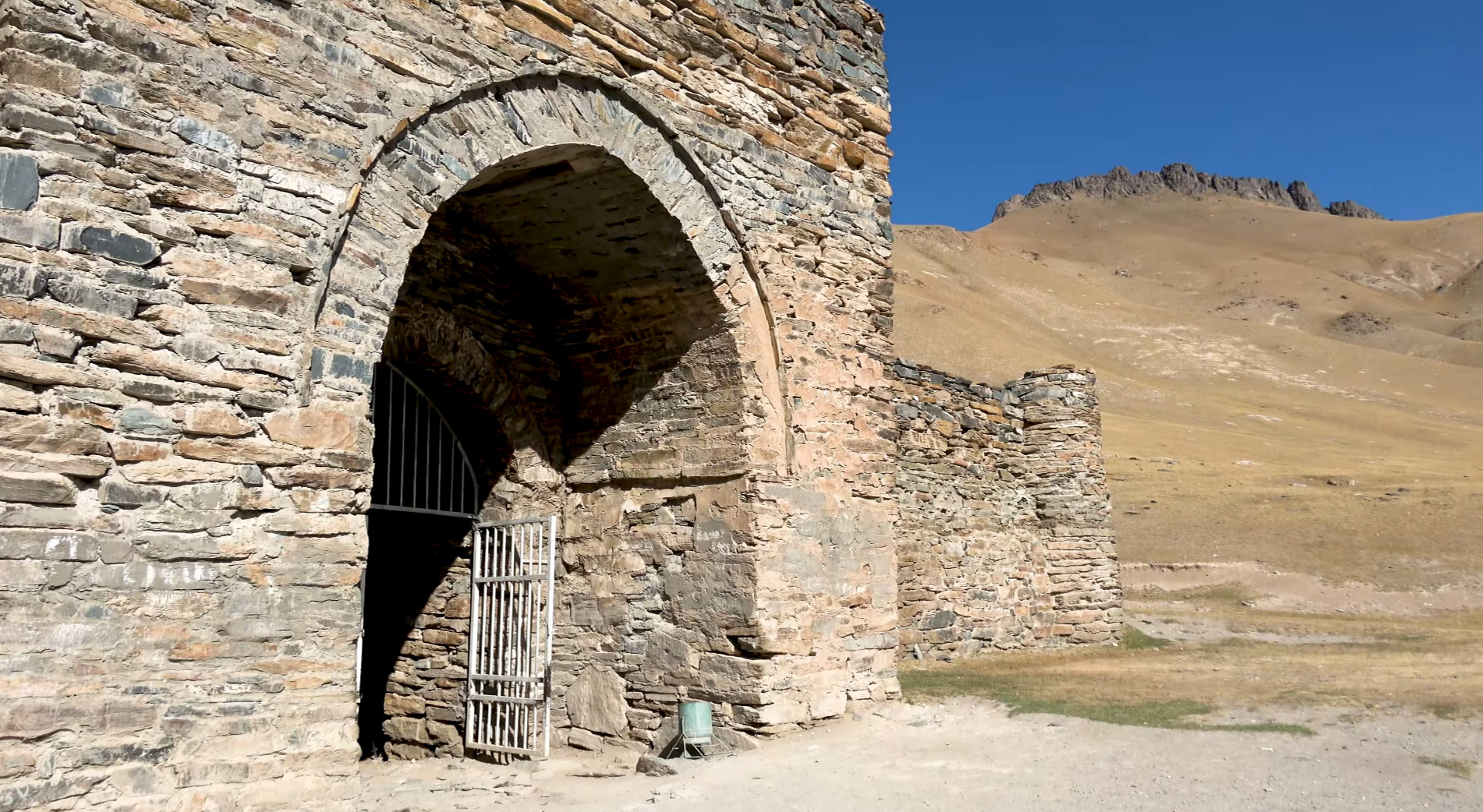
It sits far from any urban context, built entirely in stone, enclosed, and structured inward rather than outward. There’s no surrounding settlement that explains it. No marketplace, no visible extension of daily life around it.
Which makes the function easier to understand, not harder.
This wasn’t a place people lived in permanently. It was a place people depended on temporarily.
You arrived with purpose. You stayed because you had to. And then you moved on.
Everything about the structure reflects that kind of use.
Thick walls. Minimal openings. Internal chambers rather than open courtyards. A central space that holds the building together, with smaller rooms branching off it.
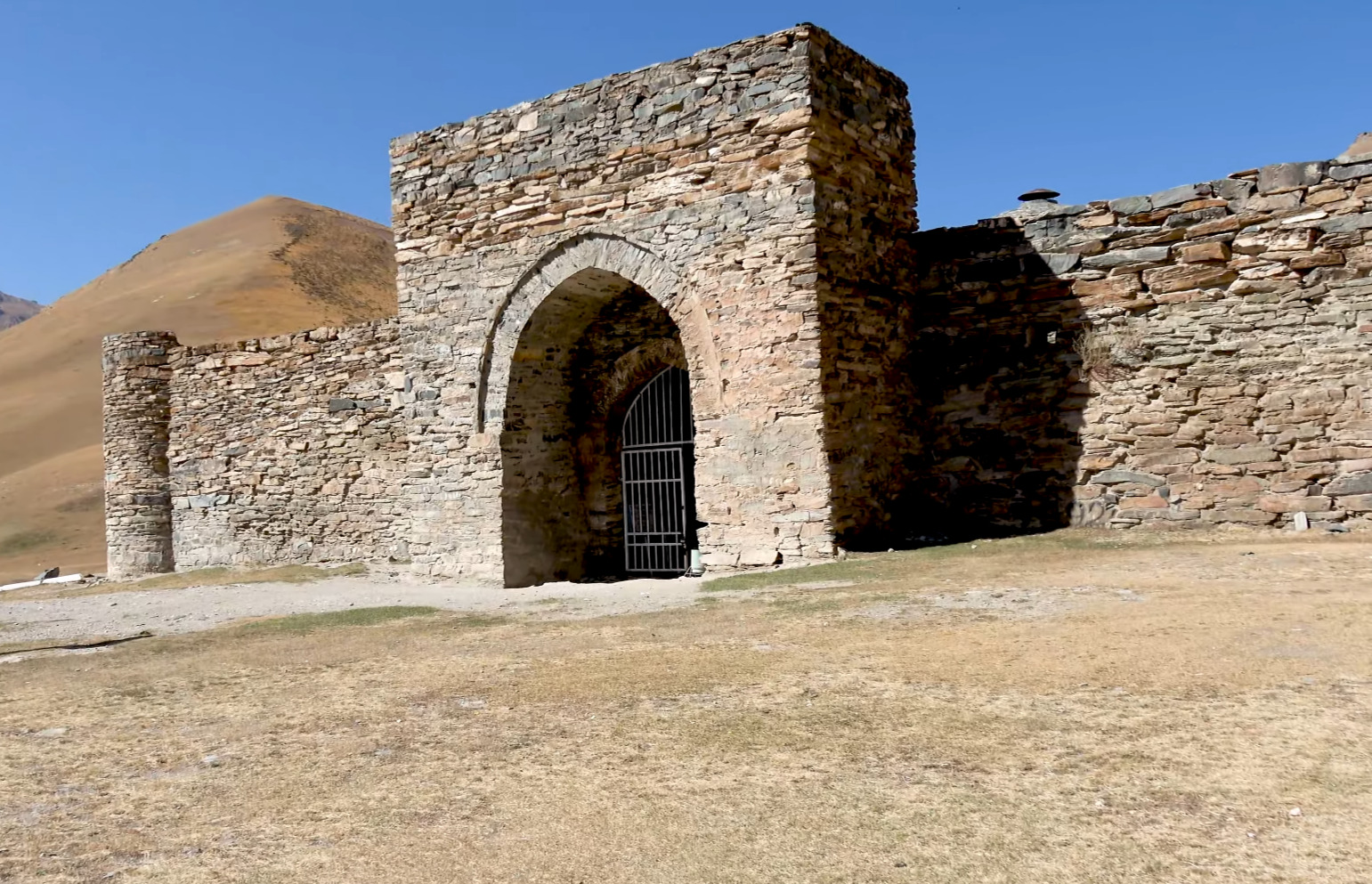
It doesn’t open itself to the landscape. It protects itself from it.
Why Tash Rabat Exists Here
Once you move past the label, the more important question is simpler.
Why here?
Why build something this solid, this deliberate, in a valley that still feels empty even now?
The answer sits in the movement that used to pass through this terrain.
Travel across the Silk Road wasn’t a single continuous flow. It was broken into segments — days of movement separated by necessary stops. In lowland regions, those stops were easier to place. Water, settlements, existing infrastructure all made spacing more flexible.
In the mountains, that flexibility disappears.
Distance becomes harder to measure. Weather becomes less predictable. Progress slows, even when the terrain looks manageable. What might be a single day’s movement on flat ground stretches into something longer and less certain.
That changes where stopping points need to exist.
You don’t place them evenly. You place them where they’re needed most.
Before difficult sections. Before exposure increases. Before routes narrow into passes where conditions can shift quickly and options become limited.
Tash Rabat sits in exactly that position.
It isn’t at the highest point of the route. It’s not placed after the hardest terrain. It’s positioned before it — at a stage where travelers would still have enough control to stop, regroup, and prepare.
This is what gives the structure its logic.
Without the route, it feels misplaced.
With the route in mind, it feels almost inevitable.
The location of Tash Rabat makes the most sense when you see it as a pre-pass shelter — a place where movement slows before becoming more exposed and less predictable.
How a Mountain Caravanserai Actually Worked
It’s easy to imagine caravanserais as static places — buildings that travelers passed through without much change in rhythm.
In a mountain setting, they worked differently.
They marked a pause in the journey, not just a stop along it.
Arriving at a place like Tash Rabat meant more than reaching shelter. It meant shifting from movement into preparation. Checking animals, redistributing loads, waiting out weather if needed, and deciding when to continue.
Time behaved differently here.
You didn’t pass through quickly unless conditions allowed it. You stayed as long as necessary, even if that meant delaying movement entirely. The route beyond wasn’t something you rushed into without consideration.
The structure reflects that kind of use.
The interior is divided into multiple chambers, each enclosed and protected. Space isn’t wasted on openness. It’s organized to contain — people, animals, supplies — within a controlled environment.
Light is limited. Openings are small. The building closes itself off rather than extending outward.
That design isn’t aesthetic.
It’s practical.
At this altitude, exposure matters. Wind, cold, and sudden changes in weather can shift conditions quickly. A structure that shields rather than invites becomes more valuable than one that emphasizes comfort or visibility.
Security mattered too.
Caravans moved with goods, sometimes valuable ones. Remote routes didn’t remove risk — they changed its form. Being able to gather within a single, enclosed structure reduced vulnerability compared to spreading out in the open.
So the building worked on multiple levels at once.
Shelter from the environment.
Control over movement.
Protection during rest.
And then, once conditions aligned again, it returned to being what it was meant to be — a point you left behind.
That’s the part that’s easy to miss today.
Without the movement, the building feels permanent.
With it, it was always temporary.
Architecture: Built for Shelter, Not Display
From a distance, Tash Rabat looks heavier than it should.
Not taller, not more elaborate — just denser. The structure sits low against the ground, almost pressed into the valley rather than rising above it. There’s no attempt to stand out. If anything, it feels like it’s trying to hold its position against the landscape rather than define it.
That impression carries inside.
The building is organized around a central hall, with a series of smaller chambers branching outward. Passageways are narrow. Light is limited. The interior doesn’t open up into large, airy spaces. It stays contained.
Everything pulls inward.
The walls are thick, built from stone rather than lighter materials. Openings are small and placed carefully. The structure isn’t designed to connect with the outside — it’s designed to separate from it.
This isn’t unusual once you consider where it sits.
At this altitude, exposure matters more than visibility. Wind moves differently across open ground. Temperature shifts faster. What might feel like a minor change lower down becomes more pronounced here.
The architecture responds to that.
Instead of creating space, it reduces it. Instead of opening outward, it encloses. Instead of distributing movement, it concentrates it into controlled areas.
The result is a building that feels stable in a way the surrounding landscape doesn’t.
And that stability is the point.
| Architectural Element | Why It Matters |
|---|---|
| Stone construction | Resists weather, retains heat, provides structural durability |
| Central hall | Acts as the core space for gathering and coordination |
| Multiple chambers | Allows separation of people, goods, and animals |
| Domed and vaulted sections | Strengthens the structure while enclosing internal space |
| Limited openings | Reduces exposure to wind and cold |
Seen this way, the building stops looking unusual.
It becomes a direct response to the environment it sits in — shaped by it, rather than placed against it.
Monastery or Caravanserai?
There’s a second layer to Tash Rabat that doesn’t resolve as cleanly as the architecture or the geography.
What exactly was it, originally?
The most common explanation is that it functioned as a caravanserai — a stopping point along a Silk Road route. That fits the location, the structure, and the practical needs of long-distance travel through the mountains.
But it’s not the only interpretation.
Some researchers suggest that Tash Rabat may have started as a religious site — possibly a Nestorian Christian monastery, or even earlier as a Buddhist structure. The timeline shifts depending on the source, with some placing its origins several centuries before its use as a caravanserai.
At first, that feels like a contradiction.
A remote monastery and a trade shelter don’t seem like the same kind of place. One suggests isolation for its own sake. The other suggests movement passing through.
But in this landscape, the distinction isn’t as clear as it might seem.
Remote religious structures were often built along routes, not away from them. Not because they served trade directly, but because routes were where movement — and therefore contact — existed. Even in high mountain regions, paths formed the only reliable lines between places.
That overlap makes both interpretations possible.
The structure could have begun as one kind of space and adapted into another. Or it could have been shaped from the beginning by both needs — isolation and access — at the same time.
There’s no single detail that settles the question completely.
And that uncertainty becomes part of how the place is understood.
Why the Silk Road Context Matters Here
The phrase “Silk Road” tends to flatten everything into a single idea — a long line of trade connecting distant regions.
That image works in broad terms, but it misses how different those routes felt depending on where you were along them.
In cities, trade was visible. Markets, goods, exchange — everything concentrated in one place.
In the mountains, the same network looked completely different.
There were no continuous lines of movement. Travel broke into segments. Progress depended on terrain, weather, and the ability to move safely from one point to the next.
That’s where places like Tash Rabat come in.
They don’t represent the scale of trade. They represent the structure behind it.
Without these fixed points, movement through regions like this would have been slower, less reliable, and far more risky. The network would still exist, but it wouldn’t function in the same way.
This is what makes Tash Rabat useful beyond its immediate setting.
It shows that the Silk Road wasn’t just a line of exchange. It was a system that adapted to geography — and in the mountains, that meant building places that made difficult routes possible rather than avoiding them.
Seen like this, the structure isn’t an outlier.
It’s a piece of infrastructure.
Tash Rabat helps shift the way the Silk Road is understood — from a single route into a network shaped by terrain, where movement depended on carefully placed points of support.
What Tash Rabat Feels Like Today
| Moment | What You Notice | What It Means |
|---|---|---|
| Arrival | Nothing around it | No transition from settlement |
| First look | Structure feels misplaced | Scale vs emptiness mismatch |
| Time passing | Landscape slows perception | Movement becomes internal |
| Inside | Enclosed, controlled space | Protection over openness |
Standing near Tash Rabat now, the first thing that settles in isn’t history. It’s stillness.
Not silence in a dramatic sense — just a lack of interruption. The valley stretches without pulling your attention in any particular direction. There’s no movement to follow, no obvious focal point beyond the structure itself.
And because of that, the building feels heavier than it actually is.
It carries more presence simply because there’s nothing around it competing for it. No surrounding town, no layered architecture, no gradual transition between past and present. Just one structure, holding its place in a landscape that hasn’t changed much in how it feels.
The scale becomes clearer the longer you stay.
Not in height or size, but in how the building relates to the space around it. It doesn’t dominate the valley. It sits within it, contained, almost quiet in the way it holds itself together.
And then there’s the altitude.
It doesn’t overwhelm you, but it lingers in the background. Movement feels slightly slower. Air slightly thinner. Even small distances take a bit more effort than expected.
That changes how the place is experienced.
You don’t move through it quickly. You don’t pass it without noticing. You arrive, and for a while, you stay — not because you have to anymore, but because the setting naturally slows you down.
That’s probably the closest the modern experience comes to the original function of the place.
Not identical. But not entirely disconnected either.
What People Usually Miss About Tash Rabat
- It isn’t “remote by accident” — the location is tied directly to how mountain routes functioned
- It makes more sense as part of a route than as a standalone destination
- The architecture is about protection and control, not decoration
- The uncertainty around its origin adds depth rather than confusion
- It explains the Silk Road more clearly than many larger, more famous sites
Most descriptions focus on what the building is.
Less attention goes to what it reveals.
And that’s where the difference sits.
Practical Context Without Turning This Into a Guide
Tash Rabat is usually reached from Naryn, moving south toward the At-Bashy region before turning into the valley where the structure sits.
The distance isn’t extreme, but the sense of remoteness builds as you approach. Settlements become sparse, and the road gradually feels less connected to anything beyond the route itself.
Altitude plays a role here as well.
At around 3200 meters, the environment stays relatively cool even in summer, and conditions can shift faster than expected. Movement is still straightforward, but it carries more weight than it would at lower elevations.
There are basic options to stay in the area, often in simple yurt setups during the warmer months. They don’t change the character of the place — they sit lightly within it.
That’s about as much as you need to know.
The rest isn’t logistical.
Most trips to Tash Rabat are not standalone. It’s usually part of a 2–5 day route including Naryn, Song Kul, or even longer cross-country loops.
That changes how you experience it — from a stop into part of a larger movement through Kyrgyzstan.
Why Tash Rabat Still Holds Attention
Tash Rabat doesn’t compete with larger historical sites.
It doesn’t try to.
There are no layers of restoration shaping how you see it. No surrounding city reframing it into something easier to interpret. It remains tied to its original setting in a way that’s becoming less common elsewhere.
That’s what keeps it relevant.
Not scale. Not decoration. Not even certainty about its origin.
It holds attention because it still explains something clearly.
That movement through places like this was possible, but never simple. That routes across the mountains didn’t erase difficulty — they worked around it, step by step, with structures placed exactly where they were needed.
Tash Rabat is one of those points.
Not a destination in the usual sense. Not a monument separated from its surroundings.
But a fixed place in a system that only makes sense when you imagine it in motion.
And once you see it that way, the isolation stops feeling empty.
It starts to feel intentional.
FAQ
What is Tash Rabat?
Tash Rabat is a historic stone structure in Kyrgyzstan, most commonly described as a caravanserai — a shelter used by travelers along Silk Road mountain routes. Its exact origins are still debated.
Why is Tash Rabat so remote?
It was built along a mountain corridor rather than near a city. Its location reflects the needs of travelers crossing difficult terrain, not the presence of a nearby settlement.
Was Tash Rabat a monastery or a caravanserai?
Both interpretations exist. Some evidence suggests it functioned as a caravanserai, while other theories point to earlier use as a religious structure. The exact origin remains uncertain.
How high is Tash Rabat?
Tash Rabat sits at approximately 3200 meters above sea level, which contributes to its cool climate and isolated feel.
Why is Tash Rabat important on the Silk Road?
It represents how trade routes functioned in high-altitude regions, providing shelter and structure for movement through the mountains rather than serving as a center of exchange.
What makes Tash Rabat different from other Silk Road sites?
Its isolation, mountain setting, preserved structure, and uncertain origin make it very different from Silk Road locations tied to cities or major trade hubs.
Is Tash Rabat worth visiting?
Yes — but mostly if you understand it as part of a route rather than a standalone highlight.