Kyrgyzstan Food Guide: National Dishes, Drinks and Prices
Kyrgyzstan food is built around meat, dough, dairy, bread and long cooking rather than strong spices or elaborate presentation. That sounds simple, but the cuisine makes much more sense when you connect it to cold winters, livestock, mountain travel, guesthouse meals and the need to serve filling food to a whole table.
Some dishes are specifically tied to Kyrgyz nomadic traditions. Others — lagman, manty, samsa, plov and ashlyan-fu — belong to the wider food culture of Central Asia and reflect Dungan, Uyghur, Uzbek and Silk Road influences. Travelers encounter all of them in Kyrgyzstan, so a useful food guide needs to explain both the national dishes and the regional ones.
This guide covers what to eat in Kyrgyzstan, which dishes to try first, where different foods are strongest, typical meal prices, vegetarian and halal options, dining etiquette and the 2026 rule on restaurant service charges.
What Defines Kyrgyz Cuisine?
Traditional Kyrgyz food developed around a mobile pastoral way of life. Livestock provided meat and milk; flour and dough created portable, filling meals; fermentation and drying helped preserve dairy products. The result is food that prioritizes warmth, calories and hospitality over visual complexity.
- Meat: lamb and beef are most common, while horse meat appears in ceremonial dishes and traditional sausages.
- Dough: noodles, dumplings, bread and steamed rolls make meals substantial.
- Dairy: fresh cream, yogurt-like products, dried kurut and fermented drinks change with the season.
- Broth: soups and onion-rich meat broth connect many dishes that otherwise look very simple.
- Shared serving: food often arrives in the middle of the table rather than as carefully separated individual courses.
Spicing is generally restrained. This does not mean every meal is bland: onions, black pepper, garlic, tomatoes, peppers, vinegar and fresh herbs appear regularly. But the main flavor normally comes from the meat, broth, dough and cooking method.
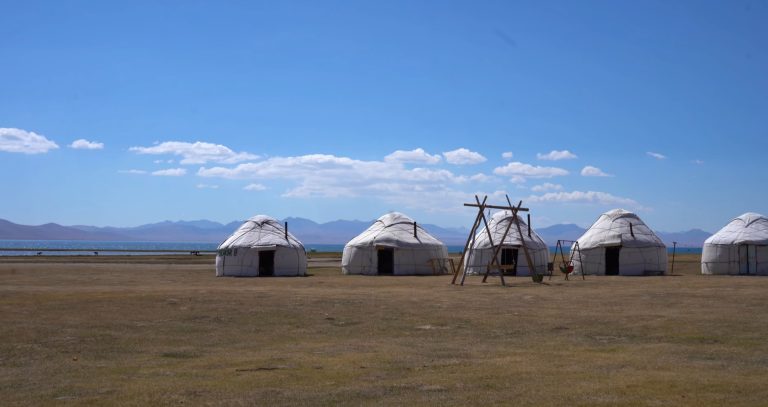
The setting matters. A dish that feels too heavy at lunchtime in Bishkek can feel exactly right after a long drive, a cold evening at Song-Kul or a mountain walk near Karakol. Guesthouse and homestay meals are often the best way to understand why these foods remain central to daily life.
Which Foods Are Specifically Kyrgyz?
Not every popular dish served in Kyrgyzstan is uniquely Kyrgyz. Central Asian cuisines overlap, and cities such as Karakol and Osh have strong regional identities of their own.
| Food tradition | Good examples | What to understand |
|---|---|---|
| Kyrgyz nomadic tradition | Beshbarmak, kuurdak, chuchuk, kymyz, kurut, boorsok | Strongest connection to livestock, hospitality and ceremonial meals |
| Shared Central Asian food | Lagman, manty, samsa, plov | Common across borders, with local recipes and serving styles |
| Dungan influence | Ashlyan-fu, hand-pulled noodles, vinegar-based salads | Especially important in Karakol |
| Uzbek and Fergana influence | Plov, samsa, bazaar food | Most obvious in Osh and southern Kyrgyzstan |
| Russian and Soviet influence | Salads, cutlets, soups, bakery foods | Easy to find in cities and canteens |
This distinction is not about deciding which country “owns” a dish. It helps travelers know where to look. Beshbarmak in a family setting explains Kyrgyz hospitality; ashlyan-fu explains Karakol’s Dungan history; plov and samsa fit naturally into the food culture of Osh.
15 Kyrgyzstan Dishes and Foods to Try
1. Beshbarmak
Beshbarmak is the best-known ceremonial Kyrgyz dish. The name is commonly translated as “five fingers,” referring to the traditional way of eating it by hand. Boiled lamb, beef or horse meat is served over broad noodles and finished with onion broth.
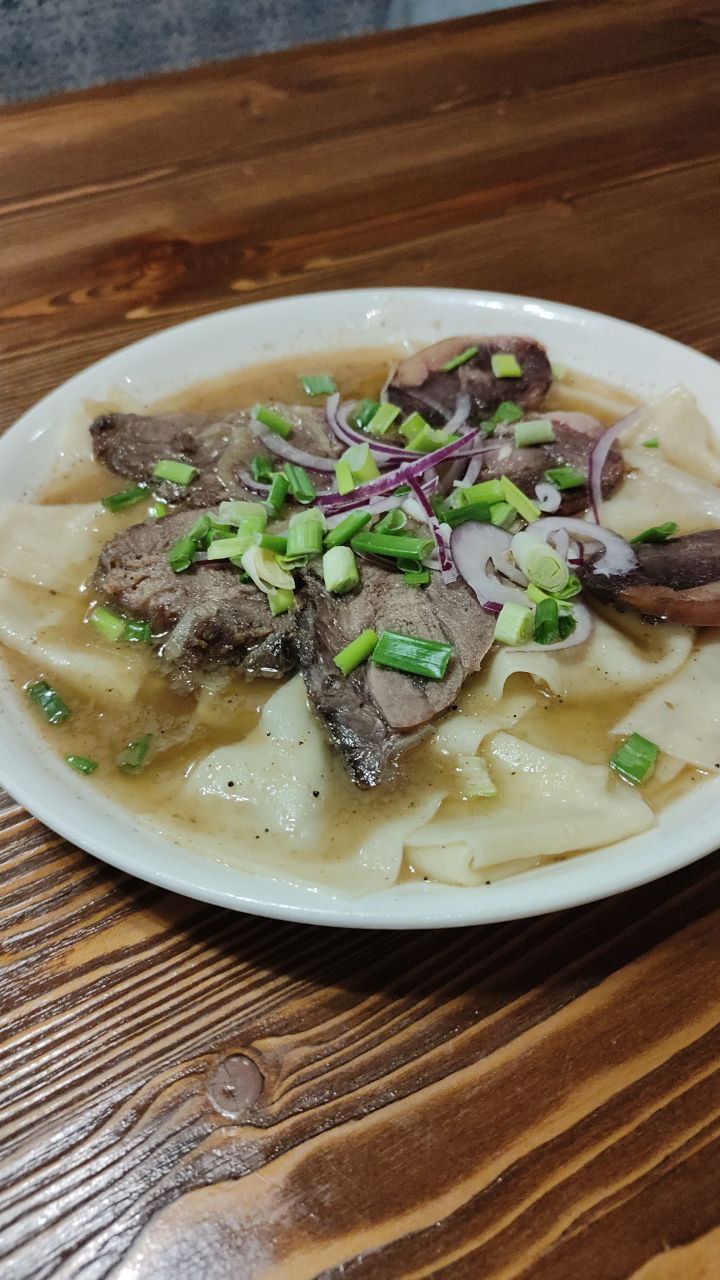
The flavor is mild and deeply savory rather than spicy. Quality depends on the meat, the broth and whether the noodles have enough time to absorb it. Beshbarmak is tied to celebrations, family gatherings and respect for guests, so it works better as a shared meal than as a rushed individual lunch.
If a guesthouse or local family offers it, that is usually a better introduction than ordering a small tourist-menu version. Different cuts of meat may be distributed according to age, status and tradition, although practices vary between families and occasions.
2. Lagman
Lagman is one of the easiest first meals for travelers. Hand-pulled noodles are served with meat, tomatoes, peppers, onions and a savory sauce or broth. Some versions are soupy; others are almost dry.
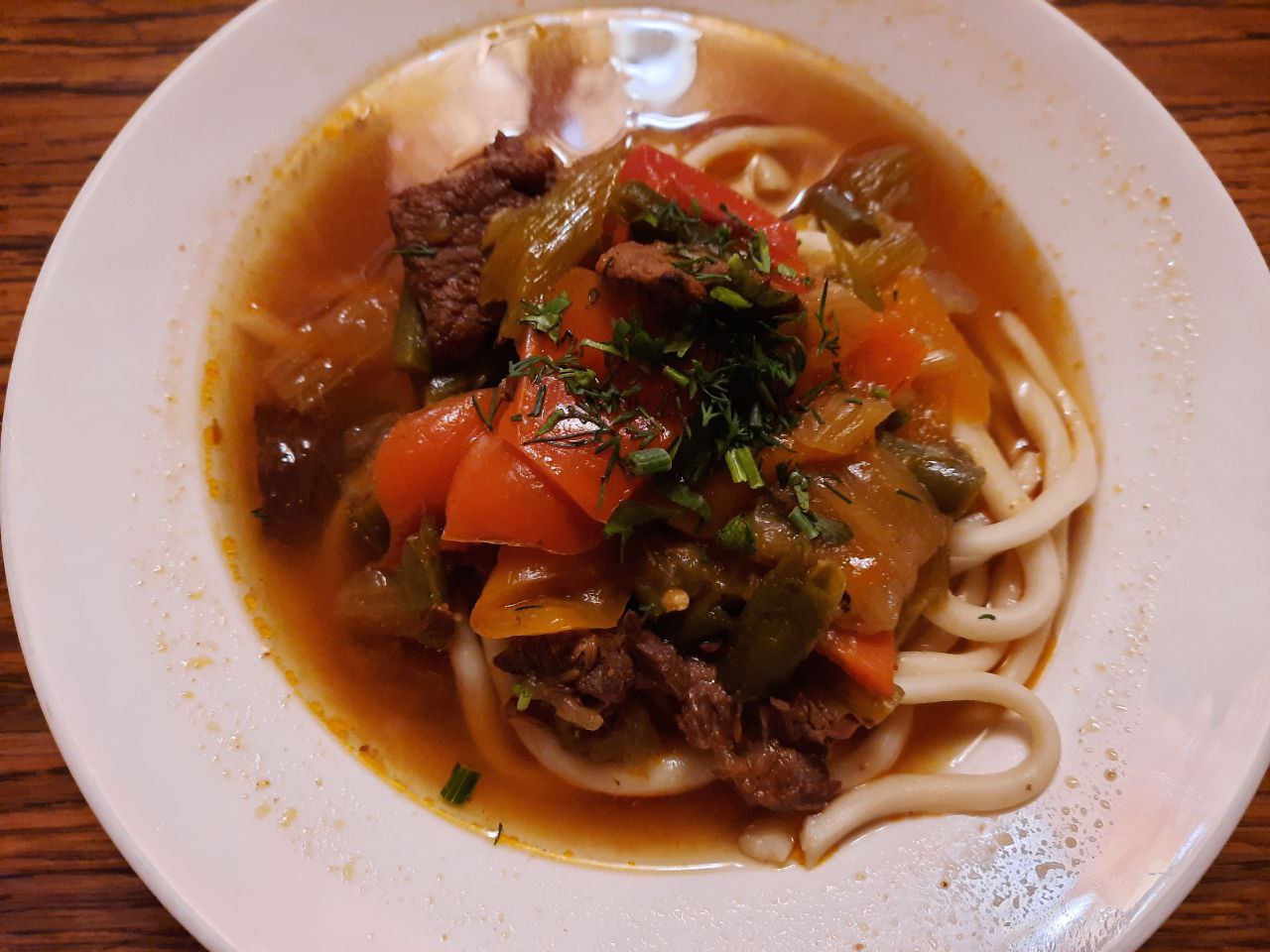
Lagman belongs to a wider Uyghur and Dungan food tradition rather than being uniquely Kyrgyz. In Kyrgyzstan, it is common in local cafés and is usually filling without being as heavy as a large meat platter. Karakol is a particularly good place to try hand-pulled noodles and Dungan-style variations.
3. Manty
Manty are large steamed dumplings filled with minced lamb or beef, onions and often a little fat that melts during steaming. Pumpkin or mixed vegetable versions also appear, especially in homes and seasonal menus.
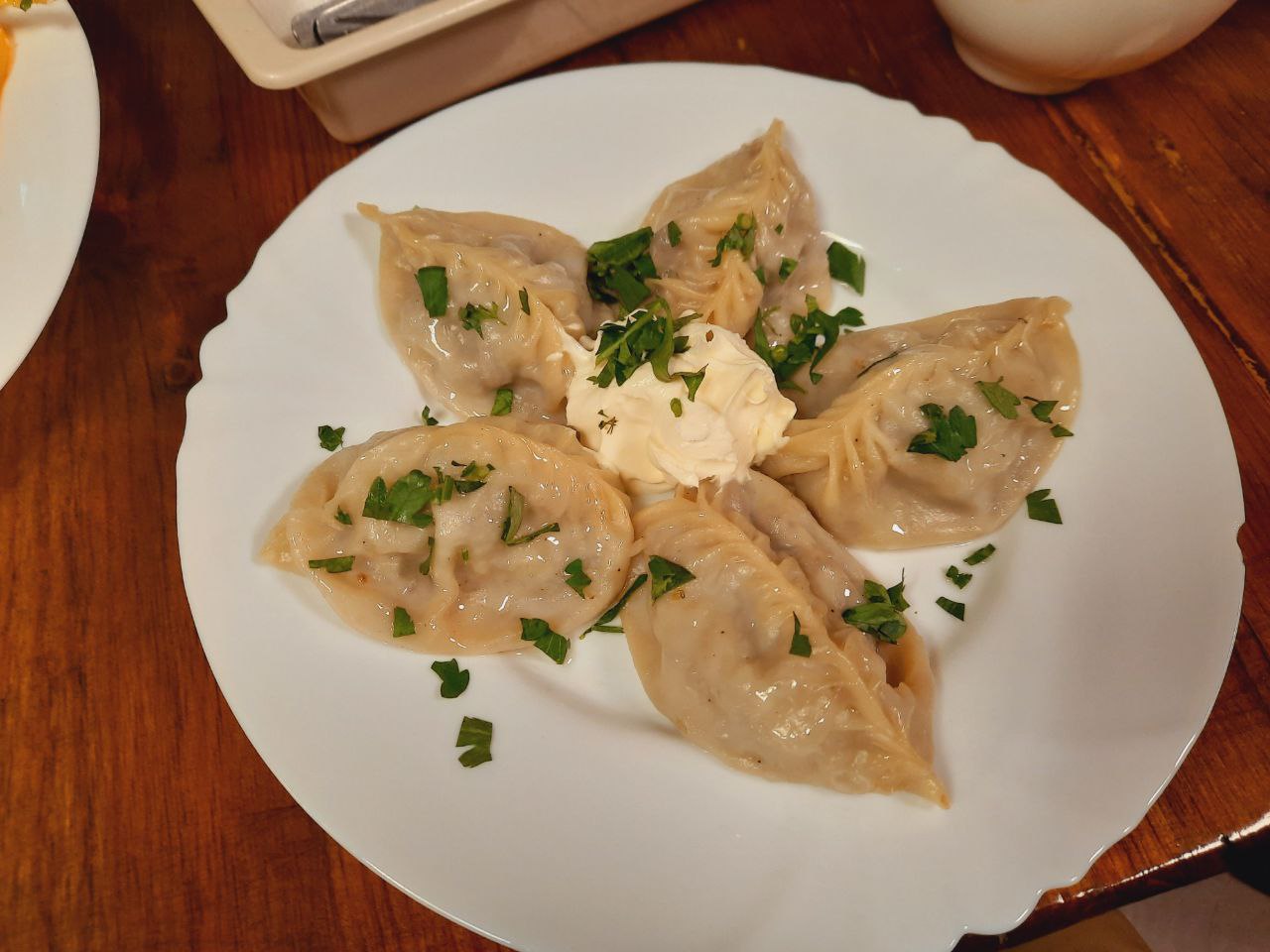
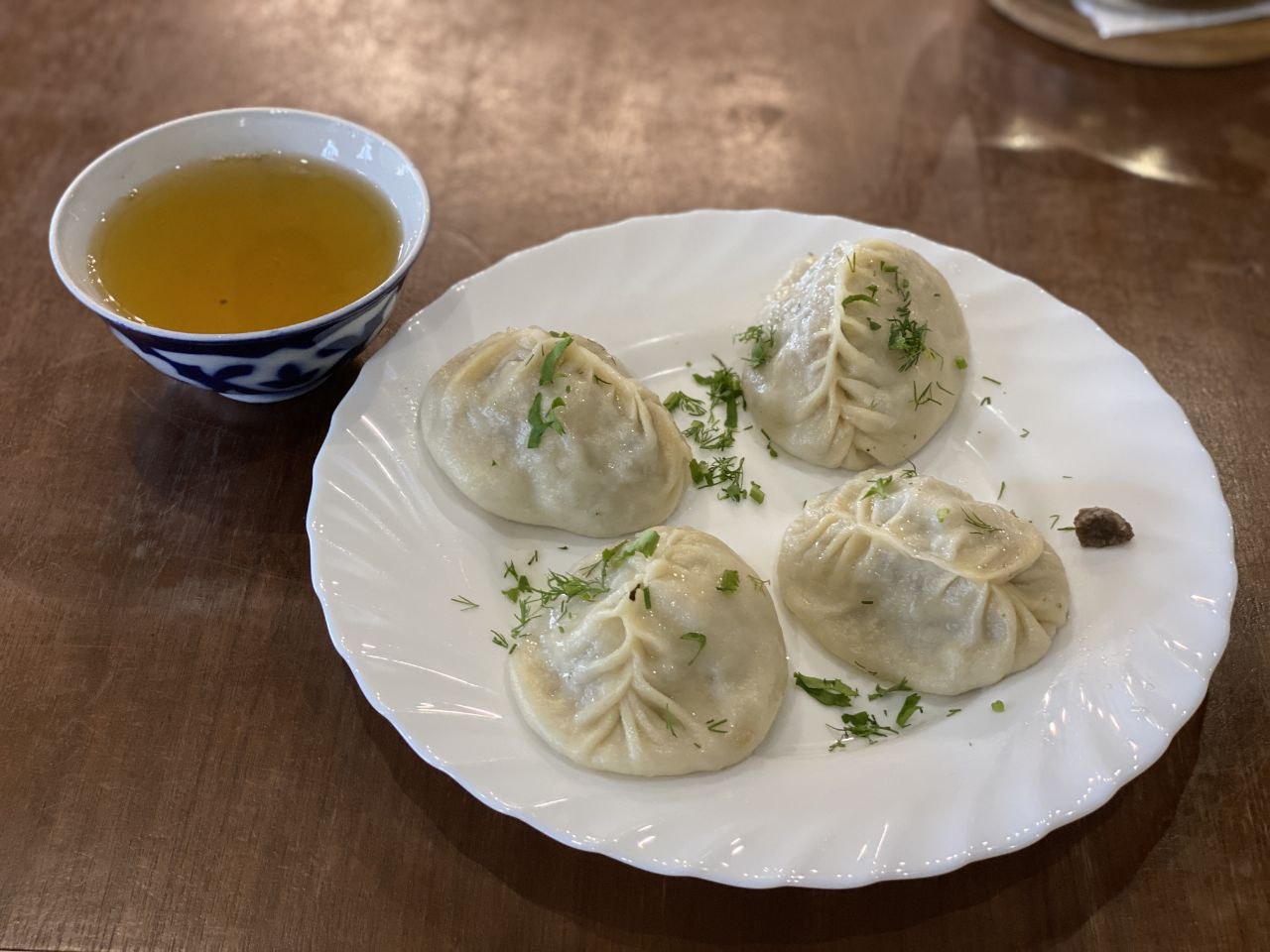
They are best eaten slowly while hot, because the filling may contain broth or melted fat. A portion can be substantial. Manty are widely available in cafés, guesthouses and national-style restaurants and are a reliable choice when you want something familiar but still regional.
4. Plov
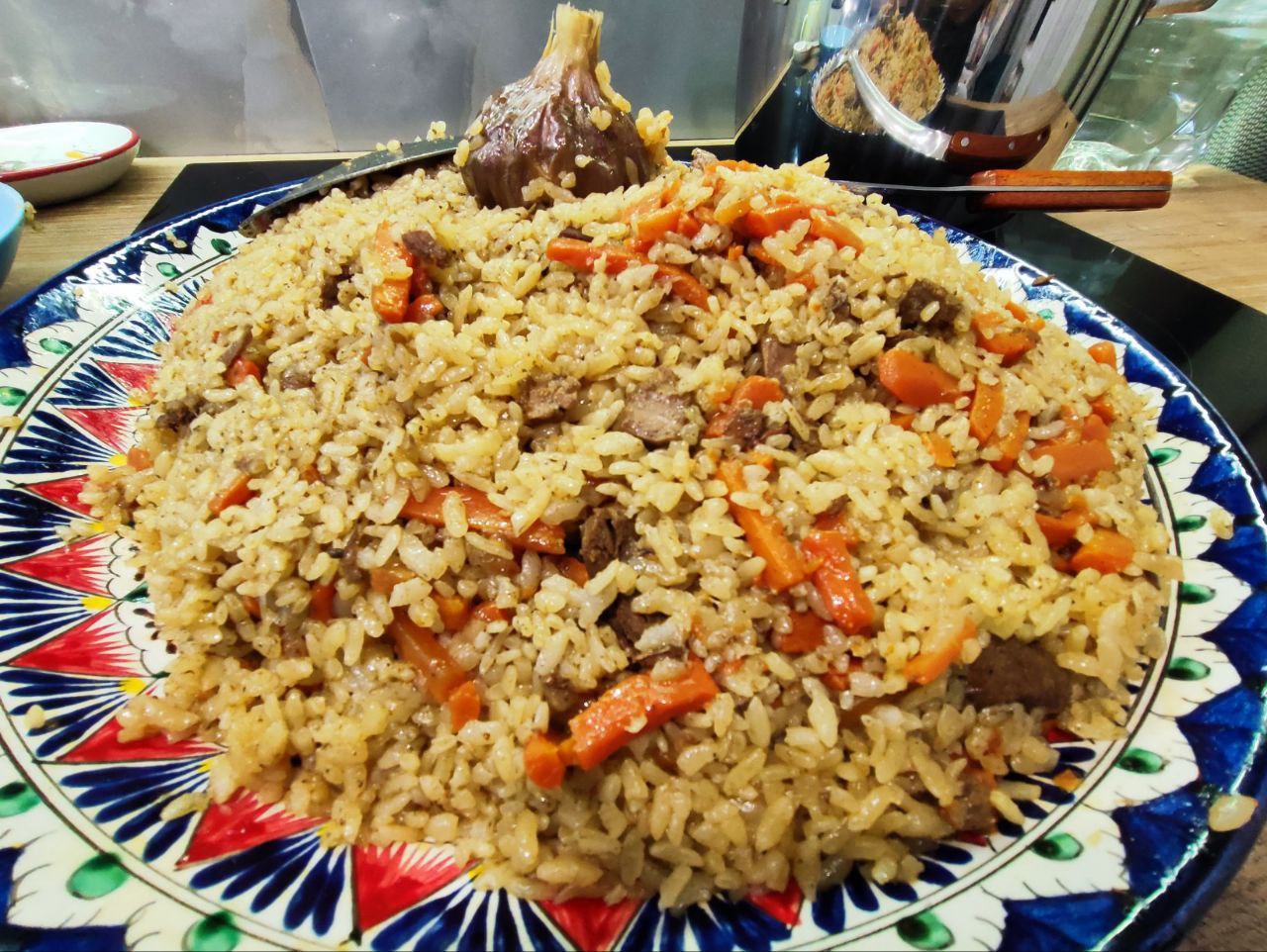
Plov combines rice, meat, carrots, onions and oil in a large kazan. It is a Central Asian dish with especially strong Uzbek associations, but it is widely cooked across Kyrgyzstan.
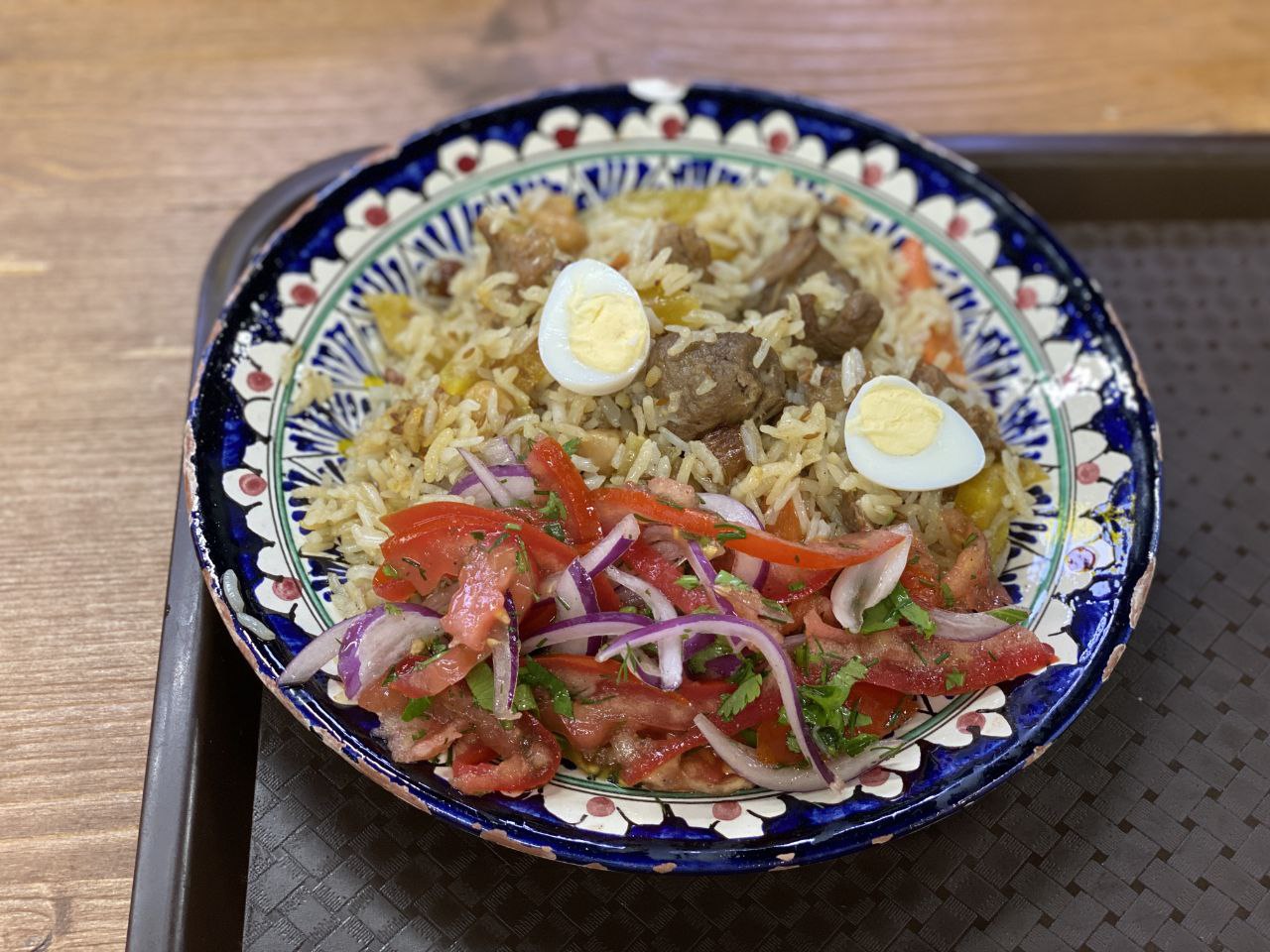
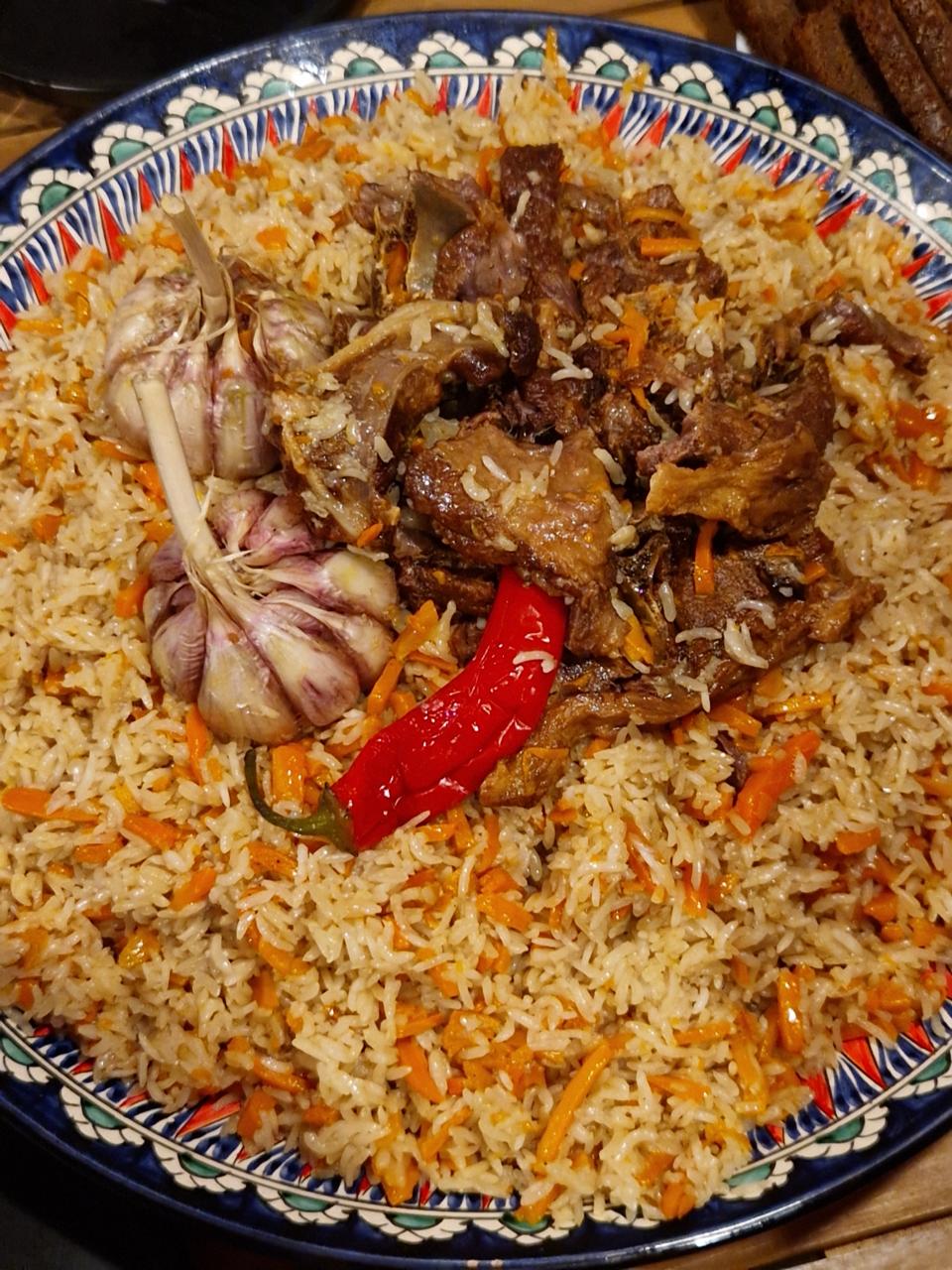
Recipes vary by city, cook and occasion. Some are oily and rich; others are lighter, with distinct grains of rice. Travelers interested in Uzbek-style plov should make a point of trying it in Osh, where the influence of the Fergana Valley is strongest.
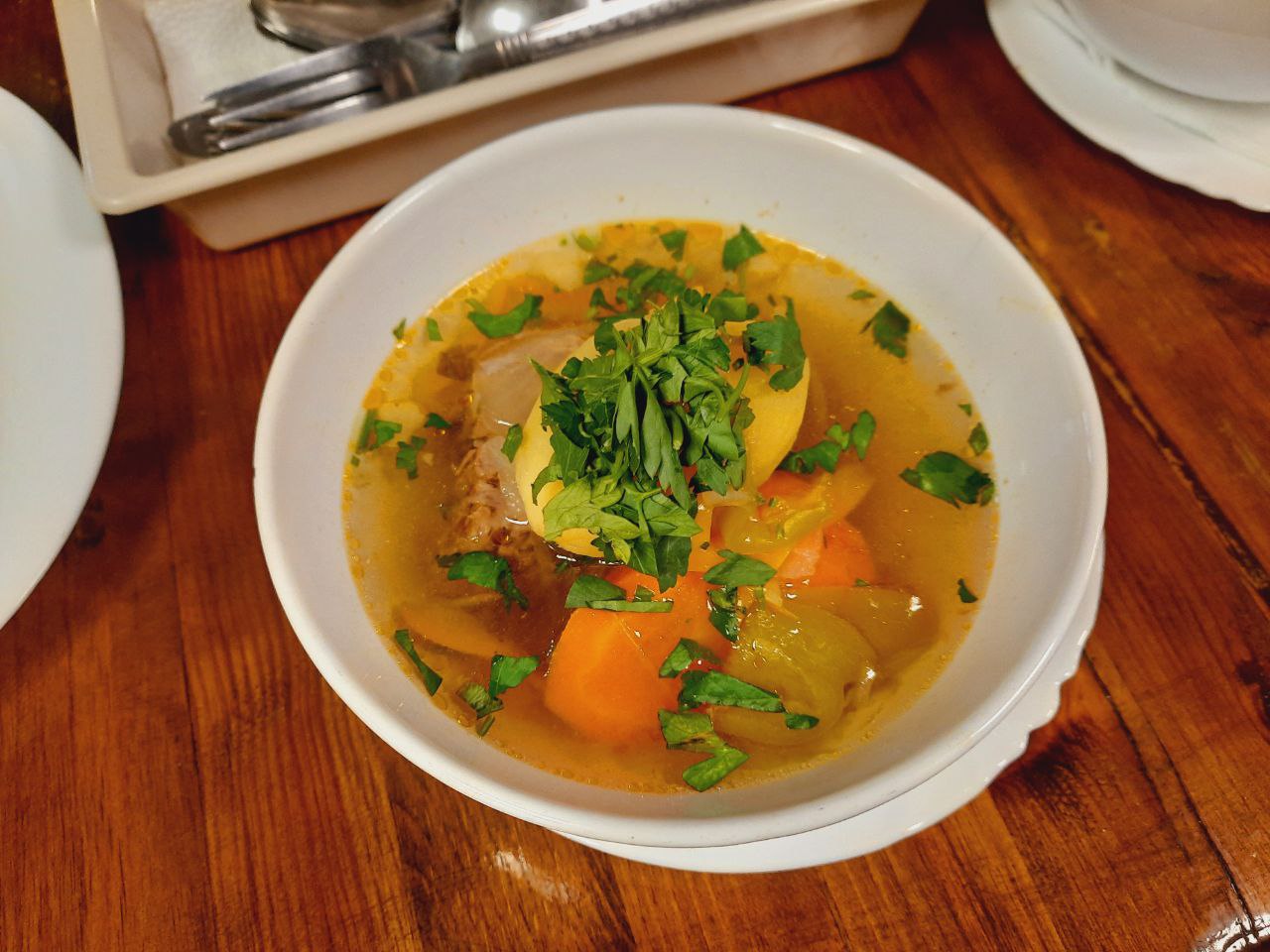
5. Shorpo
Shorpo is a clear meat soup, normally made with lamb or beef, potatoes, carrots and onions. It is straightforward, warming and common in guesthouses. Good shorpo depends on a clean broth and tender meat rather than heavy seasoning.
It is a useful dish after travel, during colder weather or when richer fried food feels too much. Bread is normally served alongside it.
6. Kuurdak
Kuurdak is fried or sautéed meat with onions and sometimes potatoes. Traditional versions may use lamb offal as well as regular cuts. It is richer than shorpo and often served as a shared dish.
This is one of the foods most clearly connected to the practical use of freshly slaughtered meat. Ask what cut is being used if you are uncomfortable with liver, heart or other offal.
7. Oromo
Oromo is a rolled sheet of dough filled with meat, onions, pumpkin, potatoes or vegetables, then steamed and sliced. It is softer and less meat-dominant than many better-known dishes.
Oromo is more common at homes, guesthouses and family cafés than at tourist-focused restaurants. Pumpkin or vegetable versions can be useful for vegetarians, but confirm that the filling and accompanying sauce do not contain meat or animal fat.
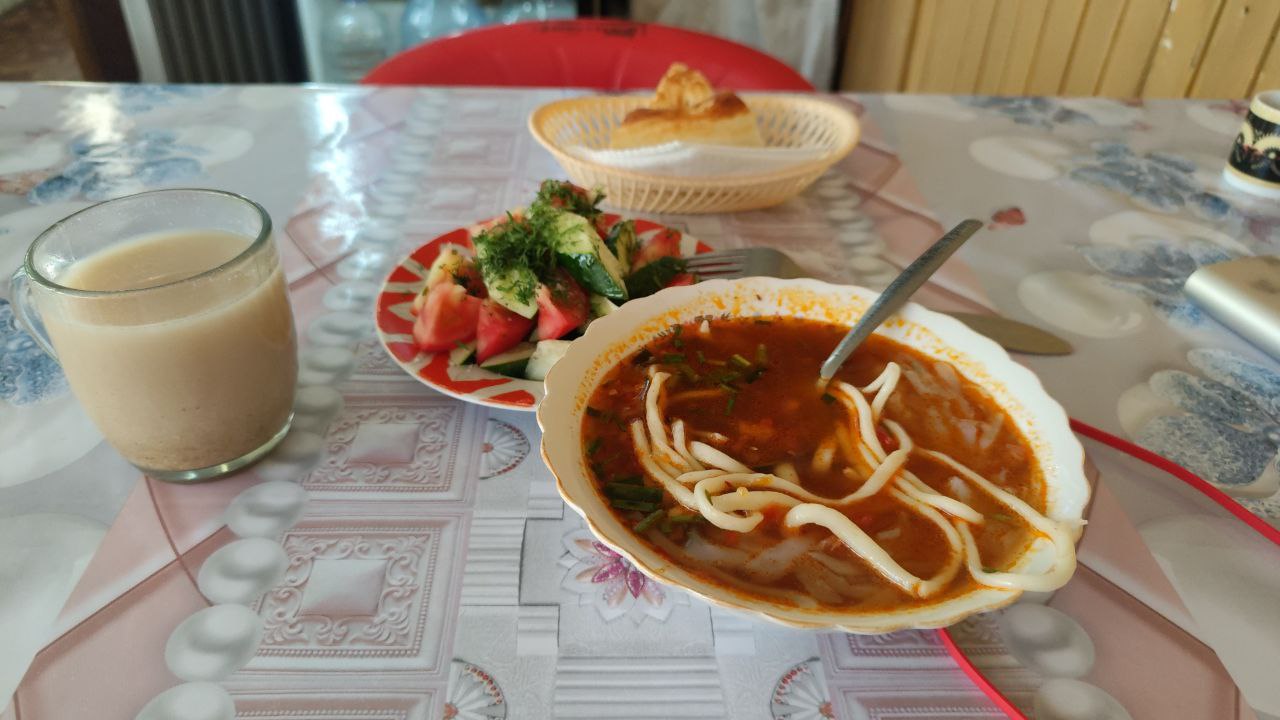
8. Ashlyan-Fu
Ashlyan-fu is a cold, sour and often spicy Dungan noodle dish most strongly associated with Karakol. Wheat noodles and starch jelly are served with vinegar, chili, vegetables and a seasoned sauce.
It is especially refreshing in summer and feels completely different from the meat-and-dough dishes travelers often expect. Bazaar-edge cafés and simple specialist counters in Karakol are usually better places to try it than a general national restaurant.
9. Samsa
Samsa are oven-baked pastries filled with meat, onions, pumpkin or potatoes. They are sold at bakeries, bazaars and roadside stops and are one of the easiest travel-day foods.
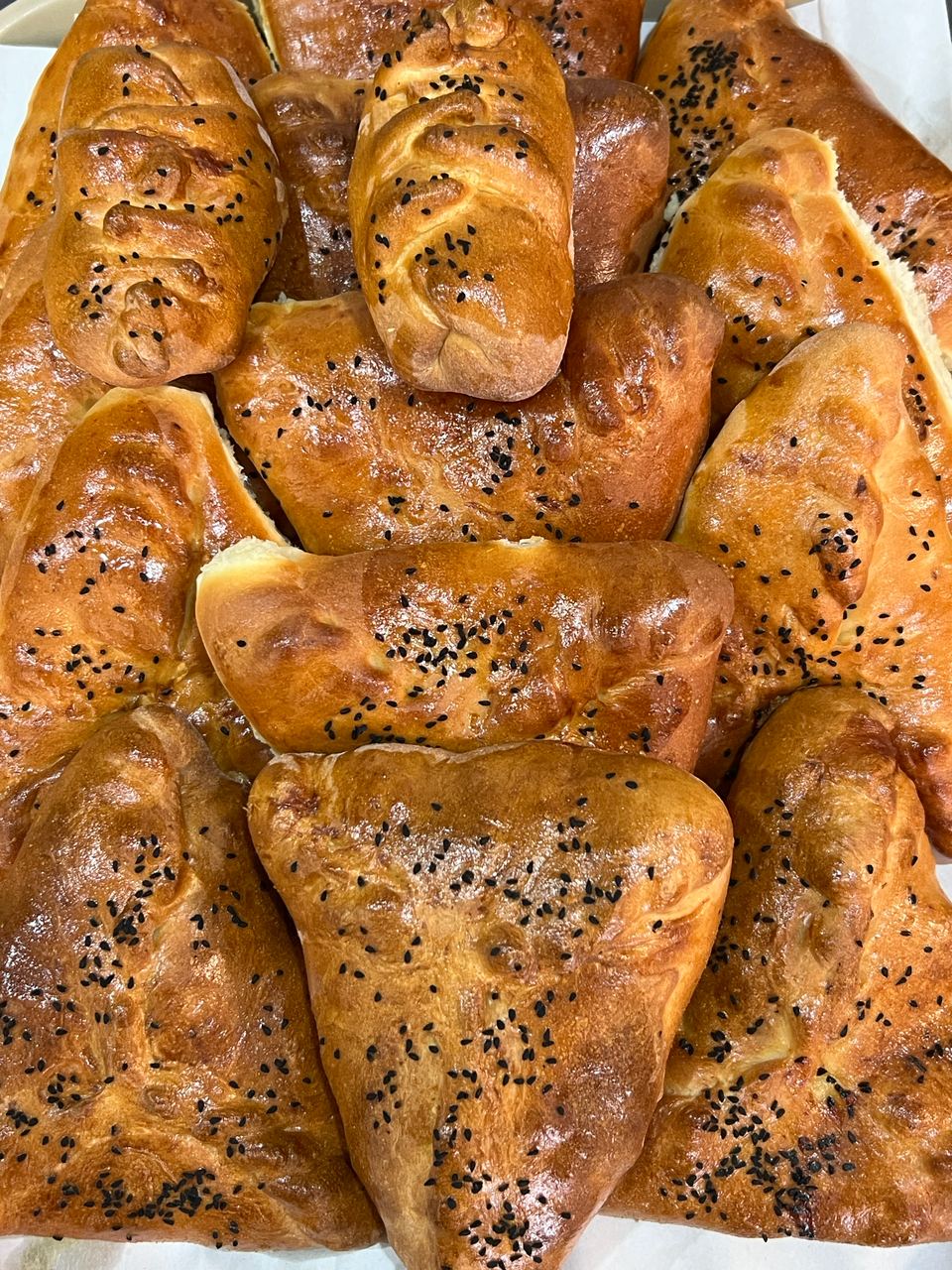
Meat samsa may contain visible pieces of fat, which keep the filling moist. Pumpkin samsa can be vegetarian, but ask whether animal fat is used in the pastry or filling.
10. Nan or Lepeshka
Round tandyr bread is commonly called nan in Kyrgyz and lepeshka in everyday Russian. It appears at nearly every meal and is treated with respect.
Do not place bread upside down, throw it away casually or leave it on the floor. In homes and guesthouses, accepting at least a small piece is an easy way to respect the table.
11. Boorsok
Boorsok are small pieces of fried dough served at celebrations, family meals and guest tables. They may accompany tea, jam, cream or savory food.
They are simple, slightly crisp outside and soft inside. Boorsok are not normally a complete meal, but they are an important part of hospitality and ceremonial food.
12. Kurut
Kurut consists of small balls of dried salted dairy product. It is portable, long-lasting and strongly flavored. You will see it in markets, roadside stalls and rural homes.
Try a small piece first: some versions are extremely salty and sour. Kurut is useful trail food for locals, but many visitors find it more interesting than easy to eat.
13. Chuchuk and Kazy
Chuchuk is a traditional sausage commonly made with horse meat and fat. The term kazy is also used regionally for horse-meat sausage. It may appear at celebrations, on meat platters or with beshbarmak.
Travelers who do not eat horse meat should ask before accepting an unfamiliar sliced sausage at a traditional meal.
14. Local Salads and Pickles
Tomato and cucumber salad, pickled vegetables, cabbage salads and Korean-style spicy salads help balance meat-heavy meals. Bishkek and other cities have a visible Korean diaspora influence, so market salad counters can offer much more variety than a short national-food menu suggests.
15. Tea, Jam and Cream
Tea is part of hospitality rather than merely a drink. Black or green tea may arrive with bread, boorsok, homemade jam, honey, butter, cream and sweets. In guesthouses, this lighter table can become one of the most memorable food experiences of the trip.
Traditional Drinks to Try
Kymyz
Kymyz is fermented mare’s milk. It is sour, lightly alcoholic and sometimes fizzy. The flavor varies by producer, freshness and season.

It is most common during the warmer pasture season and in rural or yurt-camp settings. Start with a small amount if you are not used to fermented dairy. Travelers with dairy sensitivities should be cautious.
Maksym
Maksym is a lightly fermented grain drink, often made from barley, wheat or corn. It has a sour, roasted flavor and is served cold in summer. It is easier for many first-time visitors than kymyz.
Chalap
Chalap is a cold fermented dairy drink, usually thinner and saltier than yogurt. It works well with hot weather and heavy food.
Tea
Tea is the everyday drink across the country. It may be served strong or diluted, black or green, and sometimes with milk. Cups are often kept partly filled so the host can continue topping them up.
Food by Region: What to Try Where
| Place | Foods to look for | Best setting |
|---|---|---|
| Bishkek | Broad Kyrgyz and Central Asian menus, modern cafés, manty, lagman, national-style restaurants | Food tour, local cafés and Osh Bazaar |
| Karakol | Ashlyan-fu, hand-pulled lagman, Dungan dishes | Bazaar-edge counters and Dungan family restaurants |
| Osh | Plov, samsa, bread, dried fruit and Uzbek-influenced bazaar food | Jayma Bazaar and traditional cafés |
| Naryn and Song-Kul | Meat dishes, shorpo, bread, kurut, cream and seasonal kymyz | Guesthouses and yurt camps |
| Issyk-Kul south shore | Guesthouse meals, fish where locally available, eagle-hunter and yurt-camp lunches | Homestays and small village experiences |
| Arslanbob and the south | Walnuts, fruit, home cooking and Uzbek-influenced dishes | Family guesthouses and markets |
Regional food is one reason not to eat every meal in the same national restaurant chain. A Song-Kul yurt stay, a Karakol noodle counter and an Osh bazaar lunch explain different parts of the country.
Typical Food Prices in Kyrgyzstan
Kyrgyzstan remains relatively affordable for everyday food, but Bishkek, resort areas and polished restaurants cost more than local cafés in smaller towns. The following are planning ranges rather than fixed prices.
| Food or meal | Typical planning range |
|---|---|
| Samsa, bread or simple snack | 80–250 KGS |
| Local café meal such as lagman, manty or shorpo | 300–700 KGS |
| Inexpensive restaurant meal in Bishkek | About 400–1,000 KGS |
| Better city restaurant | 1,000–2,500+ KGS per person |
| Guesthouse or yurt-camp dinner | Often included or sold as a set meal |
| Tea, bread or market snacks | Usually low-cost, depending on quantity |
Remote food is not always cheaper. Transporting ingredients to Song-Kul, Kel-Suu or mountain camps raises costs, and set meals may include the host’s time, fuel and accommodation logistics. Use the full Kyrgyzstan travel costs guide when planning a complete daily budget.
Vegetarian and Vegan Food in Kyrgyzstan
Vegetarian travel is manageable in Bishkek, Karakol and Osh, where international cafés, salads, vegetable dishes and modern restaurants are available. It becomes harder at yurt camps, remote guesthouses and roadside cafés, where meals may be planned around meat and dairy.
Tell hosts in advance rather than waiting until dinner is served. A dish that looks vegetarian may still contain meat broth, animal fat or small pieces of meat.
Useful foods to ask about
- pumpkin or potato manty;
- vegetable lagman without meat broth;
- pumpkin samsa;
- oromo with pumpkin or vegetables;
- salads, pickles and bread;
- eggs, cheese, yogurt and dairy for lacto-ovo vegetarians;
- fruit, nuts and dried fruit from markets.
Useful Russian phrases
| Phrase | Meaning |
|---|---|
| Bez myasa, pozhaluysta | Without meat, please |
| Bez bulona | Without broth |
| Tolko ovoshchi | Only vegetables |
| Ya vegetarianets / vegetarianka | I am vegetarian |
Strict vegan travel requires more planning because bread, dough, sauces and salads may contain dairy, eggs or animal fat. Carry backup snacks on long road and mountain days.
Is Halal Food Easy to Find?
Halal food is widely available, especially in Kyrgyz, Uzbek and other Central Asian restaurants. But formal certification is not universal, and an unlabeled menu should not automatically be treated as certified halal.
Travelers who require certified meat should ask the restaurant directly. Russian, Korean, Chinese and international restaurants may serve pork or cook several meats in the same kitchen. Horse meat is not pork, but some travelers may still prefer to avoid it for personal reasons.
Where to Try Authentic Kyrgyzstan Food
Guesthouses and Homestays
These are often the best places for shorpo, manty, kuurdak, bread, jam, cream and seasonal home cooking. The meal may be simpler than a restaurant menu but gives more context and usually changes according to what the family cooks.
Local Cafés and Ashkana
Small cafés and canteen-style ashkana are useful for affordable lagman, manty, soup, plov and tea. Short menus can be a good sign: the kitchen may focus on a few dishes rather than trying to reproduce everything.
Bazaars
Markets are best for bread, samsa, kurut, dried fruit, nuts, spices, salads and seasonal produce. Keep valuables secure in crowded aisles and choose food that is freshly cooked or has been stored appropriately.
National-Style Restaurants
These restaurants are the easiest first introduction in Bishkek. They offer broad menus, comfortable seating and familiar service. They may be more polished and expensive than a local café, but that does not automatically make the food inauthentic: local families also use them for celebrations and visiting guests.
Food Tours
A guided food experience is useful if you want explanations, help ordering and several small tastings without committing to full portions of every dish. See the Bishkek food tour guide for the difference between bazaar tastings, restaurant routes and private experiences.
Food Etiquette and Restaurant Bills
- Accept tea or a small piece of bread when offered in a home.
- Do not place nan upside down or throw it away casually.
- Wait for the host or older guests to begin at formal meals.
- Shared dishes are normal; use serving utensils when provided.
- Tell hosts about allergies or dietary restrictions before the meal.
- Remove shoes when entering a home or yurt unless the host indicates otherwise.
From January 1, 2026, restaurants should not add a separate mandatory charge for service, table setting or serving food. Required operating costs should be included in menu prices. Check that the bill matches the menu. A voluntary tip for good service is welcome but not required.
Some older menus, travel guides or habits may still refer to a percentage service charge. Ask politely if an unexplained fee appears rather than assuming it is a normal compulsory tip.
Food Safety and Allergies
Choose busy establishments with good turnover, especially for meat, dairy and prepared salads. In bazaars and roadside stops, freshly cooked hot food is usually a safer choice than food that has been sitting uncovered.
- Use filtered or bottled water if you are unsure about local water or building plumbing.
- Be cautious with unpasteurized dairy if you are pregnant, immunocompromised or sensitive to dairy.
- Start with a small amount of kymyz or other fermented drinks.
- Tell guides and guesthouses about serious allergies in advance and carry written translations.
- Carry basic rehydration supplies on remote routes.
Nut allergies require particular care in southern Kyrgyzstan and market environments. Vegetarian does not automatically mean allergen-free, and dishes may share cookware.
Common Food Mistakes Travelers Make
- Ordering only plov and lagman. They are useful regional staples, but they do not explain the full Kyrgyz food tradition.
- Expecting strong spice in every dish. Traditional flavor is often based on meat, broth, onions and cooking time.
- Ignoring regional food. Ashlyan-fu in Karakol and plov in Osh deserve separate attention.
- Waiting until dinner to mention dietary restrictions. Remote hosts may need hours to adjust a meal.
- Judging guesthouse food by presentation. Home cooking is usually about warmth, quantity and sharing.
- Assuming every restaurant is formally halal. Ask when certification matters.
- Accepting an unexplained service fee. Mandatory service costs should already be included in 2026 menu prices.
Kyrgyzstan Food FAQ
What is the national dish of Kyrgyzstan?
Beshbarmak is the dish most commonly described as Kyrgyzstan’s national dish. It consists of boiled meat, broad noodles and onion broth and is strongly connected with gatherings and hospitality.
Is Kyrgyz food spicy?
Traditional Kyrgyz food is generally mild rather than hot. Dungan dishes such as ashlyan-fu and some salads can be spicy, and chili may be offered separately.
How much does a meal cost in Kyrgyzstan?
A basic café meal often costs around 300–700 KGS. An inexpensive restaurant meal in Bishkek commonly falls around 400–1,000 KGS, while polished restaurants can cost considerably more.
Is Kyrgyzstan good for vegetarians?
Vegetarian travel is manageable in the main cities but needs advance planning in villages, yurt camps and remote areas. Ask specifically for food without meat, meat broth or animal fat.
Is food in Kyrgyzstan halal?
Halal food is widely available in Kyrgyz and Central Asian restaurants, but formal certification is not universal. Ask directly if certified halal meat is important to you.
What food should I try in Karakol?
Try ashlyan-fu, hand-pulled lagman and other Dungan dishes. Karakol is the country’s strongest destination for this regional food tradition.
Do restaurants add a service charge in Kyrgyzstan?
Separate mandatory service or table-setting charges should not be added from January 1, 2026. Prices in the menu should include required service costs. Voluntary tips remain optional.
What traditional drinks should I try?
Kymyz is the most famous traditional drink. Maksym, chalap and tea are generally easier introductions. Try fermented drinks in small amounts if you are not used to them.
Final Verdict: Is Kyrgyzstan Food Worth Exploring?
Yes. The cuisine becomes much more interesting when you stop treating it as a single list of meat dishes. Beshbarmak, kuurdak, kurut and kymyz explain the nomadic foundation; Karakol’s ashlyan-fu shows Dungan influence; Osh adds the food culture of the Fergana Valley; guesthouse tea tables explain hospitality better than a formal tasting menu.
You do not need to love every dish. Try the foods in the settings where they make sense: samsa on a road day, shorpo after cold weather, ashlyan-fu in Karakol, plov in Osh and a shared meat dish in a guesthouse.
For a broader route that combines food with landscapes and regional travel, use the Kyrgyzstan travel guide and the guide to the best things to do in Kyrgyzstan.