Jeti-Oguz, Kyrgyzstan: How to Visit the Seven Bulls from Karakol
Jeti-Oguz is one of the easiest and most rewarding day trips from Karakol. Most travelers know it for the red sandstone cliffs called the Seven Bulls and the nearby Broken Heart Rock, but the area is more than a quick photo stop. If you continue deeper into the valley, Jeti-Oguz becomes a soft mountain escape with flower meadows, short hikes, horse riding, Soviet-era spa history, and views of the Terskey Ala-Too mountains.
The mistake many visitors make is giving Jeti-Oguz too little time. A 30-minute stop is enough to see the famous red rocks. It is not enough to understand why the valley is worth visiting.
This guide explains how to visit Jeti-Oguz from Karakol, what to see, how long you need, when to go, what transport costs to expect, and whether you should visit independently or with a driver or tour. If you are planning a wider Issyk-Kul trip, Jeti-Oguz is one of the best stops on the eastern and southern side of the lake.
Quick Answer: How to Visit Jeti-Oguz from Karakol
| Planning Question | Practical Answer |
|---|---|
| Distance from Karakol | About 25–28 km to the main red-rock viewpoints and roughly 32 km to the resort area |
| Typical driving time | About 40–60 minutes, depending on the drop-off point and stops |
| Cheapest option | Marshrutka or shared transport toward Jeti-Oguz Kurort |
| Typical public-transport fare | Roughly 80–120 KGS; confirm the current fare and final stop in Karakol |
| Minimum useful visit | 45–60 minutes for Seven Bulls and Broken Heart Rock |
| Better visit | Half a day for the rocks, viewpoint, sanatorium area and a short valley walk |
| Best full-day extension | Kok-Jaiyk and Maiden Braids Waterfall |
Quick planning note: Jeti-Oguz village and Jeti-Oguz Kurort are not the same place. If you use public transport, confirm that the vehicle goes to “Kurort” or “resort,” not only to the lower village. The main sights and trailheads are farther up the valley.
For travelers already staying in Karakol, an arranged return transfer is most useful when you want to continue beyond the red rocks into Kok-Jaiyk, walk toward the waterfall, and avoid depending on the last marshrutka back to town.
Want to Go Beyond the Seven Bulls Viewpoint?
This organized trip from Karakol combines the famous red rocks with a deeper visit into Jeti-Oguz Gorge. It is designed for travelers who want transport, horse riding and the valley experience arranged together rather than stopping only for photographs.
- Departure from Karakol
- Seven Bulls and Broken Heart Rock
- Horse riding in the valley
- Waterfall and mountain scenery
- Better suited to a full-day visit
What Is Jeti-Oguz?
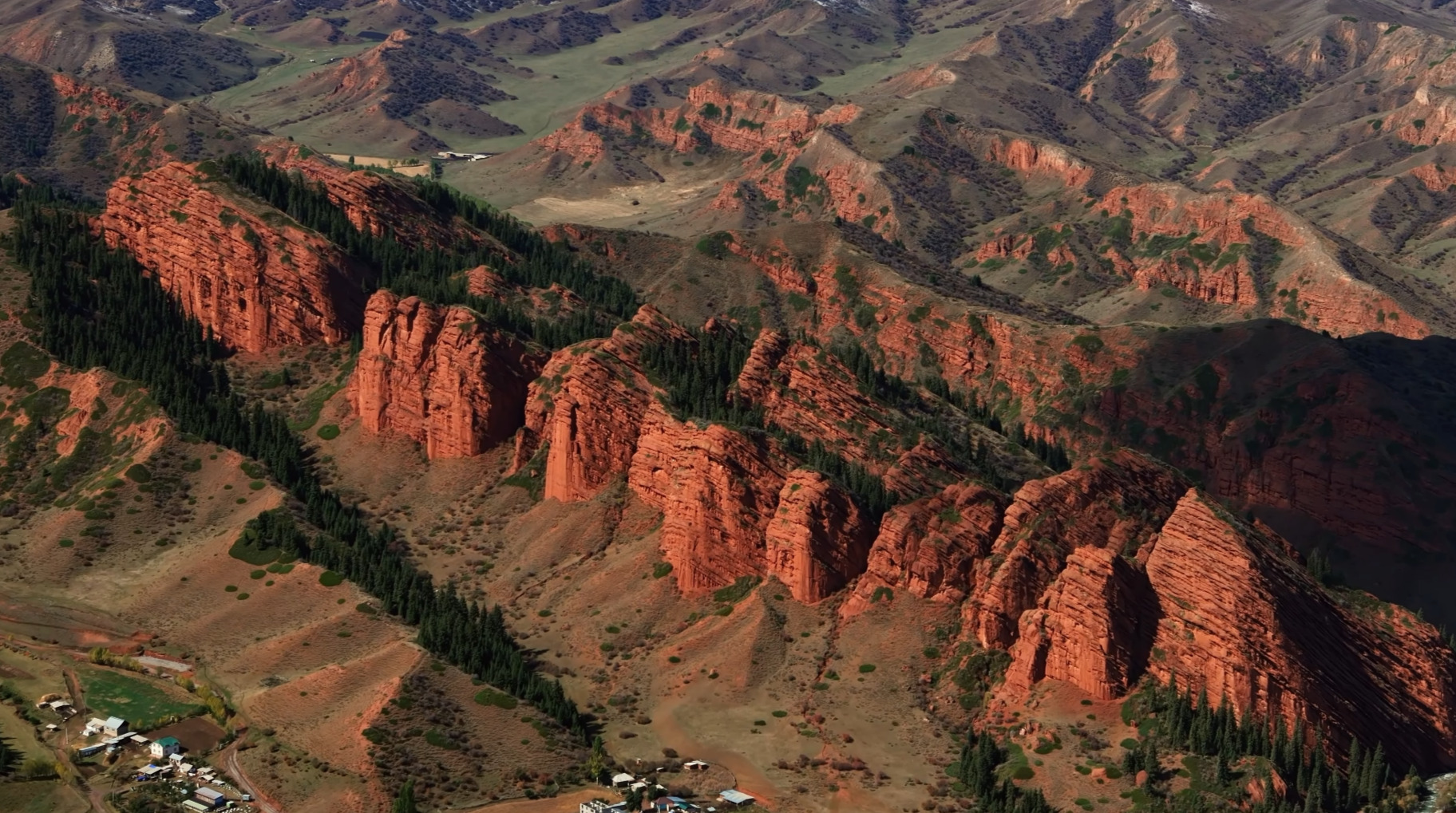
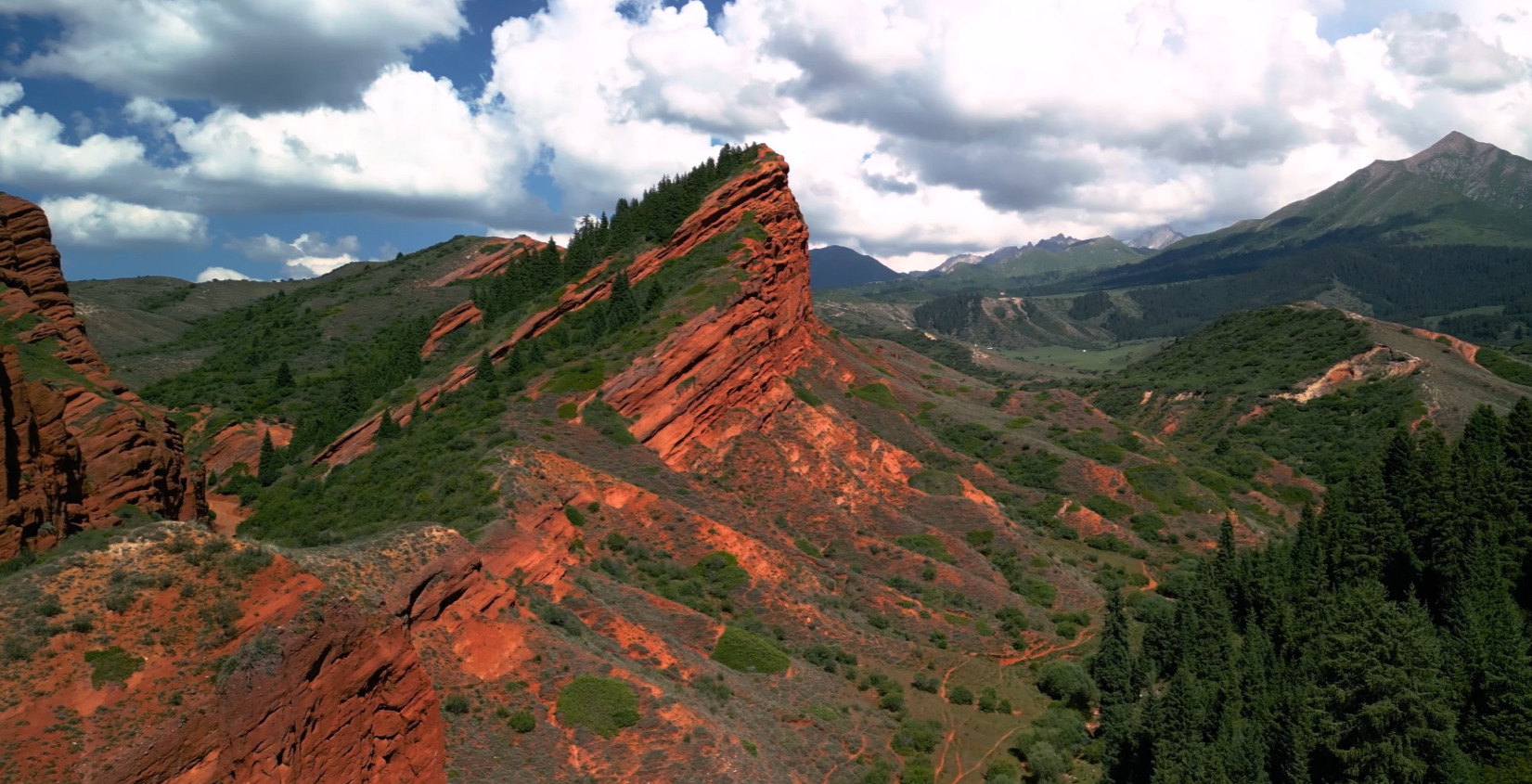
Jeti-Oguz is a mountain valley and resort area near Karakol in eastern Kyrgyzstan. The name is usually translated as “Seven Bulls,” referring to the line of red sandstone cliffs that look like a row of bulls from certain angles. These cliffs are the most famous image of Jeti-Oguz and one of the most recognizable landscapes near Issyk-Kul.
The second famous rock formation is Broken Heart Rock, a split red rock connected with local legends about love, jealousy, and tragedy. It is close to the Seven Bulls and easy to visit on the same stop.
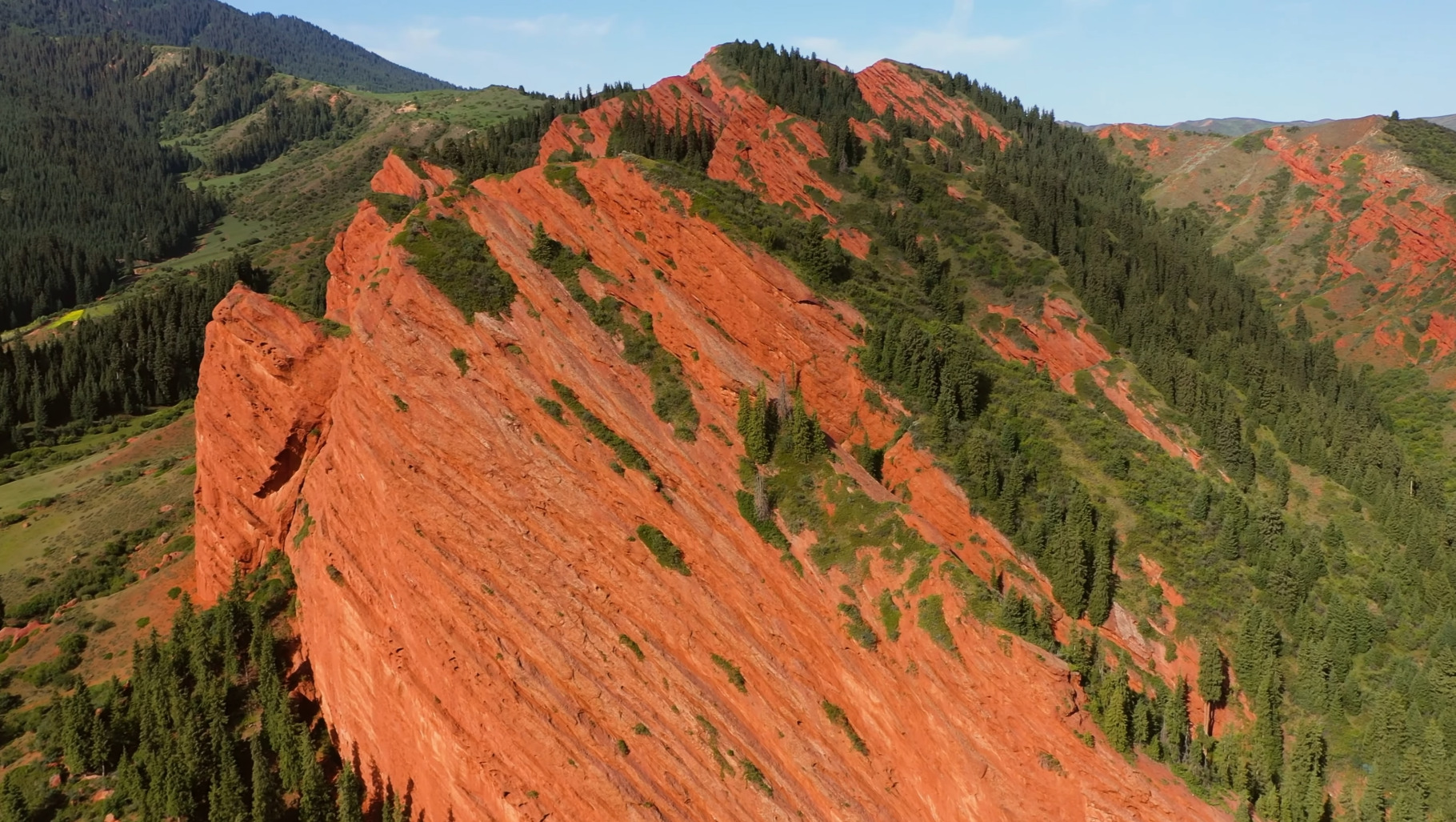
Behind the rocks, the road continues deeper into the valley toward Jeti-Oguz Sanatorium and the Kok-Jaiyk area, also known as the Valley of Flowers. This is where the trip starts to feel less like a roadside viewpoint and more like a real mountain day out.
You can visit Jeti-Oguz in several ways. Some travelers stop for less than an hour while driving around Issyk-Kul. Others make it a half-day trip from Karakol. With more time, you can hike toward Kok-Jaiyk, visit a waterfall, ride horses, or stay overnight in a guesthouse or yurt camp.
Where Is Jeti-Oguz?
Jeti-Oguz is located southwest of Karakol, near the eastern part of Issyk-Kul. The main Seven Bulls and Broken Heart viewpoints are roughly 25–28 km from Karakol, while the resort area is closer to 32 km away. Driving commonly takes around 40–60 minutes, depending on the final stop and road conditions.
Karakol is the best base for visiting Jeti-Oguz. From Karakol, the trip is short enough for a relaxed half-day or full-day outing. From Bishkek, Jeti-Oguz is too far for a comfortable standalone day trip. It makes much more sense as part of a longer Issyk-Kul itinerary, with Karakol used as the overnight base. See our Bishkek to Karakol transport guide when planning that connection.
If you are deciding how to build your route, think of Jeti-Oguz as part of the Karakol and south-shore Issyk-Kul cluster. It combines well with Karakol town, Altyn Arashan, Ala-Kul, Skazka Canyon, Barskoon, and other stops around the lake. For broader route planning, see this guide to the lakes of Kyrgyzstan.
Open the driving route from Bishkek to Jeti-Oguz in Google Maps
Jeti-Oguz Village vs Jeti-Oguz Kurort
This is the most important practical detail for independent travelers.
Jeti-Oguz village is the lower settlement. Jeti-Oguz Kurort, also called the resort or sanatorium area, is farther up the valley. The famous Seven Bulls, Broken Heart Rock, sanatorium area, and trailheads are not simply “in the village” in the way first-time visitors often imagine.
If you take a marshrutka or shared taxi from Karakol, you need to know where it is actually going. Some vehicles may go only to Jeti-Oguz village. Others continue toward the resort area. If you get off in the lower village, you may still need another ride, a long walk, or a local taxi to reach the main sights.
Transport tip: Before you get into a vehicle in Karakol, ask “Kurort?” If the driver says yes, you are more likely to reach the resort area near the main sights. If the vehicle goes only to Jeti-Oguz village, plan extra time and transport.
This small distinction can decide whether your day feels smooth or frustrating. If you only want a quick look at the rocks and are using a private driver, it is simple. If you are using public transport and hoping to hike into the valley, confirm the destination carefully.
Is Jeti-Oguz Worth Visiting?
Yes, Jeti-Oguz is worth visiting if you are staying in Karakol or traveling around Issyk-Kul. It is scenic, easy to reach, and flexible. You can make it as short or as slow as you want.
It is less convincing as a long detour from Bishkek only to see the red rocks. The rocks are beautiful, but the real value of Jeti-Oguz is its location near Karakol and its ability to fit into a wider mountain and lake itinerary.
Jeti-Oguz is especially worth visiting if:
- you are already in Karakol;
- you are doing an Issyk-Kul loop;
- you want an easy nature trip without a difficult trek;
- you like red rock landscapes and mountain valleys;
- you want a gentle alternative to harder hikes near Karakol;
- you are interested in horse riding or yurt-style valley scenery;
- you want a photogenic stop on the way around the lake.
The simple rule is this: Jeti-Oguz is a quick photo stop if you only visit the rocks. It becomes a real day trip if you continue into the valley.
Best Things to Do in Jeti-Oguz
See the Seven Bulls
The Seven Bulls are the main reason most people come to Jeti-Oguz. These red sandstone cliffs rise above the valley and look especially striking against the green slopes and snowy mountains behind them.
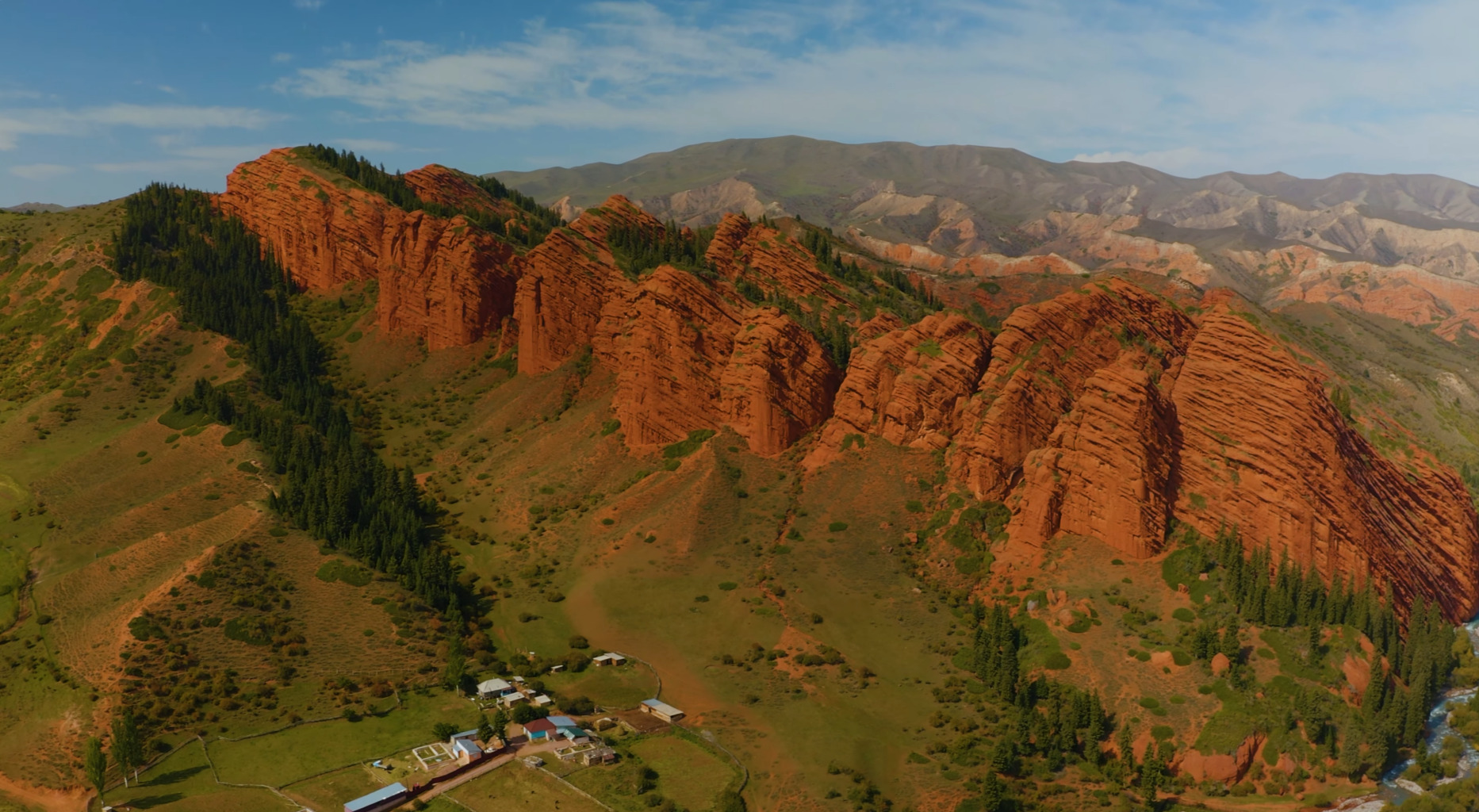
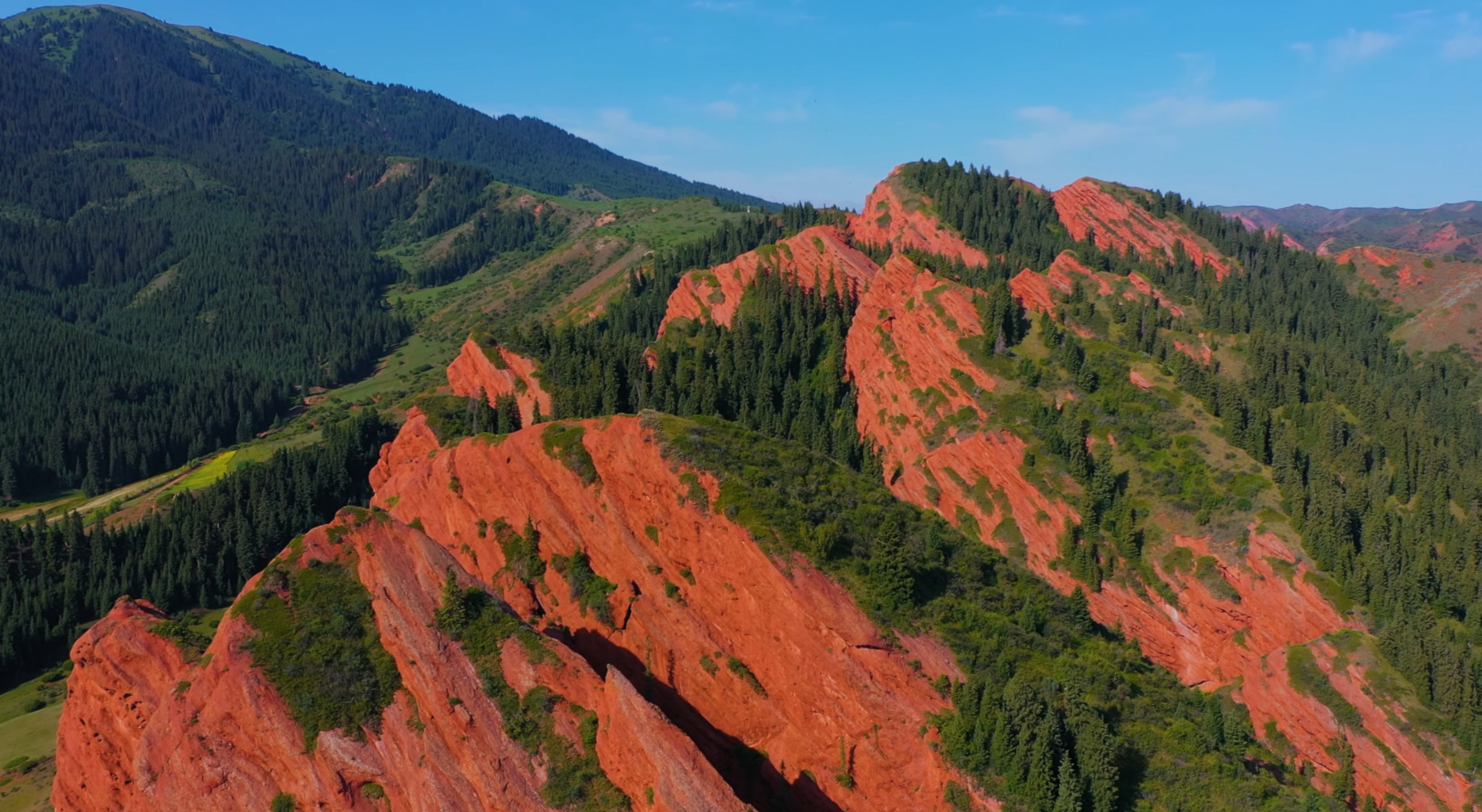
You do not need a difficult hike to see them. Most visitors can enjoy the view from near the road or from a nearby viewpoint. If you have a little energy, walk up to a higher angle rather than taking only the standard photo from below. The rocks often look better when you can see the full shape of the ridge.
For photography, late afternoon can be better than harsh midday light. The red cliffs usually look warmer and deeper when the sun is lower.
Walk to Broken Heart Rock
Broken Heart Rock is another famous formation near the Seven Bulls. It is a split red rock with a romantic and tragic legend attached to it. You do not need to spend a long time here, but it is worth including because it is so close to the main cliffs.
Many short visits to Jeti-Oguz include only the Seven Bulls and Broken Heart Rock. If you are passing through the area on a tight schedule, that is still a worthwhile stop. Just know that this is the most basic version of the visit.
Hike Into Kok-Jaiyk, the Valley of Flowers
Kok-Jaiyk is where Jeti-Oguz becomes more interesting. This meadow area deeper in the valley is often called the Valley of Flowers. In late spring and early summer, the slopes can be green and dotted with wildflowers. In summer, it is a popular place for picnics, horses, yurts, and easy walking.
You can walk part of the way from the resort area, or arrange transport deeper into the valley if road conditions allow. How long it takes depends heavily on where you start. From the lower resort area, it becomes more of a half-day outing. From farther up Kok-Jaiyk, the walks are shorter and easier.
This is the part many quick tours miss. If your itinerary gives Jeti-Oguz only 45 minutes, you will probably not reach Kok-Jaiyk. You will see the rocks, take photos, and continue.
Visit Maiden Braids Waterfall
Maiden Braids Waterfall is also listed by some local tours as Maiden’s Tears Waterfall or Girl’s Braids Waterfall. It is a good extension if you have a full day and decent weather, giving the trip more shape than only looking at the red rocks.
From the upper Kok-Jaiyk area or the main visitor parking, the walk commonly takes around 30–45 minutes each way. It is considerably longer if you start near the lower resort area. Paths can be muddy after rain, and rocks near the waterfall may be slippery, so wear shoes with grip rather than city sneakers.
Bring water and snacks. Food options in the valley are limited and seasonal.
Stop at Jeti-Oguz Sanatorium
Jeti-Oguz Sanatorium is a Soviet-era spa complex connected with mineral springs. It is not a polished luxury spa in a modern resort sense. It is more interesting as a piece of local history and an atmospheric stop between the rocks and the valley.
Some travelers enjoy walking around the grounds, seeing the old buildings, or asking locally whether any bath or treatment facilities are operating. You do not need to make the sanatorium the main reason for your trip, but it adds a different layer to Jeti-Oguz.
Buy Local Honey or Snacks
In warmer months, seasonal stalls may sell local honey, drinks, or basic snacks. Availability is inconsistent, so do not rely on these stalls for a full meal.
Bring cash in small notes. Do not assume card payments will work in the valley.
Consider Horse Riding in the Valley
Jeti-Oguz can also work for easy horse riding. This is best for travelers who want a soft adventure rather than a serious trek. If you arrange a ride, ask how long it lasts, where it starts, whether it is suitable for beginners, and whether someone will lead the horse if you are not experienced.
If horse riding is a major part of your Kyrgyzstan plan, read this broader guide to horse riding tours in Kyrgyzstan before choosing a route.
How to Get to Jeti-Oguz from Karakol
Most travelers visit Jeti-Oguz from Karakol. You can go by public transport, shared taxi, private taxi, or arranged driver. The best option depends on your budget, time, and how far into the valley you want to go.
By Marshrutka or Shared Taxi
The cheapest option is to go to the Ak-Tilek Bazaar area in Karakol and look for marshrutka or shared transport toward Jeti-Oguz Kurort. Route 372 is commonly listed for this connection, but local schedules can change, so confirm the route number and destination on the day rather than relying only on an old online timetable.
Ask specifically whether the vehicle continues to “Jeti-Oguz Kurort.” Transport marked only for Jeti-Oguz village can leave you roughly 12 km short of the resort area and the deeper-valley trailheads.
As a practical planning range, expect roughly 80–120 KGS per person and about 40–60 minutes of travel. Return departures may finish in the late afternoon, commonly around 16:00–17:00, but this is not a guaranteed daily timetable. Check the last return locally before walking deeper into the valley.
By Private Taxi or Driver
A private taxi or driver is easier and more flexible. This is often worth it if you want to see the rocks, continue toward Kok-Jaiyk, walk to the waterfall, and return without worrying about public transport timing.
There is no fixed public taxi tariff for a Jeti-Oguz day trip. The price depends on whether the journey is one-way or return, how long the driver waits, and how far the vehicle continues into the valley. Agree on the total price, waiting time, final drop-off point, and return arrangement before leaving Karakol.
This 4×4 return transfer from Karakol gives you several hours of free time in Jeti-Oguz. It is a better fit if you want to choose your own walk, visit the red rocks and explore part of the valley without paying for horse riding or a fully guided day.
By Organized Trip or Private Tour
An organized trip makes sense if you want hotel pickup, a guide or driver who knows the route, or a day that combines Jeti-Oguz with other Issyk-Kul sights. It is also useful if you are traveling with children, short on time, or visiting in shoulder season when local transport feels less predictable.
As a rough 2026 benchmark, simple return-transfer or transport-style options from Karakol can start around $85. Guided trips and options with horse riding usually cost more, but the total depends on whether the guide, horse, meals, entrance fees, waiting time, and return transfer are included. Multi-day Issyk-Kul itineraries that include Jeti-Oguz vary much more according to route, accommodation, vehicle, and group size.
Do not compare only by price. Check how much time the itinerary gives to Jeti-Oguz and whether the driver or guide accompanies you beyond the parking area. A tour that stops for 45 minutes at the rocks is a different product from a day that includes Kok-Jaiyk or the waterfall.
Can You Visit Jeti-Oguz Without a Tour?
Yes, you can visit Jeti-Oguz without a tour, especially if you are based in Karakol. It is one of the easier nature trips in the area to organize independently.
The real question is not whether you can go alone. It is whether independent transport matches the kind of day you want.
Independent Visit Works Well If
- You are staying in Karakol.
- You are comfortable using local transport.
- You mainly want Seven Bulls and Broken Heart Rock.
- You have a flexible schedule.
- You are traveling on a tight budget.
- You do not mind checking return transport locally.
A Driver or Tour Is Better If
- You want to reach Kok-Jaiyk or the waterfall easily.
- You want hotel pickup and return.
- You are traveling with family or limited time.
- You want to combine Jeti-Oguz with other Issyk-Kul stops.
- You are visiting outside peak summer.
- You want horse riding or a more structured day.
For simple sightseeing, independent travel is fine. For a smooth full-day version of Jeti-Oguz, a private driver often gives better value than trying to save every som and losing time on transport uncertainty.
Is 45 Minutes Enough for Jeti-Oguz?
It depends what you expect from the visit.
Forty-five minutes is enough to see the Seven Bulls, take photos, and visit Broken Heart Rock if the logistics are simple. It is not enough for Kok-Jaiyk, the waterfall, horse riding, or a real valley walk.
This matters when you compare Issyk-Kul tours. Some itineraries include Jeti-Oguz as a short scenic stop. That is not bad, as long as you understand what you are getting. If the tour is mainly about covering many places around the lake, Jeti-Oguz may be treated as a photo stop.
If you want to experience the valley, look for an itinerary that gives more time. Ideally, you want at least a half day from Karakol or a full day if you plan to reach Kok-Jaiyk and the waterfall.
Simple rule: if your itinerary gives Jeti-Oguz less than one hour, treat it as a scenic stop, not a full visit.
This three-day tour from Bishkek combines Jeti-Oguz with Karakol, the south shore and other major Issyk-Kul stops. Jeti-Oguz is included as a scenic visit rather than a complete day in the valley, so this option suits travelers who want to cover more of the lake in a limited time.
Suggested Jeti-Oguz Day Trip Itinerary from Karakol
You can shape Jeti-Oguz into a half-day or full-day trip. Here are two realistic versions.
Easy Half-Day Trip
- 09:00 – Leave Karakol.
- 10:00 – Arrive near Seven Bulls and Broken Heart Rock.
- 10:45 – Walk to a viewpoint for better photos.
- 11:30 – Continue toward the sanatorium area or take a short valley walk.
- 13:00 – Return toward Karakol.
This version is best if you want a relaxed morning, easy sightseeing, and no serious hiking.
Full-Day Trip
- 08:30 – Leave Karakol with water and snacks.
- 09:30 – Visit Seven Bulls and Broken Heart Rock.
- 10:15 – Walk to a viewpoint.
- 11:00 – Continue toward Kok-Jaiyk.
- 12:30 – Picnic or lunch stop in the valley.
- 13:30 – Walk toward Maiden Braids Waterfall if weather and timing are good.
- 15:30 – Return toward the resort area.
- 16:00-17:00 – Head back to Karakol.
This version is better if you want Jeti-Oguz to feel like a real day trip rather than a short stop.
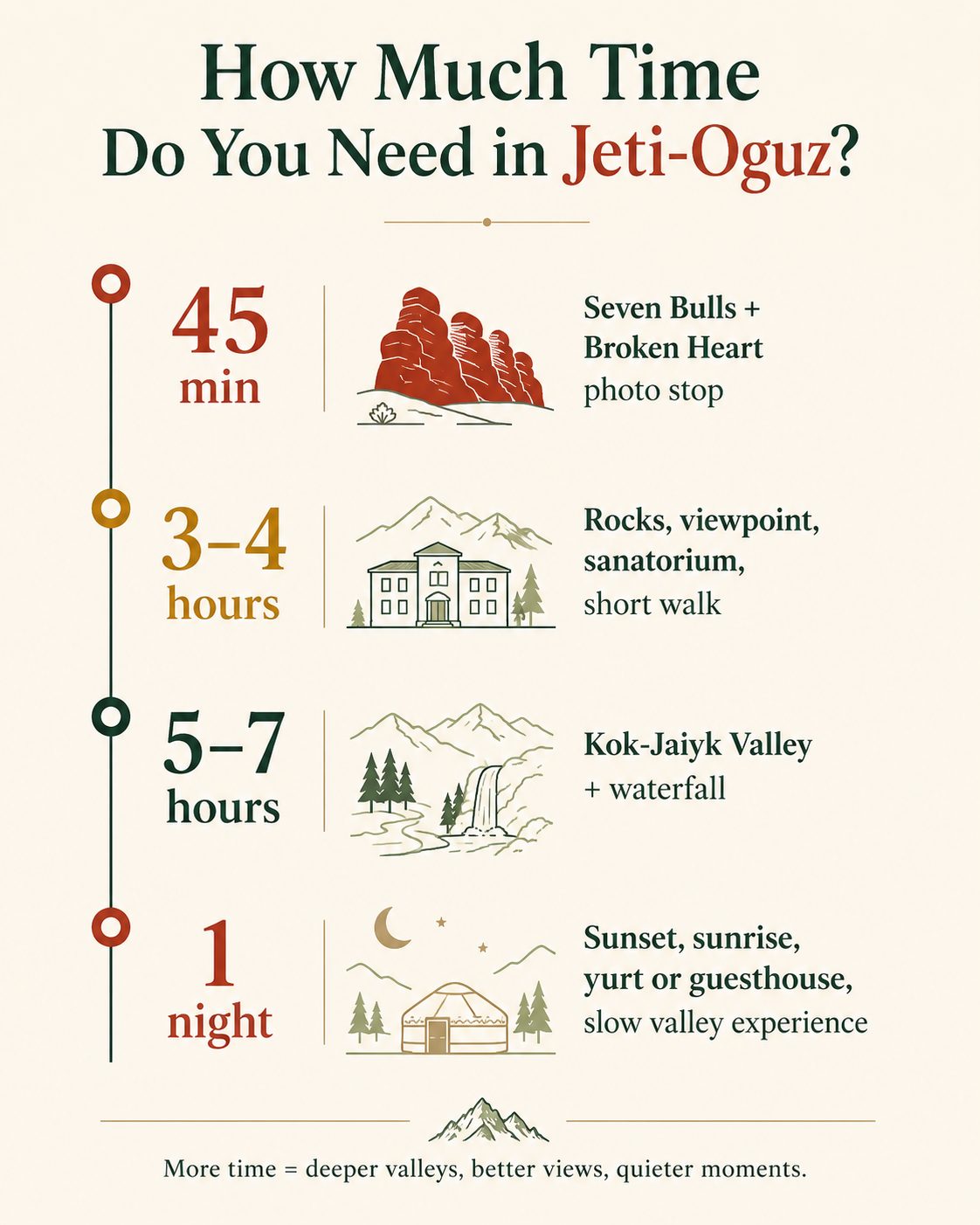
How Long Do You Need at Jeti-Oguz?
| Time | Best For | What You Will Miss |
|---|---|---|
| 30-60 minutes | Seven Bulls and Broken Heart Rock photo stop | Kok-Jaiyk, waterfall, slow valley views |
| 3-4 hours | Rocks, viewpoint, sanatorium area, short walk | Full waterfall hike and relaxed picnic time |
| 5-7 hours | Full day from Karakol with Kok-Jaiyk or waterfall | Sunset, sunrise, overnight valley atmosphere |
| 1 night | Slow travel, yurt or guesthouse stay, sunrise and sunset | Convenience of returning to Karakol the same day |
Most travelers should allow at least half a day. If you only have a short stop while driving around Issyk-Kul, the rocks are still worth seeing. If you are staying in Karakol, give Jeti-Oguz more time.
Best Time to Visit Jeti-Oguz
The best general season for Jeti-Oguz is from May to October. For green landscapes, easier walking, and more reliable access into the valley, June to September is usually the most comfortable period.
Late spring and early summer can be beautiful because the valley is fresh and flowers may be blooming. This is also when paths can be wet or muddy after snowmelt and rain. July and August are the easiest months for summer services, horse riding, and valley activity, though they can be busier.
September is one of the nicest months if you prefer quieter travel, clearer light, and cooler temperatures. October can still be attractive, but days are shorter and weather becomes less predictable.
Winter visits are possible for the red rocks, but hiking options are more limited and transport can be less convenient. If you are visiting in winter or shoulder season, a private driver becomes more useful.
For broader planning across the country, see this guide to the best time to visit Kyrgyzstan.
What to Bring
Jeti-Oguz is not a hard expedition, but you should still come prepared if you plan to walk beyond the rocks.
- Cash in small notes.
- Water.
- Snacks or picnic food from Karakol.
- Walking shoes with decent grip.
- Light jacket or fleece.
- Rain layer in spring or summer.
- Sun protection.
- Offline map.
- Power bank.
- Camera or phone with enough battery.
- Reusable bag for your trash.
Do not rely on finding proper restaurants in the valley. In summer, you may find small stalls or simple local food options, but it is safer to bring what you need from Karakol.
Where to Stay for Jeti-Oguz
Most travelers should stay in Karakol. It has more guesthouses, hotels, restaurants, shops, transport options, and travel services. It is also a good base for other nature trips, including Altyn Arashan and Ala-Kul Lake.
Staying in Jeti-Oguz itself makes sense if you want a quiet night, sunrise or sunset photos, a yurt-style experience, or more time in the valley. The trade-off is fewer food options and less convenience.
If your schedule is short, stay in Karakol and visit Jeti-Oguz as a day trip. If your trip is slower and nature-focused, consider one night in or near the valley.
Want a slower Issyk-Kul route with more time around Jeti-Oguz? This five-day circuit includes Jeti-Oguz as part of a more relaxed journey around the lake, with Karakol, the south shore and additional regional stops. It is better suited to travelers who do not want to compress the entire route into three days.
See the 5-Day Issyk-Kul and Jeti-Oguz Route
What to Combine With Jeti-Oguz
Jeti-Oguz works best as part of a wider Karakol and Issyk-Kul route. It is not a destination that needs several days by itself, but it combines very well with nearby places.
Good combinations include:
- Karakol: the natural base for Jeti-Oguz, food, markets, guesthouses, and onward trips.
- Altyn Arashan: a more adventurous hot spring valley near Karakol.
- Ala-Kul: a harder trekking option for travelers with more time and fitness.
- Skazka Canyon: another red-rock landscape on the south shore of Issyk-Kul.
- Barskoon: waterfalls and mountain scenery on the south side of the lake.
- Cholpon-Ata: a more developed north-shore lake stop, useful if you are circling Issyk-Kul.
If you are choosing between several lake and mountain stops, this broader guide to things to do in Kyrgyzstan can help you decide what fits your route.
Common Mistakes to Avoid
Jeti-Oguz is easy to visit, but a few small planning mistakes can make the day weaker than it should be.
- Confusing village and kurort. Always confirm where your transport goes.
- Giving Jeti-Oguz only 30 minutes and expecting a hike. A short stop is only a short stop.
- Relying on the last marshrutka without checking locally. Return transport can be less convenient than the ride out.
- Wearing city shoes for the waterfall. Paths can be muddy or slippery.
- Arriving at midday for photos. The rocks often look better in morning or late afternoon light.
- Not bringing snacks or water. Food options are limited and seasonal.
- Booking a multi-day tour without checking time at Jeti-Oguz. Some itineraries include it only as a quick photo stop.
- Trying to visit from Bishkek as a standalone day trip. It is much better from Karakol or as part of an Issyk-Kul route.
None of these mistakes are disastrous. They simply reduce the value of the trip. With a little planning, Jeti-Oguz can be one of the easiest highlights near Karakol.
FAQ: Visiting Jeti-Oguz in Kyrgyzstan
Is Jeti-Oguz worth visiting?
Yes, Jeti-Oguz is worth visiting if you are in Karakol or traveling around Issyk-Kul. The red rocks are beautiful, and the deeper valley makes the trip much better if you have time for a walk, picnic, waterfall, or horse ride.
How far is Jeti-Oguz from Karakol?
The main Seven Bulls and Broken Heart viewpoints are roughly 25–28 km from Karakol, while the resort area is closer to 32 km away. Driving usually takes about 40–60 minutes, depending on the final stop and road conditions.
Can I visit Jeti-Oguz without a tour?
Yes. Independent travel is possible from Karakol by marshrutka, shared taxi, or private taxi. A tour or private driver is more convenient if you want to reach Kok-Jaiyk, visit the waterfall, combine several Issyk-Kul stops, or avoid return-transport stress.
What is the difference between Jeti-Oguz village and Jeti-Oguz Kurort?
Jeti-Oguz village is the lower settlement. Jeti-Oguz Kurort is the resort and sanatorium area farther up the valley, closer to the main sights and trailheads. If using public transport, confirm that it goes to Kurort, not only to the village.
How long do I need at Jeti-Oguz?
You need 30 to 60 minutes for a quick Seven Bulls and Broken Heart Rock stop. A half day is better for the rocks, viewpoint, sanatorium area, and short walk. A full day is best if you want Kok-Jaiyk or the waterfall.
Is 45 minutes enough for Jeti-Oguz?
Forty-five minutes is enough for a quick photo stop at the red rocks. It is not enough for Kok-Jaiyk, the waterfall, horse riding, or a proper valley walk. If your itinerary gives less than one hour, treat Jeti-Oguz as a scenic stop.
How much does it cost to visit Jeti-Oguz?
Public or shared transport from Karakol commonly costs around 80–120 KGS per person, but confirm the current fare and whether the vehicle reaches Jeti-Oguz Kurort. Private taxi prices are negotiated and depend on waiting time and the final drop-off point. Organized return-transfer options can start around $85.
Can you hike in Jeti-Oguz?
Yes. The easiest walks are around the Seven Bulls, viewpoints, and the valley. From the upper Kok-Jaiyk area, Maiden Braids Waterfall commonly takes around 30–45 minutes each way. The walk is much longer if you start near the lower resort area.
When is the best time to visit Jeti-Oguz?
May to October is the broad visiting season. June to September is usually best for green valley scenery and easier walking. Late spring and early summer are good for flowers, while September is often quieter and clearer.
Do I need a guide for Jeti-Oguz?
You do not need a guide for a basic visit to the rocks from Karakol. A guide or driver becomes more useful if you want to go deeper into the valley, arrange horse riding, understand the local stories, or combine Jeti-Oguz with other stops around Issyk-Kul.
Can I visit Jeti-Oguz in winter?
You can visit the red rocks in winter, but hiking and transport can be more limited. Winter is better for a short scenic stop than a full valley day. Check road and weather conditions before going.
What should I combine with Jeti-Oguz?
The best combinations are Karakol, Altyn Arashan, Ala-Kul, Skazka Canyon, Barskoon, and a wider Issyk-Kul route. Jeti-Oguz works best as part of a Karakol or lake itinerary rather than a standalone trip from Bishkek.